 A quickie look at the books where I started my dive into homeopathic potency.
Margriet Plouvier-Suijs’ About Potencies
Happy Reading! Julia Coyte, CHom Classically Practical homeopath #wellnessawaits
0 Comments
 Homeopathic potency is a hairy subject. Don’t believe me? Ask any homeopath. I guarantee they will not have an easy answer. “This topic will cause more feathers to fly and engender more ill-will than any other subject,” says Luc De Schepper (2001, p 56).
I didn’t think it would take long to look into this topic, but over the last two weeks or so, I was on a quest for an easy answer to this potency question; and, after reading multiple books, dozens of chapters and countless pages and documents, all on homeopathic potency and all from well-known homeopaths — guess what? There appears, indeed, to be no easy answer. The only easy answer I came up with was from Jeremy Sherr, but that was when he first began practicing, decades ago, and he used nothing but 30c for a full year so he could learn all about that particular potency (Sherr 2007). The next year he added 200c and the year after, 1M and after that, he added in the whole range of potencies. So, we’re back, full circle, to no easy answer. William Boericke is a greatly revered homeopath, let’s see what he says in his preface to his 9th edition (2007): “The dosage needs some apology. It is, of course, suggestive only: more often to be wholly disregarded.” That was helpful. Surely, Dr. Samuel Hahnemann can sort this out for us? Well, I’m afraid not. I think he, actually, inadvertently, is part of the problem. You see, he wrote six different versions of the Organon — and by the last one, he no longer agreed with his earlier selves. In the 4th edition, he touted taking a single dose of a 200c and letting it ride for a few weeks. In the 5th edition, he turned around and called that method “barbaric.” And, by the time he got to his 6th edition, he ended up rejecting “everything” from the 5th and praised his “most perfect method” (De Schepper 2001, p 63). (The LM potency is a whole other kettle of fish and not what we’re talking about today — though, some would say the LMs would put an end to all the potency bickering 🤔). Remember §2 from his 6th edition? (Hahnemann and Wenda Brewster O’reilly 2001): The highest ideal of cure is the rapid, gentle [emphasis mine] and permanent restoration of health… This goal does not jibe with “barbaric.” Depending on which version of the Organon they were taught is what homeopaths are left believing and practicing. So, no, Master Hahnemann is not going to help us out of this dilemma. We have some general rules of thumb - that should fix it, shouldn’t it? Sure! Oh, wait, looks like we can’t even get to an agreement on what is considered a high potency and a low potency, though. Let’s bypass that little hiccup and come up with our own definition and go from there. For our purposes, we’ll use 200c as the mid-point: anything below is “low” and anything above is “high.” Bear in mind, this convoluted subject is much bigger than high vs low potency. Here are the “golden rules” of low potency (gathered from countless books and lectures and homeopathic wives tales). Look in any homeopathic book and you’ll see a nice list of “assured” guidance on potency which would resemble this list:
a. high potencies are for emotional and/or mental conditions b. high potencies for chronic conditions or deeper seated issues c. higher potencies for acute conditions d. high potencies are more intense [than low potencies] e. high potencies are more prone to aggravations f. high potencies last longer g. don’t repeat high potencies very often h. for healthy children, use high potencies i. high potencies may be more effective in cases where lower potencies have failed j. high potencies are more suitable for robust individuals Any other potency rules of thumb? Yes… aa. match the potency with the intensity of the condition bb. take the miasm into account and prescribe potencies based on which miasm is believed to be active in the case (but we’re not talking about miasms today) cc. when one is taking allopathic medicines, repetition of the homeopathic remedies is required (there is, of course, discrepancy as to which potency, however) dd. the more certain one is about a remedy, the higher the potency used Simple enough, right? Sure, but, right off the bat, we can see [I’m going to make my life simple and use # for both numerals and letters] #s 2 & 8 and b & c are a little in conflict as regards acute/chronic conditions. However, both can be true and I’ll use a very simple point to illustrate the possibility. As we know, acute conditions can be minor (the sniffles) or they can be life threatening (pneumonia). Chronic conditions can be minor (dry skin) or they can be intense and all encompassing (rheumatoid arthritis). This may explain some of the discrepancy, but I fear it’s not a complete picture. You see, pneumonia may also fall under #s 7, 9, h and j (at least). Alas. Let’s carry on. Let’s go through both “golden rules” lists: #1/a — low potencies are for physical symptoms/high potencies are for emotional and/or mental conditions For a brief reminder of how potency is understood to work, let’s turn to Asa Hershoff (1999) who gives us a nice explanation of low potency: “Remedies that range from the 2x, 3x, etc. to about the 6x, are considered to be very low potencies. Since these medicines are very close to the original herbal or mineral state of the original substance, they work on a very gross physical or material level. Remedies at this strength directly affect the levels of cells and biochemistry, not unlike herbs or vitamins. Low potency remedies means remedies that range between the 12x, 15x, 6c and 12c strengths. Medicines at this level of dilution have an affinity to specific tissues and entire organs, like the skin, liver or heart.… When conditions have advanced to the point of physical or structural changes, lower potencies should be used.” There is a branch of homeopathy called “organotherapy” — homeopathy which is used to support struggling organs and it seems to me that those potencies are universally low. We also know that chronic situations do often involve specific tissues and organs. We’ll call this rule of thumb pretty solid — “Low potencies for specific tissues and entire organs.” Not so fast. Jeremy Sherr (Shine 2004, p 207) may have something to add about this. “One thing I can definitely say from both the cases and the provings is that the notion that high potencies affect the mental and low potencies affect the physicals is inaccurate. That’s my opinion derived from many provings. [JS has conducted over 40 Hahnemannian provings.] In provings, some of the strongest mental/emotional symptoms have come from a 6c and yet with a 200c I have occasionally seen none of the mental/emotionals but more physicals, and also vice versa, which means that the mental/emotional/physical hierarchy does not apply to potency. In fact, to my mind, it does not apply to much at all. … I have seen provings from a single dose of a 12c last for months. These facts contradict some of the prevailing notions on the subject.” Got it. But, I’m going to stick with my “pretty solid” rating, at least for the low potencies = specific tissues and organs. In fact, Dr. Manuel Mateu Ratera (2016 p 15) also likes low potencies for “local, acute and very superficial disorders.” That’s saying something coming from an emergency room doctor. He likes medium and high dynamisations, between 30 and 200c and 1000 (1M) to 10,000 (10M)… in major and severe disorders though, so maybe the whole low potencies for specific tissues and organs doesn’t hold? I told you this was a hairy subject. Before moving on, it’s important to remember that very low potencies often have physical matter remaining in them. (See X? C? Homeopathic potency briefly explained for a refresher.) S.M. Gunavente* (2014, p 132) says plainly: “We should be wary of using very low potency, and especially the crude drugs.” Remember, Dr. Hahnemann first started potentizing (diluting and succussing/banging) crude substances because he witnessed the harm these substances (like mercury) were doing to people*; he was trying to reduce the poisonous effects while still being able to use the medicinal substance. I’m not going to pretend to know exactly what percentage of homeopathic remedies are made from substances which would be perfectly safe to consume in crude form, (cup of chamomile tea, anybody?) but it’s a good reminder to know your homeopathic remedies and from whence they stem. As a refresher to Avogadro’s number, “any potency beyond 24x or 12c has virtually no chance of containing even one molecule of the original substance” (Vithoulkas 1981, p 102). At this juncture, it’s also interesting to note that there are some substances which seem to work better in mother tinctures or very low potencies, like Sabal serrulata or Avena sativa (Gunavante 2014, p 147) — but then we are heading into herbalism/gemmotherapy, and that’s for another day, too. (See, also: Anger and Fear for further info on why some remedies should not be used in crude form.) As for the high potencies for mental/emotional symptoms? Well… I have seen people with suppressed anger issues lose their cool with little old ladies in the grocery store after taking a 200c and I have seen that same remedy in a 200c work gently and beautifully for another person with suppressed anger issues. I have also seen Avena sativa mother tincture calm the most stressed out, high strung anxious minds. Leaving us once again with hairy confusion. Having said all that, I am going to call this rule of thumb pretty solid, at least on the “low potencies for physical symptoms” piece. For the high potencies for mental/emotional symptoms, we have to take the individual and their circumstances into consideration and can’t assign a low/high rule. #3/4 & d/e — low potencies are gentler [than higher potencies]/low potencies are less likely to provoke a strong reaction & higher potencies are more prone to aggravations/high potencies are more intense I think Jeremy Sherr in #1/a handles this answer quite nicely. Let’s also revisit Asa Hershoff for this one (1999): “The higher potency contains less substance, but a more powerful and focused burst of energy and information. Using a higher potency means raising the energy level to a higher octave that, like a high-pitched sound, has deeper and further penetration.” I have to say here that low-pitched sounds can resonate pretty deeply in the human body, too. Some would even say they resonate deeper than high pitched sounds. Once again, too big of a topic for a sidestep, but if you’re interested, the internet can satisfy your curiosity. In all, though, I believe that generally speaking, lower potencies are gentler and less intense (for most people). #5 — low potencies are better suited to sensitive individuals How do we know who is sensitive? That is a question. Sometimes we know someone is sensitive because:
With sensitive individuals: “…some caution should be exercised with the initial potency” (Vithoulkas 2019, p 51). As with everything homeopathy, the individual is the most important piece of the puzzle. Regardless, we’ll call this rule of thumb pretty solid — “Low potencies are better suited to MOST sensitive individuals.” #6/g — low potencies are better when using repeated doses/don’t repeat high potencies very often This one will definitely ruffle some feathers. In fact, my cutting my homeopathic teeth on the Banerji Protocols is where I have seen the most friction with my fellow homeopaths who have been solely classically trained. Repetition of potencies doesn’t scare me. Having said that, I know from my own personal experience that repeating potencies too often and ill-advisedly can temporarily lead to some uncomfortable situations. Generally speaking, in the classical mode, one would wait for the action of a remedy to cease before repeating it. Recall back to earlier in this article where Hahnemann refers to this method as being “barbaric.” The Banerjis teach that repeating a dose, sooner rather than later, timed appropriately based on the remedy and potency being used, can avoid the discomfort of an aggravation. Repetition of doses is a very common tactic when dealing with an acute situation, (regardless of potency) — the rule of thumb here is to repeat the dose as soon as the symptoms return and to gradually space out the dosing as symptoms improve. Well, in my never-to-be-humble opinion, the same can be true in chronic situations, too. Francisco Xavier Eizayaga wrote a really amazing book, Treatise on Homoeopathic Medicine (1991). If you can find it, buy it! However, I am going to quote Robin Logan (Shine 2004, p 167) summing up Eizayaga: “… something that Dr. Eizayaga taught me quite a long time ago - is that you don’t have to be frightened of repeating the dose. In fact if you’re on the right remedy, if you give one dose of a 50M or thirty consecutive doses of a 50M, in other words once a day for a month, you’re likely to get a very similar outcome, and that’s something which I’ve experimented with and found to be the case. … But taking it every day won’t necessarily speed things up or work any more effectively either, but neither will it do anything to spoil the treatment.” Having said all that, I am going to call this rule of thumb pretty solid — “Low potencies are better suited to repeated doses”… but not to the exclusion of repetition in higher potencies. #7/8/9/h/j — low potencies for the weak and feeble and those suffering from chronic sickness/high potencies are more suitable for robust individuals Homeopathy is an excellent and gentle way to help with chronic illness, and can significantly improve comfort and quality of life (i Llobet 2014). Homeopathy can help alleviate the sometimes dire side effects from allopathic medications which accompany chronic sickness. [Murphy (2018) has a very nice chapter entitled, “Handling People on Drugs.”] Once again, however, I’m going to call the Low potencies for the weak and feeble and chronic illness a pretty solid recommendation. The flip side of that can be that high potencies are better suited for robust individuals and healthy children, but, we have to take the individual into account. Homeopathy is said to be an excellent modality for the dying, but again, that’s a whole other article. #8/b — low potencies for chronic conditions As usual, I really like what Dr. Murphy has to say. What I have learned from Dr. Murphy’s lectures is that he was a big proponent of low and slow for chronic conditions, for instance. He taught that when he came upon the right remedy for the person, he would “send in a probe”— meaning he would give a single dose of 200c and if they responded favorably, he would then follow it up with repeated doses of 6c. He mentions this in his book Case Analysis & Prescribing Techniques (excellent book, by the way) on page 281, apparently it’s something he picked up in the old journals. His reasoning for using low potencies for chronic conditions is that chronic diseases took a long time to get where they are and they need to be slowly and systematically removed over time. Makes sense to me. On the flip side of this, higher potencies can certainly be useful in chronic conditions. The Banerji Protocols (Banerji and Banerji 2013) are chock full of high potency remedies aimed at relieving chronic situations. #i - high potencies may be more effective in cases where lower potencies have failed A general rule of homeopathy floating around is ascending potencies. Use whatever potency you’re using and when it is no longer doing what is needed, move to the next potency up the ladder. I learned early on this is not necessarily the case. I was playing around with Rhus tox for my eczema and though I could tell Rhus tox was the right remedy, I could not get the potency correct, despite my following the ladder upward. Finally, on a whim, I decided to try 12c. Boom. That’s all she wrote. Eczema gone, never to return. Some homeopaths say to not go down in potency. Period. However, I have read many times in the last two weeks about various homeopaths who move to a lower potency when they are not getting their expected results with their chosen potency. Aaronson's Pharmacy (2020) instructs: “If you start low, increase potency with response. Decrease potency if no response…” The goal is to find the “right” potency, not to follow a rule. #aa — match the potency with the intensity of the condition Returning to Dr. Ratera (2016), he offers these guidelines: “Use low potencies (from 6 to 30) for milder cases, repeat several times in dry dose or diluted in mineral water… For severe cases or severe emotional or mental impairment, use higher potencies (from 200 to 10M).” Severe injuries or surgical recovery, etc., may warrant potencies not available to the general home user. Sometimes, the lower potencies work just fine but may need to be repeated more often. I once sliced the tip of my finger off (see, I did a doozy…) and low potencies did me just fine (Hypericum 30x was what I had handy) and I also used Phosphorus 30c to stop the seemingly non-stop bleeding. I may be bias, but I’m going to say it was a pretty severe injury; it certainly was a heck of a lot more than a little cut. I’m going to say that the intensity of the injury needs also to be matched by the intensity of the remedy — not necessarily meaning the potency. Perhaps if all I had was Arnica, a higher potency may have been required to match the intensity of the pain alone. Hypericum with it’s association for nerve-rich areas was the “right” remedy and therefore did not require a very high potency. Conversely, perhaps this is an example of #1, low potencies are for physical symptoms. See, this is where it gets confusing again… After all of that, here is what I have to say: All of these guidelines are correct. How can that possibly be? “There are no set rules, and experience and observation play a very large role… some general guidelines… but it must be fully understood that they are not designed to be adopted as ‘rules.’ … “Proper guidelines for selection of potency are difficult to define, because in any given case it is impossible to say what would have happened if a different potency had been given” (Vithoulkas 1981, p 213). As Dr. Murphy says (2018, p 275): “All these ways are right, and all of them are wrong, depending on the case. That should be our attitude.” If you will harken back to our acute/chronic = low/high potency discrepancy, it actually makes all the sense in the world when we return to Hahnemann’s Organon, 6th edition, §83: “This individualizing examination of a disease case… demands nothing of the medical-art practitioner except freedom from bias and healthy senses, attention while observing and fidelity in recording the image of the disease. “Freedom from bias” = these general rules of thumb should be known and considered, but not followed blindly. Observe the person (or animal) in front of you. Know the remedies. Learn from those who have learned before us. Put it all together and use your best judgement. The key to understanding how each of these guidelines can make sense even when it is in direct contrast with another? The individual. The individual needs to be considered in each and every situation. However, it is not only the intended recipient of the remedies that needs to be considered — It is also the homeopath and their understanding of the intended recipient. Max Tetau (1986, pp 36-37) agrees with this: “The choice of potency depends on the clinical case, and, also it must be admitted, on the habits and temperament of each Homeopath [sic]. With experience each one possesses a keyboard that he knows best how to use.” There is another theme that floated in and out of all these books and chapters and pages and that is this: It isn’t necessary to “fret about which potency of a medicine to give… the choice of the correct medicine is significantly more important than the correct potency. Giving the incorrect potency will generally still promote healing, albeit slower healing.” In his introduction to Select your Dose and Potency (1991), Dr. P.S. Rawat says simply: “Selection of potency depends on the susceptibility of the patient together with the acuteness and chronicity of the disease.… There is almost endless field here for speculation and observation, ranging from the pictures to the highest potencies… The various potencies are all more or less related to individuals and it is the individual we should study. How about just following the advice and guidance of respected lecturers? Yes! Gather all the information you possibly can! Learn from those who know! Clinical experience holds a lot of weight in my mind. If an experienced homeopath teaches a specific potency for a specific condition, make note of it. It doesn’t mean it’s a slam dunk, but it should be a very good place to start. Jeremy Sherr may be able to help us out on the whys for this. In his interview with Michelle Shine in her interesting book What About the Potency (A Comprehensive Guide to Homeopathic Potency and Dosage) (2004, pp 206-207), he talks about the many provings he has done, using a variety of potencies: “I have also found out various things about them. In fact, at one stage I used to put all these provings into a database, so that I could analyse [sic] the potencies relative to the symptoms they produced. Ultimately, this approach means that if we were really precise in homeopathy, we would match the potency to the potency that produced the symptom in the proving***.” I’m thinking the Banerjis and other homeopaths with extensive clinical knowledge may have stumbled upon some of these specific potencies, resulting in reproducible results. An interesting thing occurs in virtually every lecture I have ever attended — at least one hand goes up after each case description with the question, “What potency?” Some lecturers give potencies freely and often include them as part of the learning, others react like it’s a distraction from their thinking and some say plainly that the potency is irrelevant. In fact, this happened in two different lectures I was listening to this week alone: Guarang Gaikwad is one who includes the posology in most cases and the other was Richard Pitt who responded a little differently when he very sensibly said that in almost all cases when he was working in Africa that he would begin with a 30c. Simple enough! and I will call this my simple answer, too. How perfect is that since that’s the most commonly available potency for home users, too? Julia Coyte, CHom Classically Practical homeopath #wellnessawaits *Note: try as I might, I was unable to find a link for any biographical information on Gunavante. **For a refresher on how homeopathic remedies came to be, see, Original Drug Testing… Homeopathic Provings. ***I’m so excited by this information because in this new age of powerful computers and databases and AI, it feels like this should be a do-able project in the near future. Reference list Aaronson’s Pharmacy, 2020. Homeopathic Medicine Potency Selection Guide [online]. Aaronson’s Compounding Pharmacy. Bhatia, Dr. M., 2009. Homeopathic Potency Selection - Dr. Manish Bhatia [online]. Hpathy. Boericke, W., 2007. Pocket Manual of Homeopathic Materia Medica & Repertory. accessed through Radar Opus software. New Delhi, India: B. Jain. De Schepper, L., 2001. Hahnemann revisited : a textbook of classical homeopathy for the professional. Santa Fe, Nm: Full Of Life Pub. Dynamis, 2019. Dynamis [online]. Dynamis. Eizayaga, F. X., 1991. Treatise on Homoeopathic Medicine. Faculty of Homeopathy, 2026. Professor George Vithoulkas | Faculty of Homeopathy [online]. Faculty of Homeopathy. Franz, M., Bradford, T. L. and Tafel, L. H., 1994. The lesser writings of C.M.F. von Boenninghausen. accessed through Radar Opus software. New Delhi India: B. Jain. Gaikwad, G., 2024. Dr Gaurang Gaikwad – Dr Gaurang Gaikwad [online]. Drgauranggaikwad.com. Gamble, J., 2009. Mastering Homeopathy. Karuna Publishing. Gunavante, S. M., 2014. Roadmap to the Correct Prescription. B. Jain Publishers (P.) Ltd. Hahnemann, S. and Wenda Brewster O’reilly, 2001. Organon of the medical art. Kindle. Palo Alto, Ca: Birdcage Books. Hershoff, A., 1999. Homeopathic Remedies. Avery Uuuu-Uuuu. i Llobet, I. L., 2014. Homeopathic research in palliative care (PC) - A review of modern studies concerning the field of PC. Homeopathy [online], 103 (1), 87–88. Lockie, A., 1993. The family guide to homeopathy : the safe form of medicine for the future. New York: Simon & Schuster. Murphy, R., 2018. Case analysing & prescribing techniques. New Delhi: B. Jain. Pitt, R., 2024. Therapeutic Guide & Thematic Materia Medica of Homeopathic Medicine. San Francisco, California: Lalibela Publishing. Pitt, R., 2026. Welcome to my website. [online]. Richardpitthomeopathy.com. Plouvier-Suijs, M., 2014. About potencies. Emryss. Radar Opus, 2026. Dr. James Tyler Kent: A Trailblazer in High-Potency Homeopathy [online]. Radaropus.com. Ratera, Dr. M. M., 2016. First Aid with Homeopathy. Germany: Narayana Verlag. Rawat, P. S., 1991. Select Your Dose and Potency. Kishan Kunj, Delhi: B. Jain Publishers Pvt. Ltd. Rozencwajg, J., 2010. The potency : advanced prescribing in homeopathy : the Fibonacci potencies : a unified theory and practice of modern homeopathic posology. Netherlands: Emryss. Sherr, J., 2007. On Choosing The Potency [online]. Hpathy.com. Shine, M., 2004. What about the potency? : a comprehensive guide to homeopathic potency and dosage. London: Food For Thought. Team, H., 2023. Francisco Xavier Eizayaga Biography and Books [online]. homeopathy360. Ullman, D., 1992. Homeopathic medicine for children and infants. New York: Jeremy P. Tarcher/Putnam, A Member Of Penguin Putnam Inc. Vithoulkas, G., 1981. The science of homeopathy. New York: Grove Press. Vithoulkas, G., 2019. Levels of Health: The Second Volume of The Science of Homeopathy. 3rd revised edition. North Sporades, Greece: International Academy of Classical Homeopathy. Whole Health Now, 2022a. WholeHealthNow | Home [online]. Wholehealthnow.com. Whole Health Now, 2022b. WholeHealthNow | Home [online]. Wholehealthnow.com. Yasgur, J., 2024. First Aid with Homeopathy: The Ultimate Medical Guide for Travelers Athletes. Also Covering Work-Related Accidents Major Disasters by Manuel Mateu Ratera. Homœopathic Links [online]. Pain #1 - Types of Pain (How mainstream medical parlance differs from homeopathic vernacular)1/12/2026 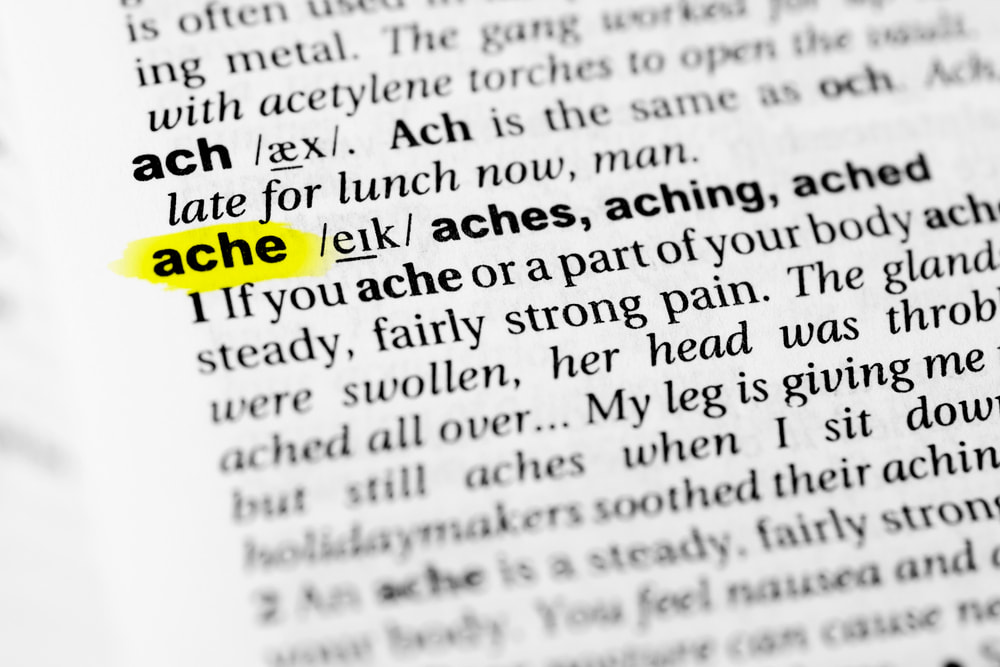 When it comes right down to it, almost every complaint involves pain. Weiner’s Pain Management (Boswell and Cole 2007, p. 35) backs up this observation: “Pain is the reason for initial contact with any physician for the vast majority of medical problems.” Looking over my clients’ chief complaints* from 2025, both acute and chronic, they almost all involve pain.
“Pain is generally described as an unpleasant sensation” (Boswell and Cole 2007, p. 35). Though undoubtedly accurate, that’s not a very helpful description. Digging around the internet, it appears there are 5 types of pain in modern medical parlance: acute, chronic, nociceptive, neuropathic and radicular; further broken down into somatic and visceral and mixed, but honestly, some of this seems to be splitting hairs. Keep reading… Acute pain lasts for minutes up to 3-6 months and is generally a result of an injury or illness and (generally) improves with healing. At some point, if that acute pain has hung around long enough (longer than 3-6 months), it will be termed chronic. This can be intermittent or constant and is often due to a long-standing health condition. However, this pain can linger even when the original complaint no longer exists. Acute and chronic would be helpful in charting a patient’s history, but they don’t actually describe any pains. There is a lot of mention of the word “nociceptive” online. I recently looked into this word when writing my Painkillers article and in that context, it makes sense; it refers to over-the-counter painkillers blocking pain by blocking nociception. If I right-click on this word on my computer, the following definition pops up: “the perception or the sensation of pain.” It seems to me that nociception is just a longer word for “pain” and, again, not a “type” of pain. Tabers (Venes 2017) uses more words to describe “nociception” : “the stimulus-response process involving the stimulation of peripheral pain-carrying nerve fibers and the transmission of impulses along peripheral nerves to the central nervous system, where the stimulus is perceived as pain.” Boswell (and Cole 2007, pp 37 and 40) talks about nociceptive pain as “a microscopic physical, chemical, or thermal event … giving good information to the body and brain that tissue is being damaged — or is about to be damaged — and that the body needs to do something about it.” With that, we’re going to do away with this word for now, too. There is another word, similar to “nociceptive” — “nociplastic.”** Nociplastic refers to pain that exists in absence of tissue or nervous system damage. It is not quite, but it is similar to what is called psychogenic** pain: “characterized by the presence of pain in the absence of objective physical pathology” or, from the right-click: “having a psychological origin or cause rather than a physical one.” Again, this term does not actually describe physical pain. Neuropathic and radicular are two more words that are, for our purposes, the same thing. Neuropathic refers to the “misfiring of wires” (Boswell and Cole 2007, p 40). “Radicular pain originates at the nerve root” (Boswell and Cole 2007, p 44) and refers to “radicle” meaning: “a structure resembling a rootlet, as a radicle of a nerve or vein” (Venes 2017). Radicular pain comes from compression or irritation of a nerve root and it typically radiates along the affected nerve. Neuropathy, however, stems from damage or dysfunction of the nerves… “any disease of the nerves” (Venes 2017). In other words, radicular pain is a type of neuropathic pain. These terms may be useful in understanding the pathophysiology of pain, but not particularly helpful when addressing pain homeopathically. Other words frequently found in regard to pain are somatic and visceral. Somatic, according to the right-click: “relating to the body, especially as distinct from the mind.” Tabers takes it a little further in its third and fourth definitions: “Pertaining to structures of the body wall, such as skeletal muscles (somatic musculature) in contrast to structures associated with the viscera, such as visceral muscles (splanchnic musculature)” and, #4: “Pertaining to sensations perceived as originating from superficial or muscular structures of the body rather than sensations seeming to come from the internal organs (the viscera).” To close this loop, visceral, according to the Oxford Dictionary app, refers to “the internal organs in the main cavities of the body, especially those in the abdomen, e.g. the intestines.” These terms are helpful in the pathophysiology, but, not so much in homeopathy — though, homeopathy does break down pain descriptors by location in the body… so maybe we’re getting a little closer. Mixed pain is pain consisting of both nociceptive and neuropathic pain. Again, not helpful for our purposes. I did stumble upon the Injury Center from the University of Michigan where allopathic pain descriptions inch nearer to homeopathic pain descriptions. This site mentions that neuropathic pain is often described as: burning, pins & needles, tingling, numbness, electric shocks/shooting, crawling (aka formication), itching and temperature intolerance. Visceral pain, they say, can be described as dull, throbbing, aching, pressure, fullness or tightness (think: angina and bowel obstruction). Now we’re getting somewhere. Pain is actually a very nuanced thing. Trying to describe pain can be very difficult. Trying to understand someone else’s description of pain is even harder and translating that into homeopathic rubrics is even more difficult, still! International Association for the Study of Pain (2020) tells us that “pain is always a personal experience that is influenced to varying degrees by biological, psychological, and social factors.” IASP defines “pain” as: “An unpleasant sensory and emotional experience associated with, or resembling that associated with, actual or potential tissue damage.” Yep, we’re getting closer to describing pain, homeopathically speaking — Homeopathy knows that everything is relative to the person. Turning to our trusty Dr. Murphy’s Repertory, I entered just the word “pain” in my Radar Opus software and it says there are 39,214 rubrics associated with that word. Homeopathic pain terminology can be confusing. Fulgurating? Never heard of it. (It means flash, like lightning.) Some terms are pretty straight forward and some seem to overlap but I will include the lot from Murphy’s “generals” section so you’ll have them all in one place. This is the beginning of a paid "Digging Deeper" article which can be viewed via subscription on my Substack or via subscription or single issues at Buymeacoffee. Julia Coyte, CHom Classically Practical homeopath #wellnessawaits * It appears that my clientele may be slightly different to most homeopathic customers. According to Witt (et al. 2005), the most common diagnoses treated in homeopathic practices in the US were: asthma, depression, otitis media and allergic rhinitis. Teut (et al. 2010) claim the most frequent diagnoses for the elderly seeking homeopathic treatment were hypertension and sleep disturbances. ** Homeopathy does not require “objective physical pathology” or “tissue or nervous system damage.” Pain is pain; it matters not from whence it stems. Reference list
Behrends, M., 2024. Types of Pain [online]. Pain Management Education at UCSF. Bodtke, S. and Ligon, K., 2016. Hospice and palliative medicine handbook : a clinical guide. Lexington, Ky: Susan Bodtke And Kathy Ligon. Boswell, M. V. and Cole, B. E., eds. 2007. Weiner’s pain management : a practical guide for clinicians. New York: Informa Healthcare. Carver, A. C. and Foley, K. M., 2016. Types of Pain [online]. Nih.gov. Collins English Dictionary -- Complete & Unabridged, 2012. Dictionary.com [online]. Dictionary.com. International Association for the Study of Pain, 2020. Terminology [online]. International Association for the Study of Pain (IASP). Jacques, E., 2025. Superficial and Deep Somatic Pain Overview [online]. Verywell Health. Lennihan, B., 2017. Homeopathy for Pain Management. Alternative and Complementary Therapies [online], 23 (5), 176–183. NIH Library of Medicine, 2023. Crushing pain (Concept Id: C0458259) - MedGen - NCBI [online]. Nih.gov. Oxford University Press, 2021. Oxford Dictionary of English. 14.1.1.47 ed. Oxford University Press accessed through mobisystems.com app. Pinnacle Pain Management, 2024. How Should I Describe My Pain to a Doctor? [online]. Pinnacle Pain Management Specialists. Radar Opus, n.d. Homeopathy Software Online | Homeopathic Repertory | RadarOpus [online]. www.radaropus.com. Raja, S. N., Carr, D. B., Cohen, M., Finnerup, N. B., Flor, H., Gibson, S., Keefe, F. J., Mogil, J. S., Ringkamp, M., Sluka, K. A., Song, X.-J., Stevens, B., Sullivan, M. D., Tutelman, P. R., Ushida, T. and Vader, K., 2020. The Revised International Association for the Study of Pain Definition of pain: concepts, challenges, and Compromises. Pain [online], 161 (9). Teut, M., Lüdtke, R., Schnabel, K., Willich, S. N. and Witt, C. M., 2010. Homeopathic treatment of elderly patients - a prospective observational study with follow-up over a two year period. BMC Geriatrics [online], 10 (1). The British Pain Society, 2020. What is pain? [online]. Britishpainsociety.org. University of Michigan, 2025. Understanding Types of Pain - Safer Prescribing Toolkit [online]. Safer Prescribing Toolkit. Venes, D., 2017. Taber’s cyclopedic medical dictionary. Kindle. Philadelphia: F.A. Davis Company. Watson, J. C., 2022. Overview of Pain [online]. Merck Manual Consumer Version. Witt, C. M., Lüdtke, R., Baur, R. and Willich, S. N., 2005. Homeopathic medical practice: Long-term results of a cohort study with 3981 patients. BMC Public Health [online], 5 (1). Yasgur, J., 2004. Yasgur’s homeopathic dictionary and holistic health reference. Greenville, Pa: Van Hoy. Yasgur, J. and Dupree, G., 2021. Glen Dupree’s Homeopathic Thesaurus. Van Hoy Publishers.  The holidays have a way of simultaneously being exhilarating and fun and overwhelming and exhausting. If you’re like me, it can be a little tricky getting your feet back underneath you after chasing yourself around while putting the house back together, making the transition from last year to this year, settling back into daily life after a few weeks of upside down land… trying to re-establish some sense of normalcy.
What can help? Some Bach Flower Essences, that’s what. Feeling a little out of control? Cherry Plum to calm the mind. Overwhelmed? Elm — it’s so handy to have the name right there in the word! Having a hard time getting back into the swing of things? Hornbeam. and, for physical and mental exhaustion… Olive. The Bach Essences are readily available (locally for me at Sprouts* and Natural Grocers); local herb stores often have them, too. However, they can be a little spendy. ($18.69 per bottle is what I’m seeing online right now — if one wanted to make a mix of all four of these remedies, that’s nearly $75!) Don’t get me wrong — if these issues are frequent visitors in your world, it’s totally worth the investment. Full kits are available and, in my never-to-be-humble opinion, are totally worth it. So, what to do when you would like to use a few Bach flowers but don’t want to break the bank? Local herb stores will often make a custom blend for you for less than the price of one bottle of a single essence. If you don’t have that available where you are, custom blends can be purchased and shipped from places like Rebecca’s Herbal Apothecary.** How do you take the Bachs? Lots of ways, actually. You can drop them directly under your tongue from the bottle; or, dab them on the thin skin/pulse points (think: inside of the wrist); or, blend them into creams or lotions … or, put 2 drops of each of your chosen essences in a bottle of water and sip throughout the day. Each sip is a friendly tap on the shoulder reminding you that all is well. Now, in addition to sipping my Bachs, I’m going to catch a little sleep and take another couple of days to settle back into myself and (hopefully) be back into full swing by next week. Julia Coyte, CHom Classically Practical homeopath #wellnessawaits *Argh. Looking online right now, it looks like Sprouts may only be carrying Bach Rescue Remedy. I hope this isn’t the case! **I have no affiliation with this company — I just love their stuff! |
Julia Coyte, CHomI am passionate about homeopathy and I love sharing this passion. Having a working knowledge of homeopathy shouldn't be kept a secret. If people have the ability to help themselves, their children and their friends when they have minor ailments, life just gets better for everyone. That is the purpose behind Ruminating on Remedies. Archives
October 2026
Categories
All
|
 RSS Feed