 I am currently on vacation but had to share this “super quickie”…
I have a brand new dentist. It took a figurative minute to find one that seemed like a good fit. I was nudged into speeding up this process of finding a new dentist because my tongue wouldn’t leave a tooth alone. I could feel a little hole in the tooth, but no pain. I assumed it was an old filling that had come loose. Nope. Turns out I chomped really hard and damaged two teeth. I was 2 minutes late to the appointment to have this filling and I was back in my car, headed home in 30 minutes. Fastest dental appointment ever for me. He filled the tooth and then he gave me another injection. I’ve never had that before. He told me he injected Traumeel* to reduce the inflammation! Works for me! The other tooth has a very small hole that doesn’t currently need filling. I told him I was working on fixing it homeopathically. He used the little tooth camera and took a picture and said we will keep an eye on the process. I look forward to returning here one day and telling you my tooth has repaired itself. That’s a big goal and I’m excited to see what can be done! 🤞 Julia Coyte, CHom Classically Practical homeopath #wellnessawaits *He did not inject the topical version of Traumeel. They make a special one for injecting. (Once upon a time, I had an acupuncturist who dipped the needles in it.)
0 Comments
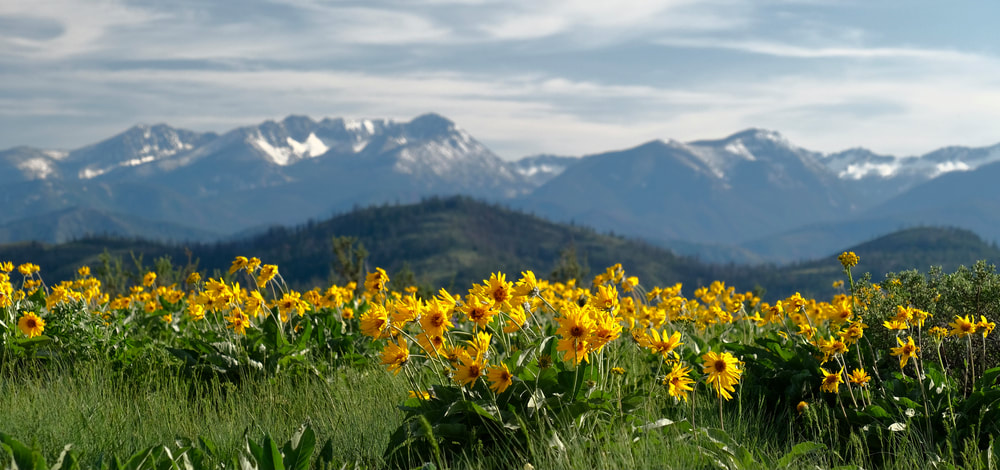 We've never really talked about it, have we? I mean, I have mentioned Arnica in more than 35 previous articles, (too many to list here, go here or here and search “Arnica” if you would like to read those, or you can keep reading and I have linked to separate articles), but I haven’t really talked about Arnica specifically. I have always just sort of assumed that everybody reading Ruminating on Remedies already had a general grasp of Arnica. Maybe not, though. With that, let’s take a look at what is considered to be the “gateway” homeopathic remedy. Before it was made into a homeopathic remedy, it was used herbally. I remember Arnica being taught to me as a plant that was in a useful place — hikers would be tired and sore after climbing in the mountains and there sits the answer to their troubles, right at their sore feet. Excerpted from Encylopedia of Herbal Medicine (Chevallier 2000, p 172): Arnica montana, also known as Leopard’s Bane, grows in the mountain woods and pastures. It has been used extensively in European folk medicine and is an effective ointment and compress for bruises, sprains and muscle pain and improves the local blood supply and speeds healing. It is anti-inflammatory and increases the rate of reabsorption of internal bleeding. Generally the plant is now taken internally only as a homeopathic dilution, principally for shock, injury and pain. If taken as a decoction or tincture… it can be toxic even at low dosage and thus is rarely used in this way. 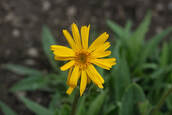 Interestingly, to me, Arnica often looks a little bedraggled in the photos… A little bent and rough around the edges and I think that is very fitting for this remedy. It looks like the Arnica plant could actually use a little bit of homeopathic Arnica itself.😄 “Due to the toxicity of the sesquiterpene lactones it contains, oral use of arnica must be avoided altogether” (Hoffman 2003, p 530). “The homeopathic preparation is entirely safe to take internally, especially when used according to homeopathic directions”(Hoffmann 2003, p 529). Let’s turn to the repertory. I have to say that repertory software makes searching all this so much easier and even more fun! (Look for an upcoming “Quickie” on software👀.) I searched for Arnica and level 4 symptoms, from Dr. Murphy:
A. L. Blackwood (2016) in A Manual of Materia Medica, Therapeutics and Pharmacology (originally published in 1906) says, “The [homeopathic] remedy is indicated following mechanical injuries, strains and wrenching of muscles, in hemorrhages from injuries, injuries of the soft parts that accompany fractures, and bruises, and ecchymosis, and in concussions of the spine and brain, and in inflammation of the skin and cellular tissues, with extreme tenderness to pressure.” Well, that sums up a lot of situations, actually. No wonder it’s the first remedy to think of following an injury. “… when the patient feels as if bruised all over, and everything upon which he lies feels too hard, compelling him to change his position on this account.” INJURIES: Now there’s a big topic… Sprains. Strains. Contusions. Fractures. Overuse injuries. Concussions. Dislocations. Guess what? Arnica would most likely be helpful in all these situations. Why? If for no other reason than they are all painful. Going back to 1855 to Dr. William Helmuth’s Surgery and Its Adaptation into Homoeopathic Practice: “Arnica is useful in all cases and ages to allay the extreme sensibility of the whole body, the general restlessness and intense pain in the seat of injury.” Let’s look again to Dr. Murphy to see where Arnica really shines —pain— using both level 3 & 4 rubrics:
BRUISING - also known as ECCHYMOSIS — is superficial bleeding under the skin or a mucous membrane; a bruise (Venes 2017). Arnica is the only level 4 remedy for skin, ecchymosis in Murphy. (Symphytum is the exception here, level 4 specific for eye injuries — black eyes — but I digress.) Bruising results when blood vessels (external or internal) are broken but the tissue surfaces remain intact (Venes 2017). As we saw above, Arnica in herbal form is known to increase the rate of reabsorption of internal bleeding and it does so also in homeopathic form. If I had a nickel for every time I have heard about an injury that looked like it was going to end up with an enormous bruise only to have disappeared to nearly nothing after taking Arnica… “Sore, lame, bruised feeling all through the body, as if beaten” (Allen). Feels as if been hit by a bus is another way of saying that. Another keynote of Arnica is they feel the bed seems too hard. Not only does the bed just seem hard, Arnica is useful for bed sores. Another injury, actually, in a strange sort of way — a localized injury, a sore, to the skin or the underlying tissue. What else to look for which may strongly indicate Arnica? They say they are fine… “nothing is wrong with me” when there is clearly something wrong with them. (rubric: Mind - IRRITABILITY, general - sends the doctor home, says he is not sick; Mind - REFUSES, general - treatment, every - very sick, in spite of being.) Massimo Mangialavori (et al. 2025) has a new book, Arnica and Similar Remedies. He takes the understanding of Arnica well beyond the gateway to homeopathy remedy for injuries. In Mangialavori’s Suggesta repertory (accessed through Radar Opus software), he shows a level 3 rubric: APATHY, INDIFFERENCE - anosognosia**, thinking that he is not ill. Back to his new book, Arnica & Similar Remedies (2025, p 4): Arnica tends to have a phobia about being sick. In fact, he is one of the most hypochondriacal remedies in the materia medica — and so he does not ‘allow’ himself to be ill… the revelation that he is susceptible is profoundly disturbing.” Prompted by Mangialavori, let’s return to Murphy and see what comes up for the mind rubrics with Arnica (again, using just levels 3 & 4):
SUMMING IT ALL UP: Jo Evans’ Asteraceae: remedies of the sunflower family (2020, p 11) gives us a nice little list of where Arnica is helpful — here are some standouts:
Arnica is without question my number one homeopathic remedy that I would not be without and now you know why. Julia Coyte, CHom Classically Practical homeopath #wellnessawaits Reference list
Allen, H. C., n.d. Keynotes and Characteristics. accessed through Radar Opus software. BLACKWOOD, A. L., 2016. A Manual of Materia Medica Theraoeutics and Pharmacology. accessed through Radar Opus software. B. Jain Publishing. Burt, W. H., 1896. Physiological Materia Medica, Containing All that is Known of the Physiological Action of Our Remedies. accessed through Radar Opus software. Chevallier, A., 2000. Natural health encyclopedia of herbal medicine. New York: Dk Pub. Inc. Evans, J., 2020. Asteraceae: remedies of the sunflower family. Harlem, NL: Emryss. Hellmuth, W. T., n.d. Surgery and Its Adaptation into Homoeopathic Practice. accessed through Radar Opus software. Hoffmann, D., 2003. Medical herbalism: The science and practice of herbal medicine. Healing Arts Press. KNERR, C., 2022. REPERTORY OF HERING’S GUIDING SYMPTOMS OF OUR MATERIA MEDICA. accessed through Radar Opus software. Mangialavori, M., n.d. Suggesta. accessed through Radar Opus software. Mangialavori, M., Heron, K., Sobraske, J. and Wood, B., 2025. Arnica & Similar Remedies. Independently Published. Murphy, R., 2006. Nature’s materia medica : 1,400 homeopathic and herbal remedies. accessed through Radar Opus software. Blackburg, Va.: Lotus Health Institute, November. Venes, D., 2017. Taber’s cyclopedic medical dictionary. Kindle. Philadelphia: F.A. Davis Company.  A Ruminating on Remedies reader made themselves known as a dentist who uses homeopathy. I asked if she would be so kind as to write a few words about how homeopathy works in her practice. (I highlighted the remedies mentioned, but other than that, here is her original email.) I started my career as a dentist in the army. I had only ever planned to do a few years in the army and then own a practice eventually. Whilst in the army a couple of my patients were using homeopathy. One of them attended with a swollen face because of an infection around his wisdom tooth. I carried out my standard practice of prescribing Metronidazole antibiotic and chlorhexidine mouthwash then to see him a few days later. He attended for his review stating that he didn't want to take the antibiotics and had instead used homeopathic gunpowder. As his face was still pretty swollen though a lot less red and he was out of pain I was very skeptical.
I was nearing the end of my army career and there was an offer of funding courses to help me reintegrate back into normal society. I thought about the gunpowder, still skeptical but realising that the use of complementary therapies and homeopathy were popular in the wider community and that maybe I should know something about health choices people were making. A dentist friend told me she had just done a course on dental homeopathy so I signed up. Within weeks I was using remedies which were working. The first one being for Acute Necrotising Ulcerative Gingivitis (Trench mouth) which is a horrible infection of the gums with destruction of the tissues, lots of green pus and a very distinctive smell of bacteria and rotting flesh. This is very common in the 18 year old trainees that I was used to looking after and I normally greeted them as they entered the practice with a prescription for Metronidazole and sent straight out again to see the pharmacist. One young soldier turned up with this condition on a Friday so the likeliness of him taking Metronidazole and avoiding alcohol for the weekend was slim. I gave him Merc Sol 30C to take over the weekend then to see him again on the Tuesday. His ulcers had healed almost completely and he had no halitosis. Wow this worked!!! I continued to study homeopathy wanting to know more (and have never stopped learning), bought a practice with my husband in Oxfordshire and now use homeopathy and other complementary therapies alongside my dentistry. Most of the time I use simple prescriptions for acute conditions such as Traumeel for taking teeth out or hygiene. Other times I can use homeopathy to support deeper problems and sometimes even improve the experience of conditions that conventional medicine struggles to help with such as burning mouth syndrome or facial pain. These conditions often cannot be cured but homeopathy can at least help make my patients comfortable even if it is just from being taken seriously. Wishing you all the best Samantha -- Dr Samantha Jugdev BSc(Hons), BDS(Brist), PGCME, FFHom(Dent) www.thirtythreedental.co.uk If you are in England and looking for a homeopathic-friendly dentist, this sounds like a good place to start! Thank you, Samantha! Julia Coyte, CHom Classically Practical homeopath #wellnessawaits  I suppose I should be more specific… some dentists are on it!
A few years ago, I was having a pretty good-sized dental procedure and I was a little worked up about it. My dentist at the time (she sold her practice😩) offered Reiki* during the procedure. I had never experienced Reiki before, but I went for it. I have to say that it was nothing short of amazing. I returned home and my husband thought I had been drugged in some way… that’s how relaxed and unbothered I was from this procedure with the adjunct of Reiki. Fast forward to this year and my husband needed a couple of big dental procedures. The first dentist, a couple of months ago, included Arnica in his after-care instructions (as well as some good, sound nutrition advice). This week, another procedure (and a different dentist). I picked up the box of the mouth rinse to see what horrors he had been given and… the active ingredients were all homeopathic! 🎉 Turns out this company** makes a few dental products and they all appear to be homeopathic… and, all made in the USA, too! So, what’s in this oral rinse? I have never heard of the first remedy listed: Azadirachta indica, but, a quick look in my Radar Opus software tells us it is Margosa Bark, or, Neem. I know Neem for its valuableness in dealing with bug bites but apperently it’s good for teeth, too. The twigs can even be chewed on to improve dental hygiene. Homeopathically, Azadirachta indica would be indicated when there is a bitter or putrid taste in the mouth, a burning tongue and salty saliva. I am starting to see how this could be very helpful following big dental procedures. I have written about the benefits of Calendula and dentistry previously (see: The Eiffel Tower in My Mouth; A Calendula Quickie… for inner bites (and bites!); Brace Face.) Calendula and wound healing go hand in hand. Echinacea purpurea is often included in tooth and gum tonics due to its antimicrobial properties. It has a “well merited reputation” for suppurative conditions and helps with pain (Dewey 2003). Plantago major has been used in its herbal form for pretty much ever. The Herbal of Dodoens from 1558 suggests the juice of the leaves or roots of Plantago for toothache and bleeding gums. (That’s a pretty long documented history of use!) Dr. Robin Murphy lists it in his repertory for toothaches, sensitive teeth and for dry sockets. I am so excited to see these marvelous homeopathic remedies moving into the mainstream. None of the dentists mentioned are “holistic” or alternative practitioners. All these patients are being introduced to homeopathy without even knowing it. I just hope that some (all!) of them take a peek at the ingredient list (or, even the little “homeopathic” word printed on the top of the packaging) and make the connection and have their curiosity stirred up a little bit. 🤞 I can’t wait until the day that homeopathy comes into its own. It’s going to be so exciting!! Thank you to those mainstream dentists out there doing the early leg work of sharing homeopathy! Julia Coyte, CHom Classically Practical homeopath #wellnessawaits * “Reiki is a Japanese technique for stress reduction and relaxation that also promotes healing.… The word Reiki is made of two Japanese words — Rei which means ‘God’s Wisdom or the Higher Power’ and Ki which is ‘life force energy.’… A treatment feels like a wonderful glowing radiance that flows through and around you.” Something wonderful was clearly flowing through me after that treatment! ** I have no affiliation with this company. Reference list Dewey, W. A., 2003. Practical Homoeopathic Therapeutics. accessed through Radar Opus software. B Jain Pub Pvt Limited. Murphy, R., n.d. Homeopathic Remedy Guide. accessed through Radar Opus.  I probably should have had braces “back in the day” but after watching 2 of my kids suffer these things, I’m glad I didn’t. Their mouth issues are not cosmetic, though, or we wouldn’t have gone this route. Thing One suffered terrible headaches and ringing in the ear that we suspect was a result of the braces. We swapped orthodontists for Thing Three and this ortho has a different approach — so far, so good. Regardless of the reason someone has a mouth full of metal, the results can understandably be quite uncomfortable. Sore, aching mouth: Like most dental work, homeopathic Arnica is a good bet for sore, aching muscles from having to hold your jaw open for the work to be done and for the actual moving of the teeth and also for any bruising that may occur. A dose of Arnica prior to the appointment and as soon as practicable following the appointment should help. If the pain persists, and the Arnica is helping, keep taking if and when the pain returns. If Arnica doesn’t help, try Ruta. Cuts: those painful little cuts from the wires are best met with Staphysagria or Calendula. Homeopathic Staphysagria has a good history for “cutting” pains as well as pains caused by actual cuts. Additionally, Staphysagria is a terrific remedy for humiliation and shame — perhaps as a result of name calling. I’m not sure kids today face the ridicule of old for having a mouth full of metal and that’s a good thing. But, if they do suffer some mental and emotional problems as a result of having braces, that may make Staphysagria an even better choice. Calendula has the reputation of being “the great herbal anti-septic” (see studies below) and is very useful for cuts and lacerations, especially those that hurt more than they “should” and it is very helpful in removing the local pain and suffering. Calendula in its herbal form can be very helpful for mouth sores, too. Here are couple of suggestions: Healthy Gums Anti-gingivitis Rinse is made with Calendula and other ingredients and is very soothing for a sore mouth**. Celebration Herbals** makes a nice tea whose only ingredient is Calendula officinalis. Toothache: Homeopathic Chamomilla is one of the best remedies for teething children. Think of the pain of toddlers cutting teeth and the accompanying grumpiness and irritability. Teenagers (and their family members!) suffering from the pain (and grumpiness!) of braces, especially right after an adjustment will appreciate this remedy. Anxiety before appointments: Homeopathic Gelsemium has a longstanding reputation to assist in anticipatory anxiety. A dose of Gelsemium 6c prior to the appointment should help. Nerve pain: homeopathic Hypericum for shooting/nerve pain following adjustments or during the use of palatal expanders. Keep on smilin’ and if you need more tailored assistance for the pain of braces, contact me here. Julia Coyte, CHom Classically Practical homeopath #wellnessawaits ** I have no affiliation with these companies, I just like their product. STUDIES related to this article:
Calendula: Jahdi, F., Khabbaz, A. H., Kashian, M., Taghizadeh, M., and Haghani, H., 2018. The impact of calendula ointment on cesarean wound healing: A randomized controlled clinical trial. Journal of Family Medicine and Primary Care [online], 7 (5), 893–897. Khairnar, M., Pawar, B., Marawar, P., and Mani, A., 2013. Evaluation of Calendula officinalis as an anti-plaque and anti-gingivitis agent. Journal of Indian Society of Periodontology, 17 (6), 741. Nicolaus, C., Junghanns, S., Hartmann, A., Murillo, R., Ganzera, M., and Merfort, I., 2017. In vitro studies to evaluate the wound healing properties of Calendula officinalis extracts. Journal of Ethnopharmacology [online], 196, 94–103. Parente, L. M. L., Lino Júnior, R. de S., Tresvenzol, L. M. F., Vinaud, M. C., de Paula, J. R., and Paulo, N. M., 2012. Wound Healing and Anti-Inflammatory Effect in Animal Models of Calendula officinalis L. Growing in Brazil [online]. Evidence-Based Complementary and Alternative Medicine. Preethi, K. C. and Kuttan, R., 2009. Wound healing activity of flower extract of Calendula officinalis. Journal of Basic and Clinical Physiology and Pharmacology, 20 (1). Gelsemium: Bellavite, P., Bonafini, C., and Marzotto, M., 2018. Experimental neuropharmacology of Gelsemium sempervirens: Recent advances and debated issues. Journal of Ayurveda and Integrative Medicine [online], 9 (1), 69–74. Bellavite, P., Magnani, P., Zanolin, E., and Conforti, A., 2011. Homeopathic Doses of Gelsemium sempervirens Improve the Behavior of Mice in Response to Novel Environments. Evidence-Based Complementary and Alternative Medicine: eCAM [online], 2011, 362517. Magnani, P., Conforti, A., Zanolin, E., Marzotto, M., and Bellavite, P., 2010. Dose-effect study of Gelsemium sempervirens in high dilutions on anxiety-related responses in mice. Psychopharmacology [online], 210 (4), 533–545. Marzotto, M., Olioso, D., Brizzi, M., Tononi, P., Cristofoletti, M., and Bellavite, P., 2014. Extreme sensitivity of gene expression in human SH-SY5Y neurocytes to ultra-low doses of Gelsemium sempervirens. BMC complementary and alternative medicine [online], 14, 104. Olioso, D., Marzotto, M., Moratti, E., Brizzi, M., and Bellavite, P., 2014. Effects of Gelsemium sempervirens L. on pathway-focused gene expression profiling in neuronal cells. Journal of Ethnopharmacology [online], 153 (2), 535–539. Venard, C., Boujedaini, N., Mensah-Nyagan, A. G., and Patte-Mensah, C., 2011. Comparative Analysis of Gelsemine and Gelsemium sempervirens Activity on Neurosteroid Allopregnanolone Formation in the Spinal Cord and Limbic System. Evidence-Based Complementary and Alternative Medicine: eCAM [online], 2011, 407617. |
Julia Coyte, CHomI am passionate about homeopathy and I love sharing this passion. Having a working knowledge of homeopathy shouldn't be kept a secret. If people have the ability to help themselves, their children and their friends when they have minor ailments, life just gets better for everyone. That is the purpose behind Ruminating on Remedies. Archives
October 2026
Categories
All
|
 RSS Feed