 We are definitely in the dog days of summer here in the desert southwest. It is monsoon season but the rain is not landing on us. We do have a couple of rooms in the house that have a little air conditioner, the rest of the house is cooled with a swamp cooler. For the most part, I definitely prefer the swamp over refrigerated air — the windows need to be open for them to work properly (we still hear the birds and the the little fountain!) and we’re not hermetically sealed inside and they add some much needed moisture into our desert house. For those unfamiliar, a swamp cooler is an evaporative cooler, meaning it only works during low humidity. How high does the humidity need to be for the swamp cooler to turn the house swampy? Not very — once we go above 30% humidity, it starts to feel fruitless. See here for more information. As I write this, the swamp has cooled our porch down to 80 (from the 99 outside), but with 56% humidity I have the unusual (for us) experience of a water glass covered in condensation. These hot and (relatively) humid days, remind me of the movie 12 Angry Men. Have you seen it? The original film with Henry Fonda (1957)? Fantastic movie. If you haven’t seen it, put it on the list — again, the original black and white movie. (You’ll get over it not being in color soon enough. You can do it.) 12 Angry Men is about the 12 jurors stuck in a jury room where one juror holds out against the others — and, of course they have to confront their own biases and demons while enduring a hot, sweaty environment. There’s so much to say about this movie — swimming against the current… doing what is right even though you’re alone and it’s difficult… bias, prejudice and yes, anger. I’m not the only homeopath who watches a movie and wonders what homeopathic remedy may benefit each character. (See also, Fictional Wounds for a previous take.) I wish I had taken notes during the movie to flesh out the characters and their anger. In hindsight, it was really only 11 angry men and 1 who was determined, rather than angry. With these memories of this movie popping into my head with these hot and sweaty days, I thought I would take a look at different kinds of anger. Well, sort of — more of how anger is expressed or what sets it off. Let’s now look at our 12 angry men. It has been a couple of years since I last watched it and I didn’t take notes, so I did ask Grok for a review of the characters to refresh my memory (turns out I did pretty well without any notes — the movie must have made a bigger impression on me than I realized!)
Let’s ruminate on some anger remedies (and, rubrics)! Are there other rubrics? Absolutely! It’s a movie, I went very surface level, here! Note: I used Murphy (via RadarOpus) unless otherwise noted and I kept it to just two possible remedies for each man — just enough to get a broad overview of the anger aspect of each remedy. For the man who had to be right (#1) I would consider Platinum metallicum or Lycopodium.
#2, the man who was angry about missing a ball game, Ignatia or Gelsemium.
Man #4 is an angry bigot. The top 2 remedies are Causticum and Lycopodium.
Our 5th man is timid and doesn’t take kindly to being talked over. Here comes Lycopodium again, as well as Staphysagria.
Juror #6 is the man who is angry about being looked down upon due to his upbringing. Once again, we are comparing between Staphysagria and Lycopodium.
Angry man #7 is the one who would get angry when he felt the older jurors were not being shown the respect he thought they deserved. Colocynthis and Causticum.
#8 (should probably be #1 since he was the foreman) is frustrated by the lack of order — he worked hard to keep thing running properly. Aurum metallicum and Calcarea carbonica are two remedies which take their responsibilities seriously.
The 9th man was indignant about how he perceived others’ prejudices clouding their judgement. The two remedies I would think about for this man are Nux vomica and Ignatia.
Juror #10 is the man who was righteously angry that others were not showing the proper respect to the justice system. This was a harder one to figure out, but I came down to Kali carb and Cuprum metallicum.
#11 is a man who was irritated at having to be inconvenienced. This one, too, has so many underlying possibilities, it’s hard to get a handle on it, but I am going to make a couple of assumptions in my rubric choices. The main remedy that comes up is Nux vomica but further down the way were two rubrics that led me to an interesting choice of remedy that I would not have thought about: Ipecac.
12 Angry Men nicely illustrates the individualization of homeopathy — there is not one remedy that would address the various expressions of anger in all these men. Their past experiences and the way their anger shows up and what they do with that anger — these are all very important considerations in finding a suitable homeopathic remedy. This article has been rolling around in my head since I last saw this movie a couple of years ago and I now know why it took so long to see the light of day — it’s actually a really big topic. (Look for the Digging Deeper into Angry Remedies soon.) It turns out, though, that I was more than happy to while away some of these really hot days sitting in front of my fan, listening to my little fountain outside the open window and finally putting some possible homeopathic remedies to these characters. Julia Coyte, CHom Classically Practical homeopath #wellnessawaits Reference listArndt, H. E., 1904. First Lessons in the Symptomatology of Leading Homoeopathic Remedies. accessed through Radar Opus software.
Buck, H., 1895. The Outlines of Materia Medica & Clinical Dictionary. accessed through Radar Opus software. B. Jain Publishers. Clarke, J. H., 1902. A Dictionary of Practical Materia Medica. accessed through Radar Opus software. Cowperthwaite, A. C., 1909. A Text-book of Materia Medica and Therapeutics, Characteristic, Analytical and Comparative. accessed through Radar Opus software. Farrington, H., 1935. Homeopathy and homeopathic prescribing : A study course for graduate physician. Master, F., 2017. Clinical observations of children’s remedies. New Delhi, India: B. Jain Publishers (P) Ltd. Master, F. J., 2003. Suppressed staphysagria. B. Jain Publishers. Murphy, R., 2003. Homeopathic medical repertory : a modern alphabetical repertory. Blacksburg, Va.: H.A.N.A. Press. New England Journal of Homeopathy, 1995, 4 (2). accessed via Radar Opus software New England Journal of Homeopathy, 1996, 5 (2). accessed via Radar Opus software Shore, J., 1990. Seminar Glasgow [Scotland]. Presented at the Seminar Glasgow. Accessed through Radar Opus software Vermeulen, F., 2004. Prisma : the arcana of materia medica illuminated : similars and parallels between substance and remedy. accessed through Radar Opus software. Haarlem, Netherlands: Emryss.
0 Comments
 It doesn’t matter what you call it: Studying. Revising. Cramming. “It” is overloading your brain with information. One may be forgiven for thinking school is out for summer, but that is not the case for everyone. One person reached out the other day, saying they and their friends are sharing some problems:
Let’s look at these problematic symptoms. What is causing the inability to focus? Is it distraction? Is it burnout? (These people did just finish law school. I should think the desire to keep at the books right as summer hits could be pretty difficult!) What is getting in the way of feeling well-rested? Is there insomnia? Is all the legalese swirling through your mind when you’re trying to sleep? Is the candle being burned at both ends? Are nutrition needs being met? What is the stress that is being managed? I’ll go in reverse order this time — are nutrition needs being met? This is so hugely important! Is the stress a direct result of not getting sufficient sleep? Is there a hyper-focus on learning the law, thereby causing a lapse in attention to the rest of the details of your life resulting in new levels of stress? I’m going to go out on a limb and say it’s a little bit of everything. Let’s think about this in terms of the repertory. Another way of saying needing to stay focused is being distracted. Dr. Murphy ranks Phosphorus at the top of this list (in terms of remedies which are readily available). I really hate to do this to you when you are already wiped out from studying, but you’ll have to read through these short descriptions to find the best-suited remedy to your specific symptoms! Phosphorus Carroll Dunham’s Lectures on Materia Medica (1878): Phosphorus - Sensorium - Weakness of memory, indisposition (moderate) to exertion; difficulty in collecting and concentrating thoughts; weak feeling in the head, aggravated by thinking and by loud noise, music or hard stepping; these things produce throbbing in the head, a feeling of confusion, dullness and distraction, but especially of weakness in the head. Frans Vermeulen (2015) says it a little more simply: Phosphorus is “easily distracted.” Clarke (1902): “Headache as if too full of blood from intense study.” Douglass (1903): Cannot study nor keep his mind on any particular subject long at a time. Disinclination to study or converse. Gibson (1987): “Is full of fears… of study (owing to mental exhaustion)…” RELEVANT RUBRICS:
Phosphoric acid Douglas Borland says in Digestive Drugs (1940): The mental picture is that of those who are just dead tired. They feel generally indefinite, do not want to talk, cannot concentrate, their thoughts wander away from the subject. Any mental effort is liable to produce an acute headache with a sensation of extreme pressure on the top of the head. On any effort at all these patients are liable to feel giddy. Gibson (1987) adds: The mind is confused, and any effort to concentrate brings on a dizzy feeling. There is great sensitivity, notably to music and also to odours. The subject is easily startled. May complain of various odd sensations such as widespread formication*; may be afflicted with homesickness. Leeser (1935) goes a little further: Poor comprehension and concentration, poor memory, indifference, dullness, inability to perform mental work, lack of ideas, moreover, depression, apathy, dissatisfaction with one’s self, aversion to speaking, in particular homesickness, indicate the psychic state in phosphoric acid. But nervous excitation with sleeplessness and sensitivity to all noises is also observed… a brief sleep may often remove the fatigue and be sufficient to refresh…
Picric acid Blackwood (1906) says: This remedy is indicated in restoring the wasted and worn-out systems of those who are suffering from the effects of close application to study or business and become anaemic and neurasthenic** and asthenic**. Clarke (1902): a patient of mine, previously a good sleeper, to lie awake a long time at nights, exhaustion after the day's studies, fatigue even from a short walk, twitchings of muscles when asleep or awake; hysterical state, loss of will power; constant headache, irregular menses. Any attempt to study = burning along spine; with great weakness of back and legs; soreness of muscles and joints. agg. By study or slightest mental exertion. Inability to keep eyes open when studying. Gibson (1987): The chief characteristic is extreme muscular weakness, accompanied by a compelling desire to lie down and a complete absence of anxiety. Is utterly exhausted; can neither think nor study. Darting pains may be felt in various sites, possibly involving bones.
Then, of course, we have our good old Nux vomica, and, I think this would be my first stop. We know Nux is helpful when things are too much: too much studying; too much not enough sleep; too much snacking while studying. Farrington (1955): "Lesson twenty-five - Nux vomica - General characteristics - Ailments from ANGER; grief; EXCESSIVE MENTAL LABOR; SEDENTARY HABITS; LOSS OF SLEEP; DEBAUCHERY; SEXUAL EXCESSES; ALCOHOL; COFFEE; NARCOTICS; TOBACCO; GETTING CHILLED; suppression of sweat or HAEMORRHOIDS. HYPERSENSITIVENESS; IRRITABILITY; …IMPATIENCE; MALICIOUSNESS; IMPETUOUSNESS; hurry; sadness; …weeping; timidity; dullness; CONFUSION; DIFFICULT CONCENTRATION; weakness of memory; INDOLENCE; IMBECILITY; delirium; INSANITY; MANIA; HYSTERIA; INCREASED SEXUAL DESIRE; debility; trembling." Those are some strong words in there. Suffice it to say, that would be an extreme picture of a Nux vomica state. Gunavante (1998) always sums things up succinctly: “Concentration difficult while studying.” Now, let’s look at a few applicable rubrics for Nux vomica:
SUMMING UP THE REMEDIES (I know your attention span is already shot, so I’ll keep this brief): Phosphorus may be a good place to start if:
Phosphoric acid may be a good place to start if:
Picric acid may be a good place to start if:
Nux vomica may be a good place to start if:
Are these the only remedies? Nope. Far from it. But, I know you’re tired, so I tried to keep it simple. Good luck on your exams! Julia Coyte, CHom Classically Practical homeopath #wellnessawaits * Formication: the feeling that bugs are crawling on your skin **Neurasthenia: an ill-defined medical condition characterized by lassitude, fatigue, headache, and irritability, associated chiefly with emotional disturbance (Oxford University Press 2021). **Ashtenia: abnormal physical weakness or lack of energy (Oxford University Press 2021). Reference list
Blackwood, A. L., 1906. A Manual of Materia Medica, Therapeutics and Pharmacology. accessed through Radar Opus software. Boericke & Tafel. Borland, D., 1940. Digestive Drugs. accessed through Radar Opus software. Choudhuri, N. M., 1916. A study on materia medica and repertory. accessed through Radar Opus software. New Delhi: B. Jain. Clarke, J. H., 1902. A Dictionary of Practical Materia Medica. accessed through Radar Opus software. Douglass, M. E., 1903. Pearls of Homoeopathy. accessed through Radar Opus software. Farrington, H., 1955. Homeopathy and homeopathic prescribing : a study course for graduate physician. accessed through Radar Opus software. New Delhi: B. Jain. Gibson, D. M., 1987. Studies of homoeopathic remedies. accessed through Radar Opus software. Kandern, Germany: Narayana Publishers. Gunavante, S. M., 1998. The ‘genius’ of Homoeopathic Remedies. accessed through Radar Opus software. Leeser, O., 1935. Textbook of homeopathic materia medica : inorganic medicinal substances. accessed through Radar Opus software. New Delhi: Jain. Oxford University Press, 2021. Oxford Dictionary of English. 14.1.1.47 ed. Oxford University Press accessed through mobisystems.com app. Vermeulen, F., 2015. Concordant reference : complete classic materia medica : 1284 remedies. accessed through Radar Opus software. Glasgow: Saltire Books.  Recently, I posted To repeat, or not to repeat? Acute version. I gave many examples of “classical”* homeopaths recommending the rather frequent repetition of the remedies for acute cases. If classical homeopaths are in agreement it’s OK to repeat remedies acutely, why do a lot of classical homeopaths think it’s not OK to repeat remedies when addressing chronic issues? Once again — keeping the individual as the main focus is the Let’s recap from last week:
When we get to chronic treatment, these guidelines are often set to the side… pushed away… locked up… verboten. Small Doses, Big Results by Karl Robinson, M.D. (2014, p xv) begins his introduction thusly: "There is only one medicine, holistic or otherwise, that treats mind and body at the same time with only one medicine and does so with one dose repeated infrequently." Lisa Strbac (2024, p 22) explains the classical thinking quite succinctly in The Trailblazer’s Insight into Homeopathy: "‘I felt so good on my remedy; why can’t I keep taking it?’ Homeopathy follows the principle of the minimum dose — using the smallest amount of remedy needed to stimulate the body’s healing response. Repeated doses of a well-matched remedy, especially when not needed, can disrupt the healing process with a risk that the individual may prove the remedy. Once improvement is noted, it’s best to stop taking the remedy and only repeat if symptoms return." Dr. Lockie (1993) adds: "In chronic conditions, 6c remedies are usually taken 3 times a day for up to 14 days, and 30c remedies every 12 hours for a few days.” “for a few days”… hmmm I have noticed classical homeopaths actually often repeat doses, especially at the beginning of treatment, even when they otherwise do not recommend repeating doses. I frequently hear or read of classical homeopaths opening a case with a “split dose” (another name for a single repeated dose, e.g., take a dose at night and repeat it the following morning); or, they may repeat a dose for 3 to 5 days in a row, right off the bat (as above), and then stop and see what happens. Aren’t they risking disrupting the healing process? I could spend hours listing all of Hahnemann’s aphorisms and Dr. James Tyler Kent’s lecture points and digging through all my books, but I’m not going to do that. I am going to ignore them when it comes to whether or not it is OK to repeat dry remedies. What?! You’re going to ignore the masters?! Yes. Instead, I am going to turn to Dr. Francisco Xavier Eizayaga** (1991, p 211) who decided to test these theories: "This subject has always worried us. After about eighteen years of collecting a rich experience with many thousands of patients, we decided to put some order to the matter. We have usually followed certain traditional rules according to the powerful influence Kent exercised with instructions stated in his Homoeopathic Philosophy [first published in 1900]. In the chronic cases we employed only one dose followed by placebo… We had always started with a 200c or MC potency and we waited for the results. The great majority of our patients suffered the initial homeopathic aggravation followed by the different contingencies described by Kent in his Lecture XXXV.…" We disregard the position taken by Hahnemann and Kent concerning the dangers of repeating doses because they never justified their reasons for this position by performing experiments, collecting statistical data, or mentioning clinical experiences. "This question intrigued us for a very long time as certain clinical experiences of ours seemed to deny this presumed truth. After a lot of thought, we decided that the only acceptable way to solve this problem was the objective, strict, clinical experimentation, leaving all theoretical speculation aside… We thus decided to experiment on ill individuals under homeopathic treatment, not with healthy individuals as Hahnemann required for his pathogenesis." Cutting to the important bit for this article [emphasis from original text, pp 214-218]: "The second point was whether the administration of identical (‘unchanged’ according to Hahnemann’s terminology) doses which were repeated every day during weeks and months could cause the damage announced by Hahnemann and Kent.… We carried out strict experimentations on more than a thousand patients during more than three years.… Two hundred and fifty (250) cases treated with the method of potency repeated in globules.… - Therapeutic result: high efficacy in all cases studied. Without appreciable differences to the Plus Method,*** but with results very superior to those obtained with the unique dose followed by placebos. We do not think we are cheating ourselves if we affirm that we have obtained the highest satisfactions of our life as physicians by employing this simple, positive method. We do not ignore that these conclusions will cause surprise and will even be resisted by many traditional homeopaths who blindly believe in Kent’s and in some of Hahnemann’s statements. … Instead, his opposition to the method of repeated potency is seemingly not confirmed by experimental or clinical facts.…" So, what’s the upshot? Dose repetition by means of globules does not bring on the inconveniences stated by Hahnemann in paragraph 247; on the contrary, there are many patients who take high potencies† for months and even years without showing the least bother. (p. 218) "-Some patients only feel well while they are having the remedy, not while they are having the placebo.… -There is no difference between the homoeopathic aggravation due to a unique dose or due to repeated doses, even when taking a remedy during the reaction. -The late aggravation of which Hahnemann speaks takes place in 4% of cases, some of them susceptible to being interpreted in another way, and, in any case, it never is anything more than a temporary bother with no other pathological significance.… When an individual has daily and repeated doses, we are referring to a chronic case, only one of those doses will modify that susceptibility, by either aggravating first and then causing recovery, or causing recovery directly…. The proof of this is that the patient’s response to the therapeutic action is the same one with a unique dose as with repeated ones…." Many colleagues fear that repetition will bring on an added or late pathogenesis, As a reminder, I was “raised” on the Banerji Protocols which repeat doses often, so, to me, this was normal and “right.” Then, I attended classical homeopathic training which told me repeating doses was very bad. I was left a little perplexed for a few years. Repeating doses was working for myself and it was working for my clients. What was I missing? Then I read Dr. Eizayaga and it turns out I wasn’t missing anything! The research conducted by Dr. Eizayaga was enough for me to put any hesitation I had been harboring about repeating dry doses away for good. Phew! So, what are we talking about in terms of repeating doses for chronic situations? #1 — the individual is the most important piece of this decision making process. I can’t stress this enough.
Now, let’s do a little comparison between “classical” and “practical” dosing. Most of the books written for home users list primarily acute conditions, so I turned to Hemorrhoids which is often a chronic condition for many people. Drs. Jonas & Jacobs (1998, p 222): "For acute†† hemorrhoidal problems, take the remedy twice daily in the 30c potency or 4 times a day in the 12x. Stop the remedy as soon as improvement occurs, or after two days if it is not giving relief." [They recommend one of 5 remedies: Aesculus, Sulphur, Nux vomica, Nitric acid or Hamamelis.] Dr. Andrew Lockie (1993, p 258) recommends the same selection of remedies, plus, Aloe, Collinsonia, Pulsatilla, Ammonium carb or Causticum “to be taken 4 times daily for up to 5 days.” The Banerjis (2013), on the other hand, recommend for hemorrhoids in their first line of treatment:
Interestingly, in this instance, we see a similar repetition of remedies between classical and practical methods††. So, to repeat or not repeat? Is it even still a question? Julia Coyte, CHom Classically Practical homeopath #wellnessawaits *For this article, “classical” refers to homeopaths using one remedy at a time; “Practical” refers to homeopaths who use multiple remedies at one time. **If you can find this book, buy this book… You won’t be disappointed. ***Plus Method, according to Eizayaga (1991, p 213): "…if the succeeding dose is changed slightly every time, namely potentized somewhat higher then the vital principle may be altered without difficulty by the same medicine (the sensation of natural disease diminishing) and thus the cure brought nearer.” †Eizayaga does not clarify what he means by “high potency.” ††To be accurate, the “classical” recommendations are not necessarily referring to chronic hemorrhoids, but let’s be real — hemorrhoid pain is hemorrhoid pain! Reference list
Banerji, P. and Banerji, P., 2013. The Banerji protocols : a new method of treatment with homeopathic medicines. India: Pratip Banerji. Eizayaga, F. X., 1991. Treatise on Homoeopathic Medicine. Estilos Graficos S.A. Jonas, W. B. and Jacobs, J., 1998. Healing with homeopathy : the doctor’s guide. New York, Ny: Warner Books. Lockie, A., 1993. The family guide to homeopathy : the safe form of medicine for the future. New York: Simon & Schuster. Robinson, K., 2014. Small doses big results : how homeopathic medicine offers hope in chronic disease. Strbac, L., 2024. The Trailblazer’s Insight into Homeopathy.  I’m traveling this week and I had the great pleasure of experiencing an exciting storm taking place on a river (not the river pictured below). Watching all the boats racing to cover with thunder all around and then the lightning strikes were close — Boom! Boom! Boom! I thought for sure something had been struck very close and expected to smell smoke and hear the fire engines but fortunately, nothing like that happened. Red Cross tells us that “lightning can ‘flash’ over a person’s body or it can travel through blood vessels and nerves to reach the ground. The electrical energy can cause burn injuries and cardiac arrest. The force of throwing the person can lead to traumatic injuries as well.” I had long been under the impression that if someone has been struck by lightning that one should not touch them lest they, too, would be affected by the electricity, but apparently that is not the case. Red Cross tells us that it is safe to give first aid immediately. This article goes on to say that showering, cell phones and cordless phones are safe to use but not if they are connected to a charger via an outlet and that “it’s best to not use a corded phone during a lightning storm.” The National Weather Service has a 34-page downloadable guide” Dr. Lightning’s Guide to Lightning and Thunder: Victims which is full of interesting factoids, like:
What to do if someone has been struck by lightning? For a start… Call 911 and start CPR, if necessary. Check for spinal injuries and burns. Check the eyes and ears. Keep the person calm. See here for more details. How to protect yourself? This same site says if the time between seeing a flash of lightning and hearing the thunder is less than 30 seconds, take shelter. It also says that if your hairs are standing on end or you see blue halos around objects or hear crackling in the air — a strike is imminent! (Yikes! Is there time to get to shelter?!) If you can’t get to shelter (Jones 2022):
Guess what? Some homeopathy may be useful here, too. I remember learning from a Robin Murphy lecture years ago that Phosphorus is the remedy to turn to if someone has been struck by lightning*. It is one of only 8 remedies in the rubric: Lightning strike, ailments from. Phosphorus is a fearful remedy in general, and it is also specifically for the fear of lightning. Another rubric is loss of vision after a lightning strike. (I will say this rubric is not clear as to whether this is being struck by lightning or watching a lightning strike.🤔 Looking further, some rubrics state: blindness after lightning stroke. Venice.ai* says that “strike” and “stroke” are often used interchangeably but says it can be that the “strike” refers to the event or action of lightning hitting a particular object or location and a “stroke” describes the actual discharge of electricity itself.) Another remedy to consider is Nux vomica. If it appears the person has died but actually is still alive (phew!) as well as asphyxia (oxygen deprivation) after lightning. Vertigo from lightning: Crotalus horridus. It doesn’t mention being struck by lightning, so I’m going to go with watching the lightning caused the vertigo. Note: Crot-h is one of the 8 listed remedies for ailments from lightning strikes. An injury is an injury, so don’t forget Arnica to help with any shock as well as pains. Seek (good!) shelter if lightning is near by and don’t forget to take a little kit of remedies with you on your adventures! Julia Coyte, CHom Classically Practical homeopath #wellnessawaits *As I recall, Dr. Murphy also talked about covering the lightning strike victim in dirt to help discharge the electricity. I can’t be certain because it was years ago and it was an audio lecture. I do know that he scoured all the old books and that’s where a lot of his information originated. I asked Venice.ai** this question and it said that “while covering a victim with earth is not a common practice, the underlying principle of grounding is sound. However, it’s important to prioritize standard first aid procedures and seek medical attention as quickly as possible.” I share this for whatever it’s worth. **I have no affiliation with this company. I have just started using it because it has given me more accurate information than others I have tried (so far) and it says it keeps your stuff private. Reference list
American Red Cross, 2024. Red Cross Training & Certification, and Store [online]. Red Cross. Jensenius, J., n.d. National Weather Service NOAA Dr. Lightning’s Guide To Lightning and Thunder [online]. Jones, C., 2022. First Aid for Lightning Strike [online]. Firstaidtrainingcooperative.co.uk. Venice.ai, 2025. Venice | Private and Uncensored AI [online]. Venice AI.  “Wellness Box” image created by AI, with my help. Everything else was done by lil’ old me. Do you have a homeopathy kit yet?
If not, why not? It doesn’t take anything fancy. Any old box or bag will do. You could purchase a kit, ready to go. (See here and here for some ideas.) Or, you could make your own kit by purchasing remedies as you need them. Start with one. Add another couple and put a rubber band around them to keep them together. Add a few more and put them in a little ziplock bag. Add a few more and put them in a shoebox. Once you have them, you are then good to go. As long as you keep them safe and together, then you have your kit. I could give you a list of suggested remedies. Would that help? (Almost all of these Ruminating on Remedies articles are written with common, easily sourced remedies in mind. Read through and find a few remedies that might serve you and your family well. It’s actually one of the hardest things to do — narrowing down to just 10, but here goes! Top 10 — in no particular order: 1. Arnica
Two people have independently spoken to me about their homeopathic kits in the last two weeks. The first one purchased a Narayani kit and there is no other way to say it — she is over the moon with it. (She didn’t purchase the little one mentioned in the link above, she went for the whole kit and kaboodle!) The second person, just this morning told me how much she loved her little kit of 50 remedies. She said she wants to carry it around with her everywhere. The other day her son was feeling a little off — Nux took care of that. She slammed her finger tip in a drawer and Arnica and Hypericum took care of that. Done. Easy. Return the remedies to where they belong and your kit is once more ready to go for the next thing that comes along. What are you waiting for?!? Julia Coyte, CHom Classically Practical homeopath #wellnessawaits  a quick look at what I affectionately call "rhoids" They are very common. 1 in 20 Americans and almost half of people older than 50 have them (Fox et al. 2014). Sometimes they are embarrassing to talk about. There’s no such thing as an embarrassing topic in my world. This stuff is important and needs to be talked about!! They are sometimes painful. They are objectively a pain in the rear! I’m talking about hemorrhoids, also known as piles, which “are tortuous masses of dilated and inflamed veins situated in the ano-rectal area” (Rahmathullah 2003). These can be inside the rectum (internal) or outside (external), or, if you’re really unlucky, the internal hemorrhoids can prolapse and can actually then be on the outside. They can bleed. They can become irritated. They can be irritating. They can be painful. They can burst. These veins are at risk of becoming thrombosed if a blood clot forms inside the hemorrhoid. I have been told that it is at this point that the bearer of such piles doesn’t care who is in the operating room when these get addressed! How does this little pile of goodies arrive in the nether regions? I’m glad you asked… Apparently, “everyone has them, the pillow-like clusters of veins that lie just beneath the mucous membranes lining the lowest part of the rectum and the anus” (Harvard Health Publishing 2019). The problematic part shows up if these veins get enlarged. How do they get enlarged? Chronic constipation and straining at toilet. Pregnancy: up to 35% (Lawrence and McLaren 2020). Sitting on the toilet for long periods of time. (If this is a thing for you, you may want to leave your phone by the sink to keep things moving along.) Heavy lifting. Being overweight. A couple of other possible causes: uterine displacement and pelvic inflammatory diseases (Enache and Soare 2022). The internal hemorrhoids are often painless, though they may bleed. The external hemorrhoids are easily irritated, as one might imagine and as Harvard Health Publishing tells us, “When a hemorrhoid protrudes, it can collect small amounts of mucus and tiny stool particles that may cause an irritation called pruritis (a tingling or faintly burning skin sensation that prompts a person to rub or scratch; an itch (Venes 2017) ani (around the anus). Wiping constantly to try to relieve the itching can worsen the problem.” That indeed sounds like a problem. Maybe somebody should invent some 4-wheel drive toilet paper to get around all the obstacles! Could it be something other than hemorrhoids you’re feeling down there? You bet. Click here and read the “Differential Diagnosis” paragraph. Fox (et al. 2014) recommends that even if hemorrhoids can be seen on examination, patients with rectal bleeding who are at risk of colorectal cancer should still undergo colonoscopy to exclude cancer as the etiology. What can help? Drinking lots of water and eating foods high in fiber to help prevent constipation and straining during bowel movements. Avoiding harsh toilet paper. Some companies seem to take the “paper” word too seriously! Since we don’t have a soft, “off-road” toilet paper yet, here are a few options to help keep the nether regions clean:
Why witch hazel wipes? I first learned about these lovely little things after the birth of my first son. Witch hazel is an astringent, meaning it can cause tissues to tighten or shrink and it has been shown to be beneficial on pain, bleeding and swelling, as well as preventing recurrence (Admuthe et al. 2025). Witch hazel has another name: Hamamelis virginiana and it is, wait for it… a homeopathic remedy! In fact, this homeopathic remedy is part of the Banerji protocol for varicose veins which is relevant here because hemorrhoids are essentially varicose veins of the rectum. The full protocol is Hamamelis 200c mixed with Arnica 3c taken twice daily. If things are particularly acute and uncomfortable, repeat this every 3 hours. A hemorrhoid which may respond well to Hamamelis may be chronic; external or internal; large and swollen and it may disturb your sleep. Why is Arnica part of this protocol? I thought Arnica was for sore muscles? Well, part of the reason Arnica is used for sore muscles is because Arnica can help reduce inflammation and pain and bruising and trauma. If you think those little dangly bits don’t suffer any trauma, think again! Arnica is also helpful to improve circulation which can definitely help because a hemorrhoid is part of the vascular structure (remember from above, a hemorrhoid is an inflamed vein). Are there any readily available homeopathic remedies that can help? Absolutely, though the Ham/Arn combination is a very good place to start. Boiron* makes a couple of combos, all with the name HemCalm. Each of these contain similar, but slightly different ingredients. HemCalm pellets and tablets contain the following remedies for the following reasons (looking at Murphy’s high level symptoms in the top row, as well as their small rubrics (unique symptoms) in the bottom row)**:
Forces of Nature* is another homeopathic combination which is for topical use only. It contains both Aesculus and Hamamelis and is combined with essential oils. WHP Be gone* from Washington Homeopathy is an ointment with Aesculus, Collinsonia and Hamamelis. Are there other combinations out there? Yes! A quick look on the internet turns up all sorts of hemorrhoid relief — some of them are homeopathic, most are not. Choose carefully! To see why you may want to choose the homeopathic remedies over the others, see these studies:
If you have tried everything and are still struggling, consider booking a consult. Julia Coyte, CHom Classically Practical homeopath #wellnessawaits *I have no affiliation with this or any other company. ** Many of these remedies may be found in many of these rubrics. I have only highlighted the level 3 & 4 rubrics as well as small (fewer than 5 remedies) rubrics. I have touched on the most common homeopathic remedies for hemorrhoids in this article, but there are more. To read further on homeopathic hemorrhoid remedies, consider subscribing to Ruminating on Remedies: Digging Deeper. Reference list
Admuthe, N. B., Karajgi, S., Uikey, J., Bhimraj, N. M., Prakash, V., Babar, T. P., Karra, T. and Shrivastava, R., 2025. Natural Products in Hemorrhoid Management: A Comprehensive Literature Review of Traditional Herbal Remedies and Evidence-Based Therapies. Cureus [online], 17 (5), e83397. Enache, T. and Soare, D. E., 2022. Doppler Ultrasound Testing Suggests Hemorrhoids in Females may be a Consequence of Impaired Blood Flow Associated with Pelvic Organ Prolapse. Journal of Coloproctology [online], 42 (03), 228–233. Fox, A., Tietze, P. H. and Ramakrishnan, K., 2014. Anorectal conditions: hemorrhoids. FP essentials [online], 419, 11–19. Harvard Health Publishing, 2019. Hemorrhoids and what to do about them - Harvard Health [online]. Harvard Health. Kamlesh Bagmar, 2020. Management of Haemorrhoids with Individualized Homoeopathy in Improving Quality of Life: An Observational Study [online]. International Journal of Research. Lawrence, A. and McLaren, E. R., 2020. External Hemorrhoid [online]. PubMed. Lohsiriwat, V., 2012. Hemorrhoids: From basic pathophysiology to clinical management. World Journal of Gastroenterology [online], 18 (17), 2009. NIH, 2016. Definition & Facts of Hemorrhoids - NIDDK [online]. National Institute of Diabetes and Digestive and Kidney Diseases. Rahmathullah, S., 2003. Compendium of human diseases and their cure by homoeopathic treatment : a modern book of homoeopathic therapeutics with concise description of the diseases. London: S. Rahmathullah. Venes, D., 2017. Taber’s cyclopedic medical dictionary. Kindle. Philadelphia: F.A. Davis Company. Washington Homeopathic Products, 2025. WHP Be goneTM Hemorrhoids [online]. Homeopathy Works.  I was beginning to think the flu season may have just skimmed over the world this year, but here it is… a little later than usual, but, just like always, it is no fun. And, just like always, a little prevention can go a long way. (See also: Calming the Cold; Flu Remedies to Consider; Ho Ho Ho, (not Oooooh No!); Ahh-choo; On the 4th Day of Cell Salts… Ferr Phos.) Let’s jump ahead to the unfortunate situation we see in the picture above where those early signals were missed (or, ignored) and, here we are, unable to get out of bed… feeling just awful and the kids are hungry. (Oh, man, I remember those days. So painful!) So, where would one start in this scenario? Below are seven MAIN COMPLAINTs, followed by 4 or 5 commonly found remedies with 4 or 5 symptoms each which may help to choose a remedy to get back on your feet quickly. Remember! We are not looking for perfection. We are looking for improvement. We are looking to move the worst symptom out of the way for a minute so you can do what you need to do and then, when that’s done, get back into bed to rest properly. This is far from a complete flu repertory. The intent here is to put as many remedies as possible in a quick list. All of these remedies could (pretty much) be listed under all of the headings. In other words, they are (for the most part) wide-reaching flu remedies. Choose the worst MAIN COMPLAINT (found in BOLD CAPS) you are experiencing at the moment and then choose the remedy that best fits your current symptoms. Notes:
 ACHING BODY: Arnica
 COUGH: Antimonium tart
 FEVER*: Aconite
 GASTRO: Arsenicum album
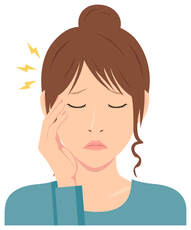 HEADACHE: Belladonna
 NOSE: Arsenicum album
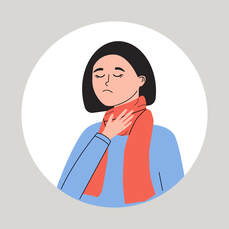 SORE THROAT: Causticum
It’s important to remember that there are many, many homeopathic remedies for each of these main symptoms. This is just a brief list which may help to get dinner on the table or that important email answered. Julia Coyte, CHom Classically Practical homeopath #wellnessawaits * Be sure to seek treatment if the fever is very high, continues to climb or is accompanied by seizure or fainting or severe headache or stiff neck (to name but a few concerning symptoms). For more information:
If you have already been through the worst of the flu, check out “Get Well Soon” to find a few helpful tips on recuperating.  The point of life is balance, not perfection. This sentiment keeps popping up everywhere I turn. I’m taking it as a direct communication from the universe to me. You see, I’m not very good at balance — I’ve always been a kind of an all or nothing sort of gal. Physically, I’m pretty decent with balance. In a former life, I was a recreational figure skater and I could do my spirals and my spins and I could land my basic jumps on one blade. I used to slalom water ski as well as snow ski and those take balance. When we had to do gymnastics in PE, I was horrible at every single part of it, except the balance beam. Mentally, that’s another story. I used to think I was good at balance but only because I was juggling lots of things at once — which, in fact is not a demonstration of balance at all, just an act of mental acrobatics. I start making jewelry and that’s all I think about for the next couple of years. I decide to try my hand at art and I am almost paralyzed by the need for it to feel “perfect” and then I’m unable to do anything at all. I discover homeopathy and I drop everything else and decide there simply aren’t enough hours in the day to study this fascinating system of medicine. So, having this mentality, I have perfected the art of giving stuff up, that’s for sure. (Remember, "all or nothing" was my motto.) I'm pretty good at embracing an all-encompassing deep dive on things, often at the expense of other things. Even writing these articles -- recently taking a step back from writing weekly weighs on my mind heavily. It's a struggle to remember that "about weekly" (as I stated in the "about" section of Ruminating on Remedies) is not the same thing as weekly. However, it's never too late to start a good habit and I have finally come to the realization that it’s time to accept the idea of Wabi Sabi. I’ve heard of this concept before, but I am new to putting it into practice, but I like it, and I’m thinking this might be a good answer for me. Wabi Sabi is a traditional Japanese aesthetic that celebrates the beauty of imperfection and impermanence. Perhaps embracing this philosophy is the way out of my all or nothing mentality. Perfection, or the pursuit thereof, is an admirable goal, I suppose. But, it’s really not a very healthy way to live a life. I always tell my clients when using homeopathy that we are NOT looking for perfection, we’re looking for improvement. (See: What Now and Perfect is the Enemy of the Good.) What is it we are looking for? As a reminder, we are looking for the symptoms to pop up a little less often and when they do, to be a little less intense and hopefully we see an improvement in mood and/or energy. If one struggles with the idea of needing to be perfect, there are some excellent homeopathic remedies to consider. Ignatia is the first remedy that comes to mind for perfection. Ailments from disappointments. Unhappy love. Idealistic. Nervous. High goals, high ambitions, high ideals and high expectations and a burning desire to fulfill them (Master 2009). Intolerant of contradiction. Expectation of others to be perfect. Strong sense of inner duty. Nux vomica for overstudy; "close application to business, with its cares and anxieties" (Vermeulen 2015). These mental strains may lead to the use of stimulants, possibly in excess. Keeping late hours and displaying an irritable temper. Everything makes too strong an impression on this overloaded nervous system. See also: Overwhelmed for further discussion comparing Ignatia and Nux vomica. Arsenicum album for the fastidious person who wants everything neat and clean and tidy and just right. Even when feeling poorly, the person who may benefit from Arsenicum alb may direct someone to tidy up the sick room a bit. This is a person who, in the words of George Vithoulkas, takes "order and cleanliness to the point of expending inordinate energy constantly cleaning and straightening" (Vithoulkas 2015). Natrum muriaticum for one who is responsible and perfectionistic. They may "be compulsively fastidious, trying to control the environment". They may display a "type of hypochondria… expressed as an anxious desire to find the cause of every blemish or pimple" (Morrison 1993). Nat mur cell salt also plays an important role in balancing fluids in the body… if there is excessive dryness or excessive mucus production (for example), Nat mur may be of help. As American poet Henry Van Dyke very eloquently states, “Use what talents you possess; the woods would be very silent if no birds sang there except those that sang best.” Life is too short. Drop the idea of perfection. Let it go. Sing the song, regardless of talent. Paint the picture. Write the story. Live a good life and enjoy yourself while you're at it. Julia Coyte, CHom Classically Practical homeopath #wellnessawaits Reference list: all books accessed through RadarOpus software
Master, F. J., 2009. Clinical Observations of Children Remedies B. Jain Publishing. Morrison, R., 1993. Desktop guide to keynotes and confirmatory symptoms. Nevada City, Calif.: Hahnemann Clinic Pub. Vermeulen, F., 2015. Concordant reference : complete classic materia medica : 1284 remedies. Glasgow: Saltire Books. Vithoulkas, G., 2015. Essence of materia medica. Usa: B. Jain Publishers (P) Ltd.  Can you catch vertigo*? Gosh, it seems like it cuz all of the sudden, everybody around me is complaining of dizziness. (See also: It’s Never Too Late, part 2: Balance.) I’ve been there done that — it’s a miserable experience. Some people experience it as being lightheaded or unsteady on their feet. Others experience it as the room spinning around them and still others experience it as if they themselves are spinning. Some may feel they are falling to the left, or the right. Some people have it only when they’re in bed and others have relief when they get into bed. What causes vertigo/dizziness? Lots of things: Upper respiratory viruses can set it up. Head injuries. Ear infections or inner ear problems. Motion sickness. Anxiety. Infections, in general — viral or bacterial. Migraines. These are all some “benign” causations. Vertigo can also be caused by some more serious issues: some medications, heart problems, stroke, MS — so if you are a vertigo sufferer, be sure to work with your physician to uncover the cause. Another cause of vertigo is a “silent” migraine, also known as vestibular migraine, which can affect the inner ear and the balance system but without the typical headache usually associated with migraines. Typical migraine triggers may set this off (caffeine, bright lights, changes in weather) and these episodes can last for minutes or for days. So, how can homeopathy help when your world is spinning? Murphy’s Repertory lists 974 rubrics for vertigo with some pretty specific symptoms and I’ve seen some pretty pleasing results for this nasty condition. (There are so many homeopathic remedies that can help with vertigo that it can make your head spin!) Perhaps some of the frequent vertigo I am hearing about lately is coming from the world at large feeling all topsy-turvy right now — these are some dizzying times, politically and culturally speaking. (See also: Homeopathy can make a heavy world a little lighter.) When anxiety is related to the dizziness, Cocculus may be of some assistance. A trembling/fluttering sensation in the heart (palpitations) during vertigo; mental confusion; mental exhaustion. Vertigo following emotional excitement; vertigo from loss of sleep. Travel may bring on dizziness (see also, Seasickness). Another remedy which can be useful for vertigo and anxiety is Nux vomica. I have watched Nux vomica work beautifully (and quickly!) for dizziness as a result of fatigue. (See: Too Much.) As we all know, fatigue can be brought on from not enough sleep — not enough is another way of saying “too much.” More broadly, Nux vomica can be useful for dizziness as a result of eating, drinking alcohol or smoking. If there is tendency to fall or if there is staggering or if fainting accompanies the vertigo. Dizziness from the smell of flowers or gas; Mental exertion; or, from being in a room with too many lights. Think of Nux vomica also for vertigo that is worse in bed. If turning in bed is worse, look to either Belladonna or Conium. Belladonna is a good one to think of when a headache accompanies the dizziness. Anxiety might be part of this picture. Pupils may be dilated. Walking may be tricky, or, the vertigo may actually come on while walking. Visually speaking, dizziness may be accompanied by dim or obscured vision. Nux vomica is very highly indicated if there is “vanishing” sight with vertigo. Gelsemium for vertigo with vision issues: double vision; obscured or dim vision, or, even a loss of vision during the vertigo. Head position can play a big part in vertigo. There is something called Benign Paroxysmal Positional Vertigo (BPPV) (which is different from “silent” migraine mentioned above). BPPV is very common and results in “the sudden sensation that you are spinning or that the inside of your head is spinning” (Mayo Clinic 2018) . If moving the head makes the dizziness worse, think of either Bryonia or Conium. (Remember, Bryonia is very commonly worse for movement no matter what is going on, they prefer to remain still.) Another way of looking at this one, is that keeping the head perfectly still makes the vertigo better. Borax is a little remedy which has a great affinity for downward movement. If the vertigo kicks in when descending stairs, Borax is the place to start. (Think of Borax also for sleeping babies who startle awake as they are being placed in the crib.) If dizziness occurs when going up the stairs, look to Calc carb. There are so many reasons why one may be experiencing vertigo/dizziness. Be sure to work with your physician to rule out anything serious. In the meantime, a well-chosen homeopathic remedy may help stop the merry-go-round while you figure out what is causing the dizziness/vertigo. Julia Coyte, CHom Classically Practical homeopath #wellnessawaits * I will be using vertigo and dizziness interchangeably in this article, though National Dizzy & Balance Center (Balance 2021) -- (I have no idea who they are, but it’s an interesting website) describes vertigo as “a false sense of movement — almost making it feel as if you, yourself, are spinning even when you’re standing still.” They describe dizziness as a “term often used to describe a variety of balance issues… a term that may apply to motion and balance sensations including light-headedness, faintness, wooziness, or unsteadiness. While not all dizzy spells point to vertigo, vertigo can fall under the umbrella of general dizziness for diagnostic purposes.” Balance, 2021. Dizziness vs. Vertigo - National Dizzy & Balance Center [online]. National Dizzy & Balance Center.
Mayo Clinic, 2018. Benign Paroxysmal Positional Vertigo (BPPV) - Symptoms and Causes [online]. Mayo Clinic.  No matter what you want to call it … (if you’re squeamish, just know we’re talking about diarrhea and skip forward to the next paragraph). If toilet humor is your thing, here we go: Number 3, Chocolate Thunder, Poo Stew, Rectum Rapids, Turd Tea, Emergency Evacuation, The Squirts, Brown Bomb, Liquid Lunch, Poop Soup … I’ll stop now. (If you would like a few more unseemly names, see Travelers’ Diarrhea.) Don’t worry, I won’t continue with the graphic descriptions. What follows is a long list of situations where one might experience diarrhea and the most highly indicated remedies for each. Once again, if you are experiencing diarrhea beyond an acute bout, please seek professional medical advice. Before embarking on my long list of unfortunate bottom-related circumstances, let me share one of my first amazing homeopathic "wowee!" moments. We were traveling and my then young teenage son was very sick in the night with suspected food poisoning. I was hemming and hawing, trying to remember what I had learned about remedies. I went with Veratrum album and within minutes everything stopped. I mean, everything completely stopped. He slept the rest of the night and woke up fine and dandy. “Better out than in” is what we say around here! As a result of this experience, I keep a little vial of Veratrum album in my little travel kit that accompanies me every time I leave the house with my suitcase. Veratrum album is my go-to homeopathic remedy for if things are coming out of both ends. What else may point to the use of this remedy? The diarrhea (or vomiting) may be violent, voluminous and relentless. Collapse following diarrhea (not the only well indicated remedy in this rubric, but a good place to start). The person may be cold: cold limbs, generally chilly, and/or clammy. Diarrhea with perspiration. Diarrhea after eating fruit; diarrhea after eating cucumbers (technically a fruit, after all). Diarrhea during menses. Diarrhea which is made worse by movement/motion (Bryonia is another one to think of for this symptom). And, here’s one more unusual concomitant symptom for Veratrum album: hiccups during diarrhea. Isn’t that just what you need in that situation?! Children & Diarrhea: If you have an infant with diarrhea, administer Podophyllum on the way to see the doctor — dehydration can set in quickly. Diarrhea while cutting teeth: Chamomilla. Chamomilla is such an excellent remedy for children, in general, and it doesn’t let us down in this situation, either (but these symptoms are not confined to children. With everything homeopathy, if the symptoms match, the remedy would be effective for man, woman, child or animal.) Diarrhea with abdominal pain. Diarrhea: following anger; after taking a cold; after eating and, specifically after eating rhubarb. Emotional diarrhea or from excitement. During hot weather. Painless diarrhea. And, here is a rubric unique to Chamomilla (but hopefully you wouldn’t find this in a child!): diarrhea after smoking. The Elderly & Diarrhea: Like children, the elderly, too, have some remedies with great affinity to their age. In this particular situation, I would lean toward China officinalis. China is so good for enfeebled people, as can often be found in the later years. In particular, China is useful for weak digestion; dyspepsia/indigestion; flatulence; chronic belching. Dysentery, in simple terms, involves frequent bowel movements with blood and mucus in the stool, often accompanied by cramps and pain. Give some China while on the way to see a doctor. Please seek medical assistance if you are experiencing these symptoms. If diarrhea and constipation alternate in older individuals, consider Antimonium crud. On to the general list… If experiencing abdominal pain, and it feels like diarrhea is imminent, Aloe would be my first recommendation. There may be accompanying weakness. Diarrhea after eating and in particular, diarrhea following the slightest dietary indiscretion. Walking makes it worse. Lots of toots during the diarrhea. There are a few rubrics where Aloe and Sulphur “tie” when it comes to diarrhea: burning pain in the rectum; being driven out of bed in the morning, needing the toilet desperately (Sulphur has the specific times of 5-6 am); painless diarrhea; standing makes it worse. Where Sulphur “wins out” over Aloe: diarrhea after beer and nighttime diarrhea, especially after midnight. If the diarrhea alternates with another symptom, such as:
Diarrhea and emotions:
Feeling wiped out after all that wiping? China is a good place to start. If the weakness is particularly pronounced, also consider Phosphoric acid. If the act of wiping actually causes pain: Graphites. Diarrhea during pregnancy: Phosphorus Diarrhea during menopause: Lachesis Diarrhea following an injury: Arnica If it’s coming out as from a hydrant: Podophyllum If it has a really noxious smell: Baptisia Diarrhea following the consumption of:
If you find your appetite increases with diarrhea: Petroleum. Cold hands with diarrhea: Phosphorus Cold feet: Lycopodium Cold limbs: Arsenicum album, Camphora and Veratrum album Positionally speaking: If lying down make it worse: Dioscorea If lying down makes it better: Bryonia (though it may be worse lying on your side) Sitting upright makes it worse: Bryonia Time of day: If it starts after you have risen from bed and moving around: Bryonia or Nat sulph After midnight: Arsenicum album or Sulphur If the diarrhea causes sleeplessness: Phosphorus I changed my mind. I will use one more dysphemism: the sharts, also commonly referred to as “gambled and lost” (Flanagan 2010). If you are having diarrhea during rectal flatus, there are a number of well indicated remedies, but I would start with Aloe — the remedy for an insecure rectum (click that link to read the previous article with the same name.) What would cause an “insecure rectum?” Let’s go back to Giulia Enders’ Gut for this explanation. Apparently we have a pair of “sophisticated” sphincters which Enders takes a few pages to explain and I am going to try and shrink it down to the bare essentials using her words, (but the full explanation is certainly worth a read). “The outer muscle is a faithful servant of our consciousness. When our brain deems it an unsuitable time to go to the toilet, the external sphincter obeys and stays closed with all its might. … Our internal sphincter is a no-nonsense little guy. His motto is, ‘If it’s gotta come out, it’s gotta come out!’ … The external sphincter, on the other hand, has to deal with the vagaries of the outside world and its many options.” Suffice it to say, we need these two sphincters to communicate well. A few more remedies for involuntary stool (not necessarily diarrhea):
As you can see, homeopathy can be invaluable when it comes to diarrhea — there is a homeopathic remedy for almost any situation! Julia Coyte, CHom Classically Practical homeopath #wellnessawaits References:
Enders, G., 2015. Gut : the Inside Story of Our Body’s Most Underrated Organ. Greystone Books. Flanagan, D., 2010. Everybody poops 410 pounds a year : an illustrated bathroom companion for grown-ups. Berkeley, Ca: Ulysses Press. Murphy, R., n.d. Homeopathic Remedy Guide. accessed through Radar Opus software. |
Julia Coyte, CHomI am passionate about homeopathy and I love sharing this passion. Having a working knowledge of homeopathy shouldn't be kept a secret. If people have the ability to help themselves, their children and their friends when they have minor ailments, life just gets better for everyone. That is the purpose behind Ruminating on Remedies. Archives
October 2026
Categories
All
|
 RSS Feed