|
t’s a spooky time of year — let’s take a look at some seasonally-appropriate rubrics and remedies and try a few scary ways to remember the remedy.  Ghosts show up mainly in the following mind rubrics (from Murphy, Phatak, & Knerr, Boericke, Boger — all level 3 unless otherwise mentioned) and I chose to compare a few commonly found homeopathic remedies which popped up in the repertory:
Arsenicum album I think of Arsenicum album more of an anxious remedy, but it’s right there big and bold in Murphy’s large general fears and phobias rubric. Arsenicum album is afraid of being alone and dying alone (yet, they may be averse to company, too; in fact, they may desire company but fear them, at the same time). They may be afraid when going to sleep.
Belladonna is also a bold level 3 in Murphy’s general fears and phobias rubric. In particular, Belladonna is afraid of animals (real and imaginary); fears while in bed; of coughing; of death and, imaginary things, think: ghosts and monsters.
Camphora is not my first thought for scared remedies, but I trust Knerr, so let’s take a look. Camphora is afraid of the dark and being left alone, especially at night (Ars, Phos, Stram) and being in bed, alone, on going to sleep. They are afraid of their own thoughts. A hall of mirrors might be too much for this person. And, they might just have the poop scared out of them, literally (Ars, Puls). Visions of ghosts and spirits may show up in their sleep. ☠️ Halloween connection: Sensory horror. Oversensitivity to noise and light, startles easily, and a fear of ghosts and of being alone in the dark. The picture that shows up from the proving is a little like someone visiting a haunted house. Another thought is embalming and the morgue. Camphor has been used as a deodorizer for the sickroom. The remedy is known to be cold to the touch, like a corpse. Camphor is a classic remedy for collapse, sudden chill and the sense that the body is shutting down and for coldness in spots (as if a part has already died). Carbo vegetablis is another remedy I would think of more for anxiety, but it, too is big and bold in Murphy’s general fears and phobias rubric, including the fear of ghosts… and monsters.
Carbo veg isn’t the first remedy I would think of for fears, but that doesn’t mean it’s not a good one to try, especially if they have some keynotes of Carb-v in general:
They may fear a little something might escape involuntarily while tooting or urinating (Phos). 🎃 The Halloween connection: Carbo-veg is made from rot and putrefaction and this connects to the digestive keynotes of foul gas, bloating and a feeling of inner decay. Another thought is the pumpkin with a candle in it — left to rot and the oxygen is all gone, the jack-o-lantern gasping for air. Chamomilla might be a reluctant trick or treater with their fear of people (Lyc), or approaching others (Ars, Stram)… or, having others approach them (Stram), too. They, too are afraid of imaginary things and night time and the wind (Ars, Lyc, Puls), but for Chamomilla, this fear of night might be heightened during pains, especially teething. Their fears may be overpowering to them (Bell, Carb-v, Puls). Chamomilla’s boldest fear rubrics are being touched and shaking with fear. 👻 Halloween connection: To remember Chamomilla, think of the screaming child — the child who is furious and inconsolable and wants to constantly be carried and who screams more when they are put down. The temper tantrum that occurs when the little trick-or-treater is having a meltdown. They are hyper sensitive to pain and the itchy costume as well as the whole night in general might be too much for them. Kali carb may have some sadness (Ars, Lyc) and tears (Ars) with their fear. Their fear of being alone may be ameliorated by holding mom’s hand (Lyc, Puls, Stram). They might want to be alone, but that’s too scary, but being with people is too much (Ars, Lyc, Stram)… that’s a scary vicious circle on Halloween night! Like Chamomilla, they don’t don’t want anyone near them for fear of being touched (Stram) or being struck by someone coming toward them (Bell, Stram). Birds, real and imagined; lying down in bed; monsters and they may dream of ghosts.
👻 Halloween connection: Think of the last of the pack of trick or treaters, alone in the dark, jumping at the slightest noise, imagining they’ve been jabbed or struck with something. They are chilly and can’t wait to get back to their warm home and eat their highly anticipated sweet treats. Lycopodium is a big, bold and underlined fearful remedy. They are afraid of being outside (agoraphobia) (Ars, Stram) and being alone but to make matters worse, they might want to be alone but they are also averse company (Ars, Stram). The Lycopodium child may want to hold mom’s hand (Puls, Stram). They may fear being away from home (Ars). They may be fearful in bed, but they may also wet the bed (but they might also be fearful of wetting the bed). They may fear bugs (Ars, Puls, Stram) and cats (Stram) and crowds, and public places (Phos, Puls) and monsters and the dark. Sadness or depression with their fear (Ars, Kali-c). Fearful after eating (Carb-v). Constant fear of everything (Ars, Phos, Puls, Stram). A few stranger fears of Lycopodium which may be troublesome on Halloween:
Phosphorus is one of our “scarediest” remedies. Once again, they are afraid of being alone… in the dark… at night. Ghosts and insects and monsters (Ars, Puls, Stram), rats and noises (Stram) are all overpowering, causing them to cry (Ars) and startle. If there is a thunderstorm on the way, watch out. And, watch out cuz there might be some diarrhea (Ars, Puls) with a Phosphorus fear. They have terrible dreams and they may jump when they are touched (Bell). Being in crowds, crossing the street, electricity and even their friends. Causeless fear, cemeteries, and waiting for something to come creeping out of the corner (are all shared with Stramonium). 👻 Halloween connection: White phosphorus glows green in the dark — one of the closest things science has to offer as a ghost — if one sees ghosts everywhere, that can lead one to being fearful all the time (Ars, Puls)… of everything. Phosphorus was what was on the match heads — think of lightning (Bell) and the startling response it can cause. Pulsatilla Ghosts are a big one for Pulsatilla with visions, fears and dreams of them. Puls also has a big fear of being alone but more specific to Pulsatilla is the fear of being abandoned or being left alone (Ars, Camph) or neglected (Ars). Yet, they may be afraid of people. Going to sleep (Ars, Phos), bugs, spiders (Stram) and snakes (Ars), too.
🎃 Halloween connection: October is considered a windy month in many places —as the fall winds usher in the new season — windy and unsettled, just like Pulsatilla. They are weeping and clinging and need their hand held as they make their way through the haunted house or through the neighborhood streets. Stramonium can be an angry remedy and their fear might alternate with rage (Bell). They are afraid of being alone, wanting to hold mom’s hand (Kali-c, Puls) and want light and company (Bell) and they are better from company (Ars, Bell). Stramonium is our biggest fear of the dark in this group of remedies. Halloween must be a tough day for someone in need of Stramonium. They have a fear of something creeping out from every corner (Phos). They are afraid of black/dark colors (Ars). And, don’t post them next to someone who is dressed as Big Bird — they have a fear of feathers, too. Bugs, flies, spiders, cats (Lyc), ghosts, monsters, wolves (Bell), graves and cemeteries (Phos). You might want to skip the hall of mirrors, lest he should see himself. Their fear of animals and dogs…especially black dogs (Bell)… goes further than our other remedies in that they fear being devoured by them (Bell). There is a fear of being attacked or bitten (Bell) and hallucinations of being pursued by ghosts. 😱 Halloween connection: Nightmares! They are terrorized in the dark and need some company and some light (but not direct light). Please remember there are many more important fearful remedies, these are just some common homeopathic remedies referencing ghosts and goblins, not fear in general. Heck, there are even many more ghost and goblin remedies, too!  Goblins Frans Vermeulen’s Synoptic Reference says the name of Cobaltum metallicum comes from the German word for goblin, Kobold. Miners would find a promising bit of ore and as soon as smelting began, it would vanish in a poisonous stench. The miners blamed the kobolds (goblins), but it turns out it was the toxic arsenic trioxide vapors, not the goblins that were the cause.  Witches My favorite witch is named Hazel — Hamamelis virginiana (aka, Witch Hazel). Back to Vermeulen for some information on Hamamelis, (this time from Prisma), who surmises the connection to witches comes from “the peculiar ‘magical’ seed dispersal of the plant: their expulsion takes place with such force that it suggests witchcraft.… Another explanation is the use of the twigs by the early settlers in Virginia [in about 1700] for water divining and for discovering precious metals.” He goes on to say that others dispute the origin of the name and posit that “it comes from the word ‘wych,’ which has nothing to do with witches but is related to Anglo-Saxon ‘wicken’, to bend, or Old English ‘wich,’ quick or loving, or possibly even to the modern word, ‘switch.’” Another witchy connection is with Stramonium (see above). Alphonse Teste says, “Thron-apple, vulgarly termed stinkweed and witch-herb, on account of the fantastic visions which these poor imbeciles procured with it, and which they believed to be real.” (See also, Anger & Fear for more on Stramonium.) Gibson tells us: “All down history the various species of Datura*** have been used as medicaments and intoxicants. The medieval witches’ salves consisted primarily of black henbane and thom-apple; the hallucinations they produced were considered to have been real even after the intoxication and mental derangement had worn off.” Apparently, Stramonium was part of the recipe to make people think they were flying. Are witches in the repertory, too? Yup. Again, from Murphy: Dreams of witches: Agaricus and Stramonium. Agaricus muscarius is a bit of a spooky remedy in itself, so let’s take a very quick look at it. Agaricus is made from the mushroom of fairy tales. Don’t let the jolly red cap fool you, though, cuz it’s poisonous.  I asked Venice AI to make me a fairy tale version of this mushroom, which really is just a cleaned up version of the actual mushroom. Roger Morrison tells of an Agaricus case where someone is preoccupied with morbid thoughts… thoughts about graveyards, coffins and they had “an element of spookiness about them.” A strange rubric: Mind, Insanity, general, madness - graveyards visits. (Agar-3, Bell/Stram-1). I had no idea Halloween was so rich in remedies! Julia Coyte, CHom Classically Practical homeopath #wellnessawaits *There is a lot of cross-over with these remedies. I did not cross reference every rubric — my purpose was to give an overview of each of these fearful remedies. **Most of these remedies are excellent for scared children, actually, especially Belladonna, Chamomilla, Lycopodium, Phosphorus and Pulsatilla. ***Datura is a group of highly poisonous, night-blooming plants in the nightshade family (Solanaceae). Reference list
Boericke, W., 2002. New manual of Homoeopathic Materia Medica and repertory. B. Jain Publishers. Boger, C. M., 1905. Boenninghausen’s Characteristics Materia Medica & Repertory with Word Index. accessed through Radar Opus software. B. Jain Publishers. Gibson, D. M., Harling, M. and Kaplan, B., 2011. Studies of homoeopathic remedies. Kandern, Germany: Narayana Publishers. Knerr, C. B. and Hering, C., 1896. A Repertory of Hering’s Guiding Symptoms of Our Materia Medica. accessed through Radar Opus software. Murphy, R., 2010. Homeopathic medical repertory : A modern alphabetical and practical repertory. New Deli: B. Jain. Phatak, S. R. and C Jeevanandam, 1963. A concise repertory of homoeopathic medicines : alphabetically arranged. accessed through Radar Opus software. New Delhi: B. Jain Pub. Teste, A., 1854. The homoeopathic Materia Medica. Vermeulen, F., 2004. Prisma : the arcana of materia medica illuminated : similars and parallels between substance and remedy. accessed through Radar Opus software. Haarlem, Netherlands: Emryss. Vermeulen, F., 2011. Synoptic reference. accessed through Radar Opus software. B Jain Publishers Pvt Ltd.
0 Comments
 Let’s begin this conversation by establishing what a materia medica actually is. A materia medica is a body of collected knowledge about substances used as medicines: their origins, their properties, the preparation and how they are used to treat illness/injury. Materia medicas/medicae are nothing new — Dioscorides’ De Materia Medica dates to the 1st century AD. With such a long history, it’s no surprise there are many to choose from! Homeopathically though, the first one was Samual Hahnemann’s Materia Medica Pura which was published in six volumes between 1811 and 1821 and covered around 60 substances. On the other end of the spectrum, Robin Murphy’s Nature’s Materia Medica (4th edition) covers 1,500 homeopathic and herbal remedies. (The first edition was published in 1995 as The Homeopathic Remedy Guide.) Frequent readers of Ruminating on Remedies will know that I am a big fan of Dr. Murphy’s materia medica and repertory. One of the main reasons for this is that he incorporates material from many other materia medica authors: Boericke, Clarke, Phatak, and others and puts their words into more modern language. In addition to the materia medicas/e proper, there are also a slew of specific titles which would fall under the materia medica umbrella but are not addressed here. These are more specific tomes, such as: Mangialavori’s Milk Remedies and Vermeulen’s Fungi and Klein’s Orchids in Homeopathy. With that bit of background, let’s dive into a few of my favorite materia medicas/e (alphabetically by author). (The prices I grabbed are all accurate at the time of writing (either from the author’s website when available or from Amazon US) and please remember there are many more used options available at lesser prices!) Note #1: All of these books essentially give the same information — it’s just the depth of that information and how it is presented. To keep comparisons on an even footing, I used Belladonna as my test remedy. Note #2: I aimed these selections at home users and did not address the fantastic, deeper works of many other homeopaths like Frans Vermeulen or George Vithoulkas or Bönninghausen, for example.
Julia Coyte, CHom Classically Practical homeopath #wellnessawaits For more thoughts on homeopathic readings, see also, Books!! *I relied on Venice AI to tell me how many remedies are covered in each book. **This should be a solid choice but I am unable to provide detailed information given my broken copies. Boericke also has Pocket Manual of Homoeopathic Materia Medica & Repertory but I don’t own it and have no way of evaluating it. Reference listAllen, H. C., 2002. Allen’s keynotes: Rearranged & classified. B. Jain Publishers.
Boericke, W., 2002. New manual of Homoeopathic Materia Medica and repertory. B. Jain Publishers. Boger, C. M., 2012. A synoptic key of the materia medica atreatise for homoeopathic students (rearranged and augmented edition). B Jain Publishers Pvt Limited. Clarke, J. H., 2005. A dictionary of practical Materia Medica. B. Jain Publishers (P) Limited. Hering, C., 2024. The guiding symptoms of our materia Medica-10 volume set. B Jain Publishers Pvt Ltd. Mansour, M., 2026. The Visual Homeopathic Materia Medica. Morrison, R., 1993. Desktop guide to keynotes and confirmatory symptoms. Nevada City, Calif.: Hahnemann Clinic Pub. Morrison, R., 1998. Desktop companion to physical pathology. Nevada City, Calif.: Hahnemann Clinic Publ. Morrison, R., 2025. Clinically verified materia medica volume I, the tapestry of homeopathy. Hahnemann Clinic Publishing. Murphy, R., 2020. Nature’s Materia Medica. Lotus Health Institute. Phatak, S. R., 1988. Phatak’s Materia Medica of Homoeopathic Medicines. Foxlee-Vaughan. Pitt, R., 2015. Comparative Materia Medica : Integrating new and old remedies. San Francisco, California: Lalibela Publishing. Pitt, R., 2024. Therapeutic Guide & Thematic Materia Medica of Homeopathic Medicine. Lalibela Publishing. Vithoulkas, G., 1998. Essence of materia medica. Usa: B. Jain Publishers (P) Ltd. 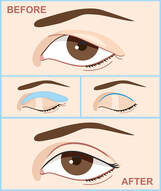 A few weeks ago I received a text from someone who was just about to undergo blepharoplasty, otherwise known as eyelid surgery. This surgery is used to correct drooping upper eyelids or to reduce “bags” under the eyes. The internet tells me it’s the most popular cosmetic procedure in the world (Bido 2025), but it’s still rather uncommon (less than .1% of the population). However, I personally know 4 people who have had it done. Blepharoplasty is a 1-3 hour surgery and recovery consists of 7-10 days of swelling and bruising, with full recovery about 2-4 weeks later. This person who texted me had a friend who recently had the procedure done and apparently used Arnica. I suggested they also purchase some Staphysagria, Calendula and, Hypericum, just in case. I heard from them again when they went for their follow up and texted me a photo of a product being sold in the office — called Skinuva “bruise”*. Skinuva is a seemingly one-stop supplement for bruising, containing: Vitamin C, Zinc, Rutin, Grape Seed Extract, Bromelain and, homeopathic Arnica! One bottle of Skinuva “bruise” costs $40 for a bottle of just 14 capsules (suggested use of twice daily for 7 days). Skinuva “bruise” uses Arnica 30x. (30x is roughly equivalent to a 15c, in case you’re interested.) A quick look at the internet shows Arnica 30x or Arnica 15c can be purchased for $7-10 a tube and will most likely last you a lot longer than 7 days. I’m not knocking Skinuva — I’m really excited that this product exists. I love supplements like Vitamin C and Zinc and Bromelain — they all have a place, but as a homeopath, they are outside my wheelhouse. Why Arnica?
If you are thinking of having this popular surgery yourself, stock up on some Arnica and/or Ledum and take a deeper look into Skinuva to see if it looks like a good fit for you. May your bruises be brief and your Arnica plentiful! Julia Coyte, CHom Classically Practical homeopath #wellnessawaits *I have no affiliation with this product, I just learned about it and am sharing what I know. **Ledum would be another really good choice for recovery from this surgery. For instance, Ledum and Arnica are the only two remedies listed in Murphy’s rubric: Eyes - ECCHYMOSIS (bruising) - eyelids and they are both in Eyes - INJURIES, eyes - surgery, complications, after. Bido, T., 2025. Eyelid surgery is now the most popular cosmetic procedure in the world [online]. NewBeauty.
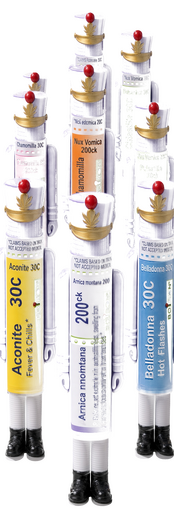 We were a bit late to the airport this morning — Balloon Fiesta is underway, after all. (Beautiful to see, that’s for sure!) The sign at the parking ramp said there were 47 spaces left and we weren’t the only car looking for a spot — the hunt was on! A near empty(!) TSA line looked promising and then I saw my suitcase on the conveyer belt, poised to get kicked for further inspection. I knew what caused the extra attention to my bag but I still had to wait while 4 (5? 6?) agents watched the other agent go through a bag that tested positive for some powder. Exciting times at the airport this morning! Finally someone asked these other agents to please take care of the bags that were beginning to pile up. When it was my turn, I offered: “it’s a box of homeopathic remedies.” She reached in my bag, dug out the box and then gave it a shake and put it back. Then she gave me a smile and sent me on my way. Homeopathic remedies fit beautifully in ammunition boxes. I think that must be what gets the TSA agents’ attention. My favorite tube size, 1/2 dram tubes, fit nicely in a 9mm ammo box. The 2 dram tubes fit in a .30 cal or .50 cal box, depending on the pharmacy. (I’m not at home to check the bottom of my other ammo boxes, but this is what Grok has told me is the correct ammo size.) Some of the larger vials (4 dram) fit in the shotgun shell boxes. (The shotgun boxes get a little unwieldy for my liking but at least those remedies have a home in the cupboard.) I believe the ammo boxes are absolutely appropriate to hold my homeopathic soldiers. These strong, sturdy and dependable little troopers help me guard against (among others…):
Some people worry about the airport X-ray machines and what effect they may have on their remedies. I used to skip the x-ray machine and have my remedies hand checked. I don’t do that any longer, but it is definitely an option if you’re worried about it. Today’s exact ammo box has traveled with me in my carry-on luggage for more than a decade (and most of the same remedies, too!) — many dozens of trips. The remedies are always fine and dandy and they always perform exactly as expected, despite the repetitive x-rays. Traveling with my remedies means I carry peace of mind in my piece of luggage. Julia Coyte, CHom Classically Practical homeopath #wellnessawaits Grok made these little homeopathic soldiers for me. 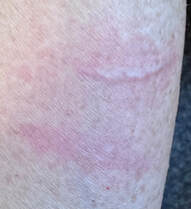 I set the baking trays on the two cool pots on the back burners not being used. I have done this for decades — every time I make cookies. I wasn’t making cookies. This time I was making some egg/cheese/sausage breakfast-on-the-go muffins which needed to be removed from the hot pan rather than hanging out for a while. I had an oven glove on, but that didn’t stop me from burning my forearm not once, but twice, in quick succession. I went back for more! 😫
Needless to say, it hurt like the dickens*. I immediately sprayed a product which is sadly no longer for sale, Similasan’s Burn Recovery. Why it’s no longer for sale, I have no idea, but it was a marvelous product.** This spray gave a certain amount of immediate relief, but it wasn’t lasting. I then took a dose of Cantharis 30x which was sitting in the kitchen cupboard. Nothing. I sprayed the spray again, to the same effect (immediate non-lasting relief). I then took Cantharis 200c and by the time I ate dinner a couple of hours later, I barely felt it. By the time I went to bed, I no longer felt any pain. I didn’t need to repeat the spray or the pellets. The top burn, as you can see in the photo, bubbled and raised immediately. It felt sticky. When I woke up in the morning, it was smooth and completely painless. What to make of all this? Well, I’m a big fan of having multiple potencies of important remedies in close proximity to where accidents can happen. My kitchen cupboard has a number of items to treat burns and bites and cuts, etc., and over the years various potencies of the same remedies have gathered together here. It works for me. Sometimes potency matters. Having said that, if I hadn’t had a 200c handy, I would have put the 30x into some water and repeated it more frequently. I’m going to go out on a limb and say that it probably would have taken a little longer to get where it got, but I think it most likely would have done the trick eventually. But, the one single dose of 200c kicked in very quickly. Baking season is going to be here any day — make sure you pay attention to how far your oven mitts actually extend up your arm and have some Cantharis handy! Julia Coyte, CHom Classically Practical homeopath #wellnessawaits *I suddenly thought, what the heck are “dickens”, anyway? Writing Explained says it’s a substitute word for devil. Shakespeare used in Merry Wives of Windsor, 1600. **Fortunately for us, we can make our own topical burn relief: the ingredients are:
|
Julia Coyte, CHomI am passionate about homeopathy and I love sharing this passion. Having a working knowledge of homeopathy shouldn't be kept a secret. If people have the ability to help themselves, their children and their friends when they have minor ailments, life just gets better for everyone. That is the purpose behind Ruminating on Remedies. Archives
October 2026
Categories
All
|
 RSS Feed