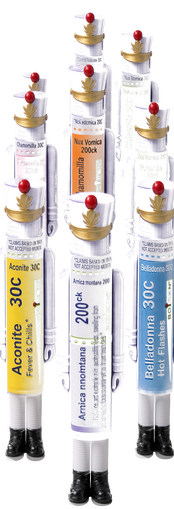
 We were a bit late to the airport this morning — Balloon Fiesta is underway, after all. (Beautiful to see, that’s for sure!) The sign at the parking ramp said there were 47 spaces left and we weren’t the only car looking for a spot — the hunt was on! A near empty(!) TSA line looked promising and then I saw my suitcase on the conveyer belt, poised to get kicked for further inspection. I knew what caused the extra attention to my bag but I still had to wait while 4 (5? 6?) agents watched the other agent go through a bag that tested positive for some powder. Exciting times at the airport this morning! Finally someone asked these other agents to please take care of the bags that were beginning to pile up. When it was my turn, I offered: “it’s a box of homeopathic remedies.” She reached in my bag, dug out the box and then gave it a shake and put it back. Then she gave me a smile and sent me on my way. Homeopathic remedies fit beautifully in ammunition boxes. I think that must be what gets the TSA agents’ attention. My favorite tube size, 1/2 dram tubes, fit nicely in a 9mm ammo box. The 2 dram tubes fit in a .30 cal or .50 cal box, depending on the pharmacy. (I’m not at home to check the bottom of my other ammo boxes, but this is what Grok has told me is the correct ammo size.) Some of the larger vials (4 dram) fit in the shotgun shell boxes. (The shotgun boxes get a little unwieldy for my liking but at least those remedies have a home in the cupboard.) I believe the ammo boxes are absolutely appropriate to hold my homeopathic soldiers. These strong, sturdy and dependable little troopers help me guard against (among others…):
Some people worry about the airport X-ray machines and what effect they may have on their remedies. I used to skip the x-ray machine and have my remedies hand checked. I don’t do that any longer, but it is definitely an option if you’re worried about it. Today’s exact ammo box has traveled with me in my carry-on luggage for more than a decade (and most of the same remedies, too!) — many dozens of trips. The remedies are always fine and dandy and they always perform exactly as expected, despite the repetitive x-rays. Traveling with my remedies means I carry peace of mind in my piece of luggage. Julia Coyte, CHom Classically Practical homeopath #wellnessawaits Grok made these little homeopathic soldiers for me.
0 Comments
 Photo by Julia Coyte The first time I saw an eclipse, I was in 4th grade. We had our pinhole cameras that we made at school, and we were warned of the dangers*, but I looked directly at the sun anyway. I’ve been paranoid for the 40+ years following that I did true damage to myself that day but fortunately the eye doctor has never found any problem. (Be sure to see an ophthalmologist if you have any concerns about your eye health.) Well, there was another eclipse today. The news keeps telling us that these eclipses are a once in a lifetime thing, and maybe I have just been lucky and have been in the right place at the right time, but I have now seen 3 big solar eclipses. This year we weren’t on the ball enough to get the special little glasses and we weren’t crafty enough to make the pinhole camera in time. But, what I saw this time that I didn’t see the other times were these crazy, crazy shadows. When I first noticed them I thought I was seeing things and then I thought I was having a dizzy spell.  My first glimpse of the shadows thinking something was wrong with my eyes. Photo by Julia Coyte Turns out I wasn’t seeing things. The trees made a pinhole camera for us. (I didn’t look very hard for an explanation of this, but I did find this article from a Singapore newspaper from 2019.)
What do these trippy shadows have to do with homeopathy? Well, I’ve never looked into it until now, but there is one homeopathic remedy listed in most repertories for ailments from looking at an eclipse and that is Hepar sulph. While Dr. Murphy lists 26 remedies which may be indicated for ailments following sun exposure to the eyes, his rubric for affects from looking at an eclipse lists just Hepar and Sol. What other eye complaints might Hepar help? Turns out there are quite a few possibilities, but these are the most likely indications, according to Robin Murphy:
Calvin Knerr’s repertory lists a few more well indicated eye symptoms for Hepar sulph:
I see some of those paper eclipse glasses on sale on the internet — maybe I’ll buy a couple to leave in the drawer for the next time an eclipse rolls through town. Then again, if I had them, I may never have noticed these cool shadows. Julia Coyte, CHom Classically Practical homeopath #wellnessawaits  Amazingly to me, some homeopaths won’t tell their clients what remedy they have given them.
“Wow!” is all I can say. I’m in the more information, the better camp. Why would a homeopath not want their remedy to be known to the person taking it? Some homeopaths think it’s just not relevant. Some homeopaths don’t want their clients to get confused with such information, especially if they think the client will look it up and find unreliable information. Some homeopaths think they know best and their expertise shouldn’t be questioned. Some homeopaths don’t want their clients to be influenced with such information. (This is the only reason which holds any water for me — I can see how understanding the remedy and its actions might possibly interfere… but, not really — ultimately, the remedy works or it doesn’t… known or unknown. However, I do have a homeopath friend whose homeopath sends the remedies to my friend’s husband and he does whatever he does to cover up the names of the remedies so she has no idea what she is taking until the next time she meets with her homeopath. As a homeopath, I find this idea kind of fun and intriguing.) The most common reason I have heard about though is that the homeopath thinks the client would freak out at hearing they were taking a remedy made from… fill in the blank: Arsenic, Mercury, Hemlock, or they would read that the pleasant sounding Belladonna is made from the deadly nightshade. All scary sounding things to be certain. (Read Anger and Fear for more information on the homeopathic benefits of otherwise dangerous substances.) Other substances from which homeopathic remedies are made can sound pretty freaky, too. Take for instance, the group of remedies called nosodes. Nosodes are powerful remedies made from microbe cultures, viruses and pathological secretions and excretions. Similar to the power found in poisonous substances, there is likewise great power in bacteria and diseased tissue. You won’t find these remedies on your local health food store shelves; they are generally only available through physicians and professional homeopaths. When I first learned about nosodes, they kind of freaked me out. I actually thought to myself that I would be a homeopath who just worked with “regular” homeopathic remedies. Then I was suggested one to take by my homeopath and, boom!, any questions I had as to their safety and efficacy were vanquished. One nosode I have written about before is Ambra grisea, made from the secretion from the intestine of the sperm whale… here, here, and here. Bowel nosodes are a sub-group of these remedies. Bowel nosodes are made from pure cultures of bacterial flora of the intestinal tract. Bowel nosodes were originally discovered by Dr. Edward Bach (of Bach Flower Essence fame) while working as a bacteriologist in a hospital in London in the early 1900s. As legend has it, he got to the point where when he saw a high level of certain bacteria in a patient’s stool, he was able to say what symptoms brought the patient to the hospital in the first place. (For a little introduction to the Bowel nosodes, see here.) Remember, with all properly prepared homeopathic remedies, nothing of the original substance remains… unless you are taking very low potencies. (For more information on potency, see here.) Sarcodes are another strange-sounding group of remedies out there in the world of homeopathy. Sarcodes are made from healthy tissues. One example of these would be endocrine glands (thyroid, pituitary. etc.) made from the gland of a healthy sheep or calf, for example, and prepared into a homeopathic remedy. Homeopathic sarcodes have been used for a very long time as a means of rebuilding tissue and helping to repair damaged organs. Again, sounds kind of yucky but this sort of thing has been used in conventional medicine for years, too -- Armour thyroid, for example is made from dessicated porcine thyroid gland. So, similar but different because, of course, the homeopathic version is diluted and succussed. Like all homeopathic remedies, nosodes and sarcodes should be respected for their power and used judiciously, but fear should be set aside. A well indicated nosode or sarcode suggested by a professional homeopath can play a very important role in healing. There will be no keeping of the secrets around here. If you have any questions about any of this, book a free 15 minute phone call and ask away. Julia Coyte, CHom Classically Practical homeopath #wellnessawaits  Well, it appears Whole Foods has failed us. Despite receiving a tremendous number of requests in a short amount of time, they have decided at a corporate level to stop carrying single homeopathic remedies. I am terribly disappointed, but I’m not surprised. (Though I haven’t heard an official word, I have noticed Whole Foods had stopped carrying most of the Bach essences recently, too.) Ever since Amazon purchased Whole Foods, nothing has been as good as it was. At all. By far. The selection of products, the quality of prepared foods and even the offerings at the butcher counter are not as nice as they once were. It’s a real bummer on many fronts. So, where to buy your homeopathic remedies locally? If you have a Sprouts in your town, that is your best bet. Sprouts carries a much larger selection of homeopathic remedies than Whole Foods ever did. Natural Grocers is another store that carries individual homeopathic remedies. If you have a local independent herb store, they often have a few individual remedies for sale. If they don’t, ask them to do so! Other than that, it’s to the internet we turn. (For all examples, I looked at Bryonia alba in both 30c and 200c for pricing.) If you want the familiar blue and purple tubes, go to Boiron*. Online, Boiron actually offers a much wider range of remedies and potencies. Their 30c is $8.49 and 200c is $11.99. (Note: Boiron tubes contain 80 pellets or 16 doses.) Additionally, they sell some Gemmos (see here for a little information on those.) Bonus! At the time of this writing, Boiron has 10% off Calendula and “On the Go” medicines. I also see “free shipping is automatically applied to all orders.” It’s not clear if this is all orders all the time or just the above mentioned promo. Washington Homeopathics is an excellent US pharmacy. They can be found at homeopathyworks.com. Their prices are $9.49 for a 30c and $16.29 for 200c. (Note: Washington sells their individual remedies in a 4 dram vial, so 900 pellets, which is a lot of pellets!) They also sell some of their remedies in 1/2 dram kit refills (containing 350 pellets) in nice little glass vials for $4.19 and $5.29 respectively. Additionally, they sell Bach Flower Essences and offer a nice selection of books and even a home-school curriculum. Bonus! Washington Homeopathics always has a few remedies on 20% sale each month. Hahnemann Labs is another superb US pharmacy. They offer a wide range of remedies and potencies and their glass tubes are $10.95 for 1/2 dram and $12.95 for a 2 dram 30c; 200c is $16.95 and $22.95 respectively. (The number of pellets is different and a little confusing: for up to 99c potencies, 80 pellets in the 1/2 dram and 240 pellets in the 2 dram.) For 100c potencies and up: 1/2 dram = 240 pellets and 2 dram = 730 pellets.) Note: Hahnemann 1/2 dram do not fit in standard kits; they are short, fat tubes. Bonus! I just got off the phone with a nice woman at Hahnemann Labs who confirmed that there is $2 discount on each remedy when ordering on-line. Olloïs sells nice remedies. They don’t have a huge selection but what they have, I like. Their claim to fame is lactose-free remedies. Their 30c is $8.49 and 200c is $9.49. (Approximately 80 pellets per tube.) Additionally, they offer a free 7-day video course on homeopathy if you want to learn more. Bonus! Free shipping on orders over $29. On to distributors in the US… I have written about Tap Roots before in regard to their kits, which I really like. They sell some individual remedies from both Washington and Boiron (similar or identical prices to buying those directly). They also sell Narayani mixes (which appear to be $22.99 each) and some Banerji protocol combination remedies (ex. Aconite 200c + Bryonia 30c for $20.99. As a reminder, Acon/Bry is the Banerji go-to protocol to use at the first sign of feeling unwell.) Additionally, they have cell salts and a nice selection of homeopathic books. Bonus! Tap Roots offers free shipping on $75+ orders. Vitamin shoppe sells a few Boiron single remedies, also for $8.49 each. Vitacost has a few Boiron and Olloïs remedies on offer. Prices seem to vary more than the other sites. Looking further afield (if you are in the US these are further afield anyway)… Helios in the UK ships to the US, though don’t expect it to arrive immediately. They have an excellent selection of remedies but their site can be a little cumbersome. If you like the self-dispensing tubes (similar to Boiron), choose: “Pills (No 6) (sucrose) in a 4g dispenser)”. Generally speaking, it appears these tubes run £5.85. They offer a huge range of potencies and a really nice selection of books and other products. Additionally, when I was in the UK at Christmas I discovered A. Vogel’s Echinacea Bioforce tablets that you might want to consider. (Not homeopathic, but good stuff!) Ainsworths is another UK homeopathic pharmacy. One feature I like about Ainsworths is you can build your own combo remedy. They, too, have a huge selection of remedies offered in a selection of pellets/tablets. 7g vial is the closest to the size we’re used to in the US. Though, their 1g vial (with the cute little cork stopper) is good for travel or, if you are in need of a “specialty” remedy. A 7g vial of a 30c or 200c is £7.50. I recently purchased “tablets” and that has been a nice change from the little pellets, though it doesn’t feel like the quantity will go very far. Weleda in the UK sells a nice “counter range” of 30c remedies for £7.65. Note: these bottles are not pocket friendly tubes. I have purchased these in the UK but I have not tried ordering from the US. If you feel so inclined, Amazon also sells some remedies. However, proceed with caution as they sell some brands which are unknown to me and I have heard some not great things from some of the “off-brand” remedies they have on offer. This is a short list of the pharmacies and distributors I know to be of good quality. I have no affiliation with any of these companies. I’m sure there are more, but this should be a good start. So, not quite as easy as picking up a remedy while you’re buying your groceries, but with a little planning, you won’t be disappointed with purchasing remedies on-line. Julia Coyte, CHom Classically Practical homeopath #wellnessawaits * As I was finishing up this article, I received an email from Boiron letting practitioners know where their clients can continue to purchase Boiron single remedies. Here is the image shown at the bottom of that email:   Why would one need to make a water dose?
What’s wrong with the tasty little, sweet pillules? Most all commonly available homeopathic remedies are made of sucrose (cane sugar) or lactose (milk sugar) pillules or pellets, of varying sizes and coated on the outside with the homeopathic medicine. These sweet little things are intended to be dissolved beneath your tongue where the medicine is quickly absorbed by the mucosal membranes. This is an excellent and highly transportable method of dosing homeopathic remedies. Why would someone mess with that method? A couple of reasons come to mind. The emphasis of this article is based on the idea that you are running short of the remedy and need to stretch it out and make it last. Making a water dose can keep a small amount of a homeopathic remedy going for a long time. This water method also affords the ability to spread the remedy far and wide among many people. If you have a family all suffering similar symptoms and only one lone, half-empty tube of a remedy, you can put a pellet in some water and dispense it to everybody from there, making your supply last significantly longer. Water doses can also be very useful when giving a remedy to an infant. Just a tiny sip of this water tipped into their mouths from a teaspoon will do. Another reason for a water dose would be for sensitive individuals. By dissolving the remedy in water, it softens (for lack of a better word) its impact on the recipient. If you find that you have a strong aggravation with every remedy you take, this would be a good thing to try. (Look for an article devoted to this sometime in the near future.) So, how do we keep a remedy going? It’s pretty simple, actually. 1. Fill a clean glass with plain water and drop 1 or 2 pillules directly into the water and gently stir. The idea here is to simply agitate the medicated water. It is now ready to go. It does not matter that the pellet has not dissolved. (Remember, the medicine is on the outside of each pellet, not inside.) 2. Take a teaspoon of the water as directed/needed. This is 1 dose. If this is for individual use, a teaspoon-sized sip will suffice — you don’t need the teaspoon itself. If sharing the liquid remedy with family members, make sure everybody has their own spoon to pour the remedy into to keep the remedy "clean.") Don't just swallow the sip, hold it in your mouth for a few moments to allow the remedy to be absorbed -- similar to letting the pellets dissolve. For children, have them count to 3 before swallowing. (Note: Holding the remedy in the mouth is the ideal method of delivery, but it is not essential. My dog and my chickens have never managed to do it and the remedies have still acted!) 3. After you have had your sip/dose, put a napkin or paper towel over the glass. If you plan on using this specific water remedy for a few days, it should be kept in the fridge. (If extending the use of the remedy, it is best to use the spoon delivery method as opposed to direct sips.) If you are just using it for a few hours or over night, it can stay at room temperature. The cover over the glass will help remind you that this water is not for drinking. Remember! Every sip is a dose. Technically, it doesn’t matter if you have a teaspoon, a tablespoon or the whole thing. Each time you have it/drink it — that is one dose, regardless of the size of the drink/sip/dose. 4. If you need to leave home for the day, this method can also be done using a clean water bottle. Again, it is important to remember that every sip is a dose, so if you’re headed for a workout, don’t confuse this bottle with your regular water bottle. (Hint: remove the label and perhaps attach a plastic spoon to the bottle with a rubber band so everybody knows it is your bottle.) 5. If you need to make another water dose, the glass can be used again for the same remedy. “Same” in this regard also refers to the potency. Or, this is easier, just get a clean glass or bottle and a fresh spoon and start anew. Some homeopaths believe the water needs to be stirred before each dose/sip. I haven’t found this to be necessary in most cases, but it certainly can’t hurt. If you are helping an infant or somebody too sick to drink a sip, this same water remedy can be used by placing a few drops on the thin skin of the inside of the wrist or even dabbed on a cloth and applied to lips. Go forth and replicate your homeopathic remedies … if need be. Julia Coyte, CHom Classically Practical homeopath #wellnessawaits  “Seasickness: at first you are so sick you are afraid you will die, and then you are so sick you are afraid you won’t die.” – Mark Twain (For the purposes of this article, I will use “seasick” as a general term for all motion sickness.) Boats. Planes. Cars. Ohhhhh. There isn’t a word for what travel sickness feels like. Many authors have made valiant efforts at describing the feeling of seasickness, but having experienced it myself, I’m not convinced they have nailed it. Diana Gabaldon’s Jamie Fraser when crossing the ocean “thought then of nothing but death, and that with a fervor of longing.” Spike Milligan, the British-Irish actor, comedian and writer suggested, “A sure cure for seasickness is to sit under a tree” (Anon. 2021). (According to this website, many authors have expressed the same sentiment in similar ways.) The Motion Sickness Guru** (Anon. 2021) has some unusual recommendations to cure seasickness, including taking a bit of earth or mud with you and to sit on it during the voyage. (Even if this one worked, it sounds a little messy.) I have better suggestion, with no mess of any sort. Homeopathy! The World Traveller’s Manual (Lessell and Greenwood 1993, p. 39) talks about beginning treatment two days before traveling for maximum efficacy. Their prescription is a mixture of a few remedies and I’m sure it works well. The authors state their focus with this protocol is on prevention of established seasickness. But, the Banerjis, as usual, have simplified things with their protocol. Tabacum 200c, one dose every hour before starting a journey; three doses to be taken (Banerji and Banerji 2013, p. 122). By beginning the remedy prior to travel, the Banerji's goal is also to stop the seasickness before it starts, but if those initial doses weren't sufficient, take the remedy again. Homeopathic Tabacum makes so much sense! Just think about all those cartoons and old TV shows where we would see someone take their first drag of a cigarette and they would turn green and double over with nausea — it’s like seasickness on land! "Nausea, giddiness, deathly sinking, vomiting, icy coldness and sweat … prostration of the entire muscular system" — those are the first symptoms mentioned in Murphy’s Materia Medica (2006, p. 1896) under homeopathic uses for Tabacum. Is Tabacum the only homeopathic remedy for travel sickness? Nope. For starters, as mentioned above, The World Traveller’s Manual suggests using a combination of remedies: Cocculus indicus 30c and Petroleum 6c as well as Tabacum 6c. Are these remedies only useful for nausea as a result of travel sickness? Nope. Nausea of any kind, from any cause. Run of the mill nausea, morning sickness, nausea as a result of anxiety, nausea as a result of vertigo … even nausea caused from smoking tobacco! What’s the difference between these remedies? All three of these remedies are strongly indicated in seasickness with nausea, but Tabacum is a little more indicated. Tabacum is more highly indicated when: - Seasick with nausea - During vertigo* - During vertigo with noises in ear - SEVERE motion sickness and nausea - Empty, weak, “goneness” sensation in the stomach - With horrible anxiety - With vomiting - During pregnancy - With cold sweats* - constant desire to swallow saliva Cocculus indicus: is more highly indicated when: - Seasickness is better closing the eyes - Sensitive hearing, or noises make it worse - During a headache - During vertigo* - During labor - From sleeplessness (think jet lag and how horrible that makes you feel!) - Air travel* - From the smell of food - Looking at moving objects makes it worse - Riding in a car* - Sitting up in bed - While smoking - During a cough - Great salivation* - for those who get seasick while swimming* Petroleum is more highly indicated for nausea when: - Air travel* - Riding in a car* - Accumulation of saliva in the mouth* - With increased appetite - Eating helps - With cold sweat* - Constant nausea - While standing - During stool - Sudden nausea - for those who get seasick while swimming* * (If the same symptom is mentioned under multiple remedies, that symptom is equally indicated in both remedies.) As you can see, there is a good deal of crossover between these remedies. If one doesn't work for you, try the next one. Ugh. Just thinking about all this makes me feel a little queasy. The next time you are planning an ocean voyage (or a plane trip or car trip if you’re sensitive to them), be sure to slip a tube of homeopathic Tabacum 200c in your bag and in your mouth a couple of hours before your travel begins. It will likely make your trip much more pleasant. **This website does have some homeopathic suggestions, too, I was happy to see! Julia Coyte, CHom Classically Practical homeopath #wellnessawaits REFERENCE LIST
Anon., 2021. A Sure Cure for Seasickness Is To Sit Under a Tree – Quote Investigator [online]. Quote Investigator. Anon., 2021. Motion Sickness Trivia - Outlandish cures, quotes, barf bag fun... [online]. www.motion-sickness-guru.com. Banerji, P. and Banerji, P., 2013. The Banerji protocols : a new method of treatment with homeopathic medicines. India: Pratip Banerji. Gabaldon, D., 2002. Voyager. New York, New York: Bantam Dell A Division Of Random House, Inc. Lessell, C. B. and Greenwood, L., 1993. The world travellers’ manual to homoeopathy. Essex: Saffron Walden. Murphy, R., 2006. Nature’s materia medica : 1,400 homeopathic and herbal remedies. 3rd ed. Blackburg, Va.: Lotus Health Institute, November. Ratera, Dr. M. M., 2016. First Aid with Homeopathy. Kandern, Germany: Narayana Verlag.  T-Relief, that is. I was annoyed when the company changed the name of Traumeel to T-Relief. No reason, I guess I just liked the name Traumeel. But today, I think the name T-Relief is far superior. I am riddled with osteoarthritis. It seems every time I have an x-ray done, I get confirmation as to why this or that place was stiff, sore or uncomfortable. My hands, wrists, knees, hips, ankles, feet — I’m sure there are more, but I haven’t had those black and white internal pictures yet. For the most part, my osteoarthritis is a non-issue. I credit bone broth and homeopathy (of course!) and exercise. If I don’t move regularly, my knees (right knee in particular) and hips get ornery. So, I make sure to walk frequently and for fairly long distances. Conversely, my hands and wrists can get sore if I use them too much. Go figure. (Actually, as I am thinking about it, perhaps that has to do with broken bones, as I broke a bunch of fingers and my wrist. Hmmm. I’ll have to noodle this further. I’ve never really given it any thought before.) I take absolutely no medicines or painkillers of any kind, aside from homeopathy. It is important to note that I have arthritis in many places, but I need to acknowledge that my arthritis is considered mild to moderate. (If you are suffering with severe osteoarthritis, homeopathy can probably still help, but I would recommend a more targeted homeopathic approach in addition to T-Relief.) Occasionally, I wake up with sore hands. Today was one of those days. I grabbed T-Relief and put a small amount of the cream on my hands. Within less than 2 minutes, I had relief. True relief. No remnants of stiffness or soreness. None. That’s the moment I decided I prefer the new name of this homeopathic combination. (A few years ago I watched an older woman with pretty advanced arthritis use Traumeel and she said, “it’s like I put on gloves and I have new hands.” Yes! I can now relate to that! What’s in T-Relief and why does it help? Let’s take a look. Interestingly, this combination uses extremely low potencies: 1X, 2X, 3X, 4X, 6X and 10X. (For a refresher on homeopathic potencies, click here and here.) With these low potencies, the instructions of using it “2 to 3 times daily, or more often if necessary” make good sense*. Aconitum napellus or Aconite for short. Numbness and tingling can result when the inflamed joints press on nerves. Raynaud’s disease occurs more frequently in arthritis patients and it, too, can be helped by Aconite. “Red, shining swelling, very sensitive joints” (Murphy 2020) are helped by Aconite as are weak and lax ligaments of joints and sharp joint pains. Hip joints and thighs that feel lame. Trembling can also be associated with osteoarthritis and Aconite can help with this, too. Arnica montana. T-Relief takes, in my opinion, a scattershot approach (in a good way!) with their Arnica by including it in 1X, 3X and 10X potencies. One of these potencies is most likely going to provide some relief. Arnica is the go-to remedy for over-doing it, as well as experiencing a lame feeling. Limbs which ache as if they had been beaten. Aching as a result of exposure to cold and damp or muscular strain. Cramps, like writer’s cramp. Weakness in the hands, especially when grasping. Arnica is shown here and here and here to have anti-inflammatory effects. Baptisia tinctoria is also excellent for aching, sore and bruised pains with great weakness. Wandering pains as well as stiffness and pain. Belladonna is well known for any ailment which is red and hot. Swollen joints, cramping pains. Spasms and shifting pains and the cold limbs which can sometimes result from arthritis. Bellis perennis, the common daisy, is amazing for aching pains, new or old. (If you are suffering from old injury pains, Bellis perennis may be your new best friend.) Sore joints as well as muscular soreness. A bruised, aching, sore pain. Tight wrists. Hip pains that are worse for exertion. Calendula officinalis. Calendula has been shown to be anti-inflammatory (and here, too) as well as being useful in repairing damaged tissues and when we get right down to it, what is osteoarthritis? “Osteoarthritis is a joint disease in which the tissues in the joint break down over time” (NIAMS 2019) so it makes sense that Calendula would be helpful in repairing not just superficial wounds, but also the deeper tissues. Like Belladonna, Calendula can also help with cold hands and feet. Chamomilla The Materia Medica does have some guidance regarding Chamomilla assisting when ankles give way, when there are pains in the hips and loins and numbness and stiffness of hands, particularly when grasping objects. However, I think Chamomilla’s biggest contribution to this combination remedy is its ability to soothe irritability and anger. Not being able to easily do, or do at all, what you want to do, inevitably leads to irritability. If Chamomilla can help soothe a teething toddler, it can help a grumpy old arthritic person! Echinacea also addresses cold hands and feet as well as aching, weakness and pain in general. Hamamelis virginiana is another good pain remedy. It is indicated in very sore muscles and joints and it is one of the most highly indicated remedies for varicose veins which have been found to be associated with osteoarthritis (Sisto et al. 1995). Hypericum perforatum is another excellent nerve remedy as well as a good remedy for when the joints feel bruised. It is also a highly indicated remedy for pain in general, especially radiating or shooting pains. Millefolium is a pain remedy, not terribly specific to arthritis with the exception of sprains and strains of joints. (Remember, T-Relief is not specifically formulated for arthritis, it is for pain, in general.) Ruta graveleons is a big remedy for bruised pain, particularly in the bones and shows an affinity for joints, ankles and wrists. Cracking in joints. Knees which give way. Pains in the bones of feet and ankles. Pain and stiffness in wrists and hands. Symphytum officinale is for bone pain and more importantly, complaints and pains of cartilage. Aching hip pain as well as joint pain, generally. See here and here for research on Comfrey, AKA Symphytum.) As you can see, T-Relief is a beautiful combination of low potency homeopathic remedies to assist in the relieving of mild to moderate arthritis pain. P.S. Don’t be surprised if you rub some T-Relief into your hands and find relief in your knee. Once the remedies are in your system (in this case via the skin), you will likely find relief all over, not just where it was applied. Julia Coyte, CHom Classically Practical homeopath #wellnessawaits * It’s always important to read the directions and use according to manufacturer’s recommendations. REFERENCE LIST
Arthritis National Research Foundation, 2021. Does arthritis cause numbness or tingling? [online]. Arthritis Research | Arthritis National Research Foundation. Carmona-Terés, V., Moix-Queraltó, J., Pujol-Ribera, E., Lumillo-Gutiérrez, I., Mas, X., Batlle-Gualda, E., Gobbo-Montoya, M., Jodar-Fernández, L., and Berenguera, A., 2017. Understanding knee osteoarthritis from the patients’ perspective: a qualitative study. BMC musculoskeletal disorders [online], 18 (1), 225. Grube, B., Grünwald, J., Krug, L., and Staiger, C., 2007. Efficacy of a comfrey root (Symphyti offic. radix) extract ointment in the treatment of patients with painful osteoarthritis of the knee: Results of a double-blind, randomised, bicenter, placebo-controlled trial. Phytomedicine [online], 14 (1), 2–10. Jurca, T., Józsa, L., Suciu, R., Pallag, A., Marian, E., Bácskay, I., Mureșan, M., Stan, R. L., Cevei, M., Cioară, F., Vicaș, L., and Fehér, P., 2020. Formulation of Topical Dosage Forms Containing Synthetic and Natural Anti-Inflammatory Agents for the Treatment of Rheumatoid Arthritis. Molecules [online], 26 (1). Marzotto, M., Arruda-Silva, F., and Bellavite, P., 2020. Fibronectin Gene Up-regulation by Arnica montana in Human Macrophages: Validation by Real-Time Polymerase Chain Reaction Assay. Homeopathy [online], 109 (03), 140–145. Murphy, R., 2006. Nature’s materia medica : 1,400 homeopathic and herbal remedies. 3rd ed. Blackburg, Va.: Lotus Health Institute, November. Murphy, R., 2020. Nature’s materia medica : 1,400 homeopathic and herbal remedies. 4th edition. Blackburg, Va.: Lotus Health Institute, November. NIAMS, 2019. NIAMS Health Information on Osteoarthritis [online]. National Institute of Arthritis and Musculoskeletal and Skin Diseases. Sisto, T., Reunanen, A., Laurikka, J., Impivaara, O., Heliövaara, M., Knekt, P., and Aromaa, A., 1995. Prevalence and risk factors of varicose veins in lower extremities: mini-Finland health survey. The European Journal of Surgery = Acta Chirurgica [online], 161 (6), 405–414. Staiger, C., 2012. Comfrey: A Clinical Overview. Phytotherapy Research [online], 26 (10), n/a-n/a.  Photo by Simon Wilkes on Unsplash The world of homeopathy suffered an enormous, irreplaceable loss this week.
If you have read any of my articles before, then you have unwittingly met Dr. Robin Murphy. I cite him regularly. Dr. Murphy is the man who translated all of the old homeopathy books into every day words and meanings. He brought clarity to all of us homeopaths in explaining the nuances of this artful, intricate science. I have listened to countless hours of his old lectures. My notes are copious as he so clearly said what needed to be understood. I never met Dr. Murphy nor spoken to him directly, but he did answer one of my questions in his forum (and that one short answer of his gave more clarity and depth to not just the remedy in question, but to homeopathy in general). The bookshelf where I work is lined with 10 sticky notes, 9 of them with Dr. Murphy's words to keep me on track with what is important in taking a homeopathic case. This fall I enrolled in a year-long class with Dr. Murphy. The 3 live classes we had were fantastic and left me wanting much more. Alas. The classes were temporarily cancelled a couple of weeks ago when he became ill, to give him the time he needed to recover. Last I heard, on Sunday, he was recovering slowly but surely and by Wednesday night the homeopathic chats were filled with the sad news. Lots of things come to mind for me with the passing of Dr. Murphy. These same sorts of thoughts popped up last year (when another world-renowned homeopath) Dr. Pratip Banerji died. I'm sure I wasn't the only homeopath who thought, “why didn’t they…?” I’m sure they did. As Dr. Banerji’s father Prasanta Banerji is known to have said, (and, I paraphrase), “Homeopathy can cure all conditions, but homeopathy can’t cure all conditions in all people.” When I pulled Dr. Murphy’s book off the shelf for guidance for this article on grief, it magically opened to Ignatia. The book knew exactly where I wanted to go. Unlike most of the rest of the book, Ignatia is not all highlighted and marked up. I hadn’t tackled Ignatia from Dr. Murphy’s point of view yet. I have written about Ignatia before (PTSD, Homeopathy can make a heavy world lighter, Accidents, and Dystopia). Ignatia is a very powerful homeopathic remedy for emotions and there aren’t many emotions bigger, or more common, than grief and sadness. Dr. Murphy’s Keynote Materia Medica (Murphy 2015, pp 328-329) are the transcribed seminar notes on homeopathic remedies — with lots of back and forth between “RM” and “Student.” He was incredibly generous with his knowledge. He wanted to make homeopathy accessible to people, and he did! His commentary on Ignatia begins: “Most of you know Ignatia so we won’t spend much time on it. This is the most often prescribed remedy if someone has an acute sudden shock and grief. Hysteria from grief, hysteria in homeopathy means a loss of emotional control: laughing, crying, weeping, irritability, moody, etc. It's for shock from frights, shock from bad news and it's also a black type remedy for shock from disappointments.” There you have it. Now you know why Dr. Murphy is my go-to guy to learn the remedies. He read through all the many, many volumes of the old literature and summed it all up for us in a nice, tidy package. (Trust me, there are no other books that give this information so succinctly.) He goes on to explain, "the disappointment was a shock to the system and the person has become sleepless, irritable, angry ever since then. A dose of Ignatia 200c will usually neutralize disappointments.” “… they’re sobbing and sighing and have catching respiration. The sighing is a keynote of Ignatia… They have a lump in the throat, and a tight feeling, and all the acute symptoms of grief, or signs of suppressed grief. They can also have an all-gone feeling in the chest or the stomach since a grief, they have an empty feeling." “Crying from grief with the inability to stop, uncontrolled crying spells with choking and spasmodic crying.… it’s like a ratching [sic] that’s tearing them apart inside, agony, really acute emotional agony and pain from emotional loss. That’s Ignatia.” I dare say, that you, too, now have a good idea of the understanding of homeopathic Ignatia. Like all homeopathic remedies, there is more to it than this. There are deeper levels and further physical manifestations but for today’s purpose, after the homeopathic community lost an absolute giant, that’s all that needs to be said for Ignatia. Thank you Dr. Murphy for your generosity in sharing your vast knowledge. You will be sorely missed by many. Julia Coyte, CHom Classically Practical homeopath #wellnessawaits  And, so it begins. The season of family, friends, food, festivities and, less desirably, the crud.
What follows is an account of one family suffering from the crud. I know this family well and often help them homeopathically through quick text exchanges. Knowing she has a good home kit of homeopathic remedies, I addressed her questions and their symptoms with common remedies. Note: sitting down and taking the full case is definitely a better way to approach any situation, but this is how things go sometimes. She didn’t request a “full” acute consultation, she just wanted to address her symptoms as they popped up. A friend called last week with her 1st grader suffering a nasty, yucky cough. She got over it pretty quickly, but she managed to share it with her little sisters. The littlest one wasn’t sleeping for a few nights and since little ones aren’t known for entertaining themselves quietly when they aren’t sleeping, her mom didn’t sleep either and she, too, succumbed to the crud. In an ideal world, the right remedy will take care of the whole enchilada all at once. But, with colds and flus you often have to chase the symptoms. One remedy takes care of the first problem and then the symptoms change and move and are looking for attention elsewhere. The mom texted with her symptoms: “What do I take for right sided nasal congestion that is also plugging my right ear? It’s a gross one. I tried to get on top of it before it fully took over and was unsuccessful.” My answer: homeopathic Sanguinaria canadensis. I knew from her oldest’s symptoms that an icky cough was part of this picture and Sanguinaria is a good cough remedy in general. It is highly indicated in a hacking cough, an irritable cough, a tickling cough and even whooping cough. Sanguinaria also is noted for ear pain and ear discharges and excessive mucus and/or tickling in the larynx, trachea or throat. The lungs may be filled with gunk and the discharges may be stringy or have an odor The headaches of Sanguinaria can be accompanied by nausea or have pain above the eyes and can be specifically associated with the right side. Gastric headaches, throbbing headaches and migraines can all be helped by homeopathic Sanguinaria. The Sanguinaria did its thing and she was feeling better than she had been earlier in the day, but her ear was still troubling her. It turns out her ear was hurting more than she mentioned at first and said that earlier in the day she found relief from resting her ear on a heating pad*. This made me think of Belladonna, another right-sided remedy that is indicated in ear pain that is better from warmth. Not long after, she texted that the crackling was much improved. * This is a very common occurrence, where what would be important symptoms are left off “the list” for one reason or another. Perhaps it is that another symptom is taking precedence or the symptom in question was worse and seemed to have disappeared and not worth mentioning, but then rears its head again. The next morning, the ear pain was gone but the congestion had shifted to her left nostril. Arsenicum album or Apis popped into my head and she texted that she had the Arsenicum album near by and “it seemed to do the trick.” I didn’t hear from her again and I just happened to text this afternoon to see how she was doing and she was not well. She now thought she had developed a sinus infection. In addition to that, her middle child was still sleeping poorly, coughing and “when she blows her nose it’s like she could blow it forever and never run out of snot.” Her daughter was also “fairly emotional” and “overly sensitive” about things that normally wouldn’t bother her. This was the first I had heard about this daughter and suggested Pulsatilla. Pulsatilla is well known for sadness, weeping easily and changeable moods. Children who can benefit from Pulsatilla are often in need of comforting and feel better for consolation. Pulsatilla is also known for discharges of all kinds from all over the body: ears, eyes, lungs, nose and more. A non-irritating, bland, discharge which may be thick or slimy or yellowish/greenish. Pulsatilla is not the only remedy that is known for a copious discharge, but when you add in the over-sensitivity, then Pulsatilla makes a lot of sense. Very soon after, another text arrived saying her daughter was already sounding less cruddy and was “snotting and coughing” less than before. As for the mom, she was suffering sinus pressure and a pretty bad headache. The mucus was no longer free flowing but it was sticking around causing the sinus pressure and the headache and causing pain at the base of her neck and down the shoulder blades. Kali bich is one of the best remedies for headaches from sinus pressure and also for sinus infections. Again, in very short order, another text arrived saying she was “feeling so much better.” A few minutes after that she phoned from her car (she felt well enough to go out and do what she needed to do!) and said she could “feel the tension leaving her body.” Her face pain was gone, her shoulders were relaxing and her voice continued to lighten as the conversation continued. Could all of the mom’s symptoms be addressed more cleanly straight off the bat? Perhaps. In hindsight, Kali bich may have been what she needed from the start, but as the symptoms presented themselves, it didn’t become clear until later. Homeopathy definitely isn’t an exact science and when the symptoms are being addressed in a piece-meal fashion via short, informal texts it’s easy to miss symptoms which could be more specifically targeted if more information had been available. Regardless, homeopathy was able to keep this busy mom going, despite her many and varied symptoms and is a good example of how symptoms can be addressed and responded to when you have a stash of common remedies at your disposal. At this point, the dad has not succumbed. He has been taking Cold Calm** as a preventative. So far, so good! Julia Coyte, CHom Classically Practical homeopath #wellnessawaits ** I have no affiliation with this company, I just like their product.  I probably should have had braces “back in the day” but after watching 2 of my kids suffer these things, I’m glad I didn’t. Their mouth issues are not cosmetic, though, or we wouldn’t have gone this route. Thing One suffered terrible headaches and ringing in the ear that we suspect was a result of the braces. We swapped orthodontists for Thing Three and this ortho has a different approach — so far, so good. Regardless of the reason someone has a mouth full of metal, the results can understandably be quite uncomfortable. Sore, aching mouth: Like most dental work, homeopathic Arnica is a good bet for sore, aching muscles from having to hold your jaw open for the work to be done and for the actual moving of the teeth and also for any bruising that may occur. A dose of Arnica prior to the appointment and as soon as practicable following the appointment should help. If the pain persists, and the Arnica is helping, keep taking if and when the pain returns. If Arnica doesn’t help, try Ruta. Cuts: those painful little cuts from the wires are best met with Staphysagria or Calendula. Homeopathic Staphysagria has a good history for “cutting” pains as well as pains caused by actual cuts. Additionally, Staphysagria is a terrific remedy for humiliation and shame — perhaps as a result of name calling. I’m not sure kids today face the ridicule of old for having a mouth full of metal and that’s a good thing. But, if they do suffer some mental and emotional problems as a result of having braces, that may make Staphysagria an even better choice. Calendula has the reputation of being “the great herbal anti-septic” (see studies below) and is very useful for cuts and lacerations, especially those that hurt more than they “should” and it is very helpful in removing the local pain and suffering. Calendula in its herbal form can be very helpful for mouth sores, too. Here are couple of suggestions: Healthy Gums Anti-gingivitis Rinse is made with Calendula and other ingredients and is very soothing for a sore mouth**. Celebration Herbals** makes a nice tea whose only ingredient is Calendula officinalis. Toothache: Homeopathic Chamomilla is one of the best remedies for teething children. Think of the pain of toddlers cutting teeth and the accompanying grumpiness and irritability. Teenagers (and their family members!) suffering from the pain (and grumpiness!) of braces, especially right after an adjustment will appreciate this remedy. Anxiety before appointments: Homeopathic Gelsemium has a longstanding reputation to assist in anticipatory anxiety. A dose of Gelsemium 6c prior to the appointment should help. Nerve pain: homeopathic Hypericum for shooting/nerve pain following adjustments or during the use of palatal expanders. Keep on smilin’ and if you need more tailored assistance for the pain of braces, contact me here. Julia Coyte, CHom Classically Practical homeopath #wellnessawaits ** I have no affiliation with these companies, I just like their product. STUDIES related to this article:
Calendula: Jahdi, F., Khabbaz, A. H., Kashian, M., Taghizadeh, M., and Haghani, H., 2018. The impact of calendula ointment on cesarean wound healing: A randomized controlled clinical trial. Journal of Family Medicine and Primary Care [online], 7 (5), 893–897. Khairnar, M., Pawar, B., Marawar, P., and Mani, A., 2013. Evaluation of Calendula officinalis as an anti-plaque and anti-gingivitis agent. Journal of Indian Society of Periodontology, 17 (6), 741. Nicolaus, C., Junghanns, S., Hartmann, A., Murillo, R., Ganzera, M., and Merfort, I., 2017. In vitro studies to evaluate the wound healing properties of Calendula officinalis extracts. Journal of Ethnopharmacology [online], 196, 94–103. Parente, L. M. L., Lino Júnior, R. de S., Tresvenzol, L. M. F., Vinaud, M. C., de Paula, J. R., and Paulo, N. M., 2012. Wound Healing and Anti-Inflammatory Effect in Animal Models of Calendula officinalis L. Growing in Brazil [online]. Evidence-Based Complementary and Alternative Medicine. Preethi, K. C. and Kuttan, R., 2009. Wound healing activity of flower extract of Calendula officinalis. Journal of Basic and Clinical Physiology and Pharmacology, 20 (1). Gelsemium: Bellavite, P., Bonafini, C., and Marzotto, M., 2018. Experimental neuropharmacology of Gelsemium sempervirens: Recent advances and debated issues. Journal of Ayurveda and Integrative Medicine [online], 9 (1), 69–74. Bellavite, P., Magnani, P., Zanolin, E., and Conforti, A., 2011. Homeopathic Doses of Gelsemium sempervirens Improve the Behavior of Mice in Response to Novel Environments. Evidence-Based Complementary and Alternative Medicine: eCAM [online], 2011, 362517. Magnani, P., Conforti, A., Zanolin, E., Marzotto, M., and Bellavite, P., 2010. Dose-effect study of Gelsemium sempervirens in high dilutions on anxiety-related responses in mice. Psychopharmacology [online], 210 (4), 533–545. Marzotto, M., Olioso, D., Brizzi, M., Tononi, P., Cristofoletti, M., and Bellavite, P., 2014. Extreme sensitivity of gene expression in human SH-SY5Y neurocytes to ultra-low doses of Gelsemium sempervirens. BMC complementary and alternative medicine [online], 14, 104. Olioso, D., Marzotto, M., Moratti, E., Brizzi, M., and Bellavite, P., 2014. Effects of Gelsemium sempervirens L. on pathway-focused gene expression profiling in neuronal cells. Journal of Ethnopharmacology [online], 153 (2), 535–539. Venard, C., Boujedaini, N., Mensah-Nyagan, A. G., and Patte-Mensah, C., 2011. Comparative Analysis of Gelsemine and Gelsemium sempervirens Activity on Neurosteroid Allopregnanolone Formation in the Spinal Cord and Limbic System. Evidence-Based Complementary and Alternative Medicine: eCAM [online], 2011, 407617. |
Julia Coyte, CHomI am passionate about homeopathy and I love sharing this passion. Having a working knowledge of homeopathy shouldn't be kept a secret. If people have the ability to help themselves, their children and their friends when they have minor ailments, life just gets better for everyone. That is the purpose behind Ruminating on Remedies. Archives
October 2026
Categories
All
|
 RSS Feed