 I was beginning to think the flu season may have just skimmed over the world this year, but here it is… a little later than usual, but, just like always, it is no fun. And, just like always, a little prevention can go a long way. (See also: Calming the Cold; Flu Remedies to Consider; Ho Ho Ho, (not Oooooh No!); Ahh-choo; On the 4th Day of Cell Salts… Ferr Phos.) Let’s jump ahead to the unfortunate situation we see in the picture above where those early signals were missed (or, ignored) and, here we are, unable to get out of bed… feeling just awful and the kids are hungry. (Oh, man, I remember those days. So painful!) So, where would one start in this scenario? Below are seven MAIN COMPLAINTs, followed by 4 or 5 commonly found remedies with 4 or 5 symptoms each which may help to choose a remedy to get back on your feet quickly. Remember! We are not looking for perfection. We are looking for improvement. We are looking to move the worst symptom out of the way for a minute so you can do what you need to do and then, when that’s done, get back into bed to rest properly. This is far from a complete flu repertory. The intent here is to put as many remedies as possible in a quick list. All of these remedies could (pretty much) be listed under all of the headings. In other words, they are (for the most part) wide-reaching flu remedies. Choose the worst MAIN COMPLAINT (found in BOLD CAPS) you are experiencing at the moment and then choose the remedy that best fits your current symptoms. Notes:
 ACHING BODY: Arnica
 COUGH: Antimonium tart
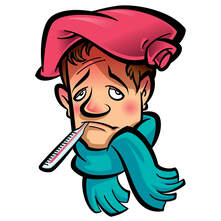 FEVER*: Aconite
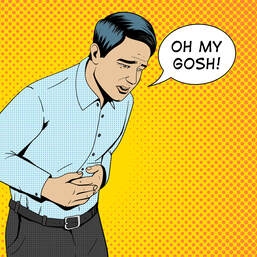 GASTRO: Arsenicum album
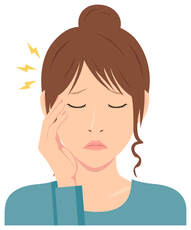 HEADACHE: Belladonna
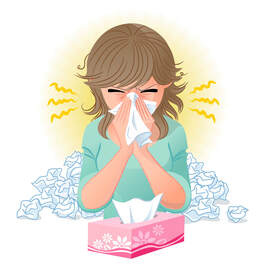 NOSE: Arsenicum album
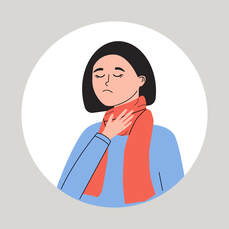 SORE THROAT: Causticum
It’s important to remember that there are many, many homeopathic remedies for each of these main symptoms. This is just a brief list which may help to get dinner on the table or that important email answered. Julia Coyte, CHom Classically Practical homeopath #wellnessawaits * Be sure to seek treatment if the fever is very high, continues to climb or is accompanied by seizure or fainting or severe headache or stiff neck (to name but a few concerning symptoms). For more information:
If you have already been through the worst of the flu, check out “Get Well Soon” to find a few helpful tips on recuperating.
0 Comments
 The point of life is balance, not perfection. This sentiment keeps popping up everywhere I turn. I’m taking it as a direct communication from the universe to me. You see, I’m not very good at balance — I’ve always been a kind of an all or nothing sort of gal. Physically, I’m pretty decent with balance. In a former life, I was a recreational figure skater and I could do my spirals and my spins and I could land my basic jumps on one blade. I used to slalom water ski as well as snow ski and those take balance. When we had to do gymnastics in PE, I was horrible at every single part of it, except the balance beam. Mentally, that’s another story. I used to think I was good at balance but only because I was juggling lots of things at once — which, in fact is not a demonstration of balance at all, just an act of mental acrobatics. I start making jewelry and that’s all I think about for the next couple of years. I decide to try my hand at art and I am almost paralyzed by the need for it to feel “perfect” and then I’m unable to do anything at all. I discover homeopathy and I drop everything else and decide there simply aren’t enough hours in the day to study this fascinating system of medicine. So, having this mentality, I have perfected the art of giving stuff up, that’s for sure. (Remember, "all or nothing" was my motto.) I'm pretty good at embracing an all-encompassing deep dive on things, often at the expense of other things. Even writing these articles -- recently taking a step back from writing weekly weighs on my mind heavily. It's a struggle to remember that "about weekly" (as I stated in the "about" section of Ruminating on Remedies) is not the same thing as weekly. However, it's never too late to start a good habit and I have finally come to the realization that it’s time to accept the idea of Wabi Sabi. I’ve heard of this concept before, but I am new to putting it into practice, but I like it, and I’m thinking this might be a good answer for me. Wabi Sabi is a traditional Japanese aesthetic that celebrates the beauty of imperfection and impermanence. Perhaps embracing this philosophy is the way out of my all or nothing mentality. Perfection, or the pursuit thereof, is an admirable goal, I suppose. But, it’s really not a very healthy way to live a life. I always tell my clients when using homeopathy that we are NOT looking for perfection, we’re looking for improvement. (See: What Now and Perfect is the Enemy of the Good.) What is it we are looking for? As a reminder, we are looking for the symptoms to pop up a little less often and when they do, to be a little less intense and hopefully we see an improvement in mood and/or energy. If one struggles with the idea of needing to be perfect, there are some excellent homeopathic remedies to consider. Ignatia is the first remedy that comes to mind for perfection. Ailments from disappointments. Unhappy love. Idealistic. Nervous. High goals, high ambitions, high ideals and high expectations and a burning desire to fulfill them (Master 2009). Intolerant of contradiction. Expectation of others to be perfect. Strong sense of inner duty. Nux vomica for overstudy; "close application to business, with its cares and anxieties" (Vermeulen 2015). These mental strains may lead to the use of stimulants, possibly in excess. Keeping late hours and displaying an irritable temper. Everything makes too strong an impression on this overloaded nervous system. See also: Overwhelmed for further discussion comparing Ignatia and Nux vomica. Arsenicum album for the fastidious person who wants everything neat and clean and tidy and just right. Even when feeling poorly, the person who may benefit from Arsenicum alb may direct someone to tidy up the sick room a bit. This is a person who, in the words of George Vithoulkas, takes "order and cleanliness to the point of expending inordinate energy constantly cleaning and straightening" (Vithoulkas 2015). Natrum muriaticum for one who is responsible and perfectionistic. They may "be compulsively fastidious, trying to control the environment". They may display a "type of hypochondria… expressed as an anxious desire to find the cause of every blemish or pimple" (Morrison 1993). Nat mur cell salt also plays an important role in balancing fluids in the body… if there is excessive dryness or excessive mucus production (for example), Nat mur may be of help. As American poet Henry Van Dyke very eloquently states, “Use what talents you possess; the woods would be very silent if no birds sang there except those that sang best.” Life is too short. Drop the idea of perfection. Let it go. Sing the song, regardless of talent. Paint the picture. Write the story. Live a good life and enjoy yourself while you're at it. Julia Coyte, CHom Classically Practical homeopath #wellnessawaits Reference list: all books accessed through RadarOpus software
Master, F. J., 2009. Clinical Observations of Children Remedies B. Jain Publishing. Morrison, R., 1993. Desktop guide to keynotes and confirmatory symptoms. Nevada City, Calif.: Hahnemann Clinic Pub. Vermeulen, F., 2015. Concordant reference : complete classic materia medica : 1284 remedies. Glasgow: Saltire Books. Vithoulkas, G., 2015. Essence of materia medica. Usa: B. Jain Publishers (P) Ltd.  Flu season has returned. Well, colds, flu, Covid, influenza, whatever you want to call it — it’s back.
I’ve said it before and I’ll say it again - homeopathy doesn’t give a hoot what you call it. Homeopathy only cares about the symptoms you are experiencing. Here is a short and sweet list of remedies to keep handy - to take at the first sign of feeling unwell; whether that be cold symptoms or fatigue setting in or aches or sneezing.
Not homeopathic but pretty impressive… Last December while traveling in England, everyone around me was coming down with whatever it was everybody was coming down with. I was in Helios pharmacy picking up some remedies and I saw A. Vogel Echinaforce tablets on the shelf. I took these, as well as Ferrum phos 6x and never had so much as a sniffle. I would use that combination again in a heartbeat. If you don’t get there in time with the above remedies and the yucks have made themselves at home, see Flu Remedies to Consider. With all of these remedy suggestions (unless otherwise noted), take a dose at the first sign of feeling unwell. Repeat every 3-12 hours. When feeling better, stop the remedy. If the symptoms return, start the remedy again. Now, go out there, make merry and celebrate the joyous season like you used to! Julia Coyte, CHom Classically Practical homeopath #wellnessawaits  “Do you have anything to help with my love life?” “What do you have in the way of ‘happy pills?’” “Do you have something for…” Fill in the blank. Not uncommon questions to a homeopath as people are looking for a quick fix for what ails them. The short answer is “sort of.” If someone is looking for a quick fix there are some possible quick answers that don’t involve working with a homeopath (though I highly recommend doing just that). I’ll get to those in a minute. The longer, more complete answer is homeopathy addresses the whole person and therefore it can help with these bigger issues which are asked about in a throw away question… like happiness. Happiness. Joy. Joie de vivre. Such a hugely important thing. Interestingly, some people looking for a quick fix for happiness may not have even considered that they are actually sad. To them, they are just "not happy." But, that's how homeopathy would look at it. A lack of happiness/sadness can stem from a vast variety of reasons… Illness. Anxiety. Chronic pain. Fear. Problems at home. Problems at work. Stress. Poor sleep. Broken heart. The list is practically endless. One of my favorite aspects of homeopathic remedies is when a remedy hits home, the emotions, the mood, is one of the first things to be affected. This is particularly apparent in an acute situation. What do I mean by that? So many times have I heard from clients that when they have given the appropriate acute homeopathic remedy to their unwell loved one that shortly thereafter the loved one still has the symptoms of illness, but they are now cheerier. When you see this change occurring, know that the physical symptoms will most likely follow behind pretty quickly. What does this look like? Children are still coughing and sneezing, but they are off the couch and now playing. The adult is still complaining of a stomach ache but they are now able to read a book or watch TV and engage with the world again. Where would I begin to help someone on a generic level who has lost their joy? With this question, I am attempting to answer generically, meaning, without hearing the details of their symptoms. A practical homeopathic solution to sadness, if you will. I would begin with some well chosen Bach Flowers. A few Bachs to consider: Mustard can help with gloom. (I have previously written about Mustard’s marvelous effects HERE. Honeysuckle can help the person see the happiness in today, rather than thinking the good old days held the secret to their happiness. Conversely, if the person is dreaming of the happiness that might one day be, Clematis may be a better fit. Wild Rose can help to reignite a passion for life for those who have become apathetic and resigned. There are other Bach Flowers which may be more suited to your situation. If you are interested in a Bach-only consultation, click HERE. Are there homeopathic remedies that are able to address a lack of joy? There are indeed! Robin Murphy lists 457 remedies in his rubric for sadness*! In his rubric for acute sadness, he lists only 3 remedies… One of which makes complete sense to me. Natrum muriaticum. (For previous articles on Nat Mur: The Big Goodbye; Springing Forward; Dehydration; Balance; Salty Lips.) Homeopathic Nat mur is made from salt. What else is made of salt? Tears are made of salt, making this an easy remedy to remember to address sadness. There are many different kinds of sadness — something I never really thought about until I started studying homeopathy. To me, back then, someone was either happy or sad. (That’s such an unbelievably strange way of thinking to me now!) What kinds of sadness are addressed by Nat mur?
Of course with all things homeopathy, the best way to choose a remedy is based on the compilation of a person’s symptoms. Though Nat mur may be a good place to start, a better fitting remedy may be found in one of those other 457 remedies. This life we have been given is short. If you are having a hard time finding joy, give homeopathy a try. Julia Coyte, CHom Classically Practical homeopath #wellnessawaits * Murphy, R., n.d. Repertory, version 3. Accessed through Radar Opus software.
 It’s a musical night around my house tonight. Not an unusual occurrence — friendly banter about what is “good” music. Who was better, Simon or Garfunkel? (Or, were they each only any good as a pair?) What would protest music look like in today’s current climate? A sharing of playlists. It’s a good thing. (I have found a bunch of my favorite tunes from my boys.) Some people are greatly affected by music. Sound as a healing modality is such a cool idea — Tibetan singing bowls? Amazing. Never heard of them? Here are a couple links about the singing bowls: HERE* and HERE* Some alternative healing practitioners use tuning forks, something I’ve never tried, but I sure would like to give it a whirl! See here.* Music affects me strongly — but, I have to like what I’m listening to or else there’s no point in having it playing, (or, I’m ok with leaving the room, too.) I really need to like what music is playing. I’m a B-side kind of a gal, and, happy music only for me, please! It’s a good thing I like a large and eclectic assortment of tunes, or life would be difficult for me. If music plays an important or unusual role in your life, one of these rubrics may help you find a remedy that really resonates with you. Let’s look at a few of these rubrics — they’re kind of fun, and quite specific and give us a little different insight into a couple of homeopathic remedies. Tarantula hispanica, the Spanish tarantula has some interesting associations to music.
It shouldn’t be a big surprise after reading that list to learn that homeopathic Tarentula hispanica is a remedy for over-stimulation of the nervous system. Another creature connected with music is the whale, or, more specifically, Ambra grisea, the highly prized substance from the secretion from the intestine of the sperm whale. For a little more info on this interesting stuff: here and here. What musical symptoms may send you in the direction of homeopathic Ambra grisea, a remedy often associated with introversion and shyness?
A bigger remedy for the music causing the tears to flow is Nat mur, a homeopathic remedy which often has deep grief and sorrow at its core. Other salty (Nat mur) music symptoms:
All three of these remedies are indicated for those who are oversensitive and emotional to music, but especially Nat mur and Tarentula, but on opposite sides of the [musical] scale. In the words of Aldous Huxley, “After silence, that which comes nearest to expressing the inexpressible is music.” Julia Coyte, CHom Classically Practical homeopath #wellnessawaits * I have no affiliation with any of these — just grabbed them off the internet after a quick search. “I haven’t understood a bar of music in my life, but I have felt it.” – Igor Stravinsky Reference list
Anon., 2023. Ambra Grisea – NutraWiki [online]. nutrawiki.org. Cherry, K., 2019. Can Tibetan Singing Bowls Help Lessen Stress? [online]. Verywell Mind. Sound Healing Tools, 2023. What Is A Tuning Fork For Used For In Medicine * Ohm Therapeutics Tools [online]. Store, T. O., n.d. How And Why To Use A Tibetan Singing Bowl [online]. The Ohm Store. Vithoulkas, G., 2019. Ambra Grisea – Homeopathic Remedy – Materia Medica Viva George Vithoulkas [online]. Hussain Kaisrani - Psychotherapist & Homeopathic Consultant.  Next up in my series on aging, "It's Never Too Late," is #2, Balance issues. What causes balance issues? Inner ear disorders, head injuries, neurological conditions and even medical issues such as diabetes, heart disease and thyroid problems, or, medications could be the culprit, too. In other words — it could be hard to find out what is causing these balance issues. There are a lot of avenues to investigate. It could make your head spin! Did I mention vertigo is a common cause of balance issues? One of the beautiful aspects of homeopathy is we don’t need to know if it’s a thyroid problem or an inner ear disturbance. We only need to know what symptoms play out with these balance issues. Can it help if we know the cause? Sure, but it’s not necessary. Let me be clear here, though. I am not suggesting to skip the investigation. Definitely figure it out with the help of a medical professional. Signs and symptoms of balance problems include (Mayo Clinic 2018):
This could become a long article with lots of twists and turns (a little vertigo-causing itself it could be, actually!) but we’re not going there. We’re going to make it simple. We’re going to look at the top homeopathic remedies for vertigo, dizziness, falling and the sensation of falling. Calcarea carbonica, Calc carb for short. Clumsy, awkward, falls easily. Feet may turn inward when walking. Get tired from a short walk. There may be a tendency to fall to either side, particularly the left side, or backward. Vertigo can be caused by turning the head, looking upward or going upstairs/uphill. This is an excellent remedy for the elderly in and of itself, regardless of a tendency to fall. Cocculus indicus has a fear of falling and a tendency to fall to either side. Cocculus has an affinity for the spine, and especially of its motor nerves. “There may be a weakness in the small of the back, as if paralyzed; the small of the back gives out when walking; the soles of the feet feel as if they were asleep; the thighs ache as if they had been pounded; first one hand then the other goes to sleep; sometimes the whole arm falls asleep … These symptoms lie at the foundation of the symptomatology of the whole drug; they all seem to depend upon spinal weakness” (Farrington 2010). In most cases which respond well to Cocculus, there is some component of vertigo at play and may be accompanied by nausea which may be worse in a sitting position or when changing from a reclining to a sitting position. Natrum muriaticum. Nat-mur has a fear of falling, too. With vertigo, this remedy has a tendency to fall forward or to the left. The vertigo feels as if they are falling and may be worse standing near a window (or looking out of a window) or on closing the eyes and is improved when lying with the head propped high. Vertigo may be worse in the morning, especially when getting out of bed and occasionally the vertigo may be accompanied by nausea or nosebleeds. Nux vomica fears falling, too, but particularly in the afternoon. (Homeopathy never fails to amaze me with its odd specificities!) With vertigo, a person who may benefit from Nux vomica isn’t so particular which way they fall: forward, backward or to the side. The vertigo of Nux-v feels as if the brain (and other objects) turn in a circle. Rhus toxicodendron tends to fall backward, forward, or, to the right. It’s a major remedy for the tendency to fall when rising from bed. Or, they may have the sensation as if they would fall over. There may be a fear of death or a weakness of memory during the vertigo. Vertigo may be worse when lying down. Rhus tox is also noted in a form of vertigo common in old age which gives a sensation of confusion and dullness (Choudhuri 2016). Stramonium popped up in the search as the only remedy listed for the following: tends to fall backward while walking; tends to fall in the dark; tends to fall to the right while sitting or rising from bed from a sitting position. There is also a tendency to hallucinations that they are falling. Vertigo is worse walking in the dark or when the eyes are closed. A few other remedies with some particular falling tendencies (single remedy rubrics): Phosphorus for vertigo with a tendency to fall from a chair. Causticum tends to fall to the left while looking upward. Spigelia tends to fall while looking down. Strength and balance training are always a good thing, despite your age. I know nothing about Elderlygym.com, but they had some good, common sense information and some clever exercises to get started on reclaiming your balance. Or, find a well-qualified yoga or pilates teacher who has experience working with people your age. If you (or a loved one) finds yourself no longer vertical on a regular basis, get it checked out. “To put everything in balance is good, to put everything in harmony is better.” Victor Hugo. Homeopathy can help with both. Julia Coyte, CHom Classically Practical homeopath #wellnessawaits Reference list
Choudhuri, N. M., 2016. A study on materia medica : an ideal text-book for homoeopathic students. Accessed through Radar Opus software. Noida, U.P., India: B. Jain Publishers (P) Ltd. Elderlygym.com, 2019. 12 Best Elderly Balance Exercises For Seniors to Reduce the Risk of Falls [online]. Eldergym® Senior Fitness. Available from: . Farrington, A., 2010. Lectures on Clinical Materia Medica in Family Order. Accessed through Radar Opus software. Mayo Clinic, 2018. Balance problems - Symptoms and causes [online]. Mayo Clinic. Morrison, R., 1998. Desktop companion to physical pathology. Nevada City, Calif.: Hahnemann Clinic Publ. Murphy, R., n.d. Repertory, version 3. Accessed through Radar Opus software.  I couldn’t come up with a pithy lip quip so I’ll just get to the point — dry lips, chapped lips, cracked lips.
What to do about them? Most people resort to some sort of lip balm but I saw an interesting study on soldiers participating in desert training. They found that “lip protectants appeared to be relatively ineffective in the prevention and treatment of chapped lips” (Shulman et al. 1997). What does homeopathy have to offer for lips? A little salt, actually. Salt? Yup, Natrum muriaticum is made from common salt and it is excellent for helping to balance fluids in the body, including ailments from said imbalances.
That about covers it, I think! My lips aren’t sealed when it comes to singing the praises of homeopathy! Julia Coyte, CHom Classically Practical homeopath #wellnessawaits  Photo by brut carniollus on Unsplash Headaches are tough. They’re tough to live through and they can be tough to help homeopathically speaking because there are so many variables in headaches. I woke up with a cracking headache the other day. This headache was so bad that I, the homeopath who has not had so much as a Tylenol in 10 years, considered for just a brief moment, taking some over the counter (OTC) medicine. Why not take that route? It’s so easy! What harm can it do? Let's take a quick look at why OTC meds might not be the best option. If you take any conventional meds, prescribed or otherwise, I highly recommend you spend a little time at drugs.com. They do a nice job of explaining the “side effects” and other important information that one should know when one is ingesting medicinal substances. (All of the below information comes from drugs.com unless otherwise noted.) The two most common OTC meds for headaches are acetaminophen (e.g. Tylenol) and NSAIDs (a.k.a. ibuprofen, e.g. Advil). Acetaminophen use in the US is shockingly high. 40% of adults reported using it monthly and 23% weekly. Acetaminophen is the most common cause of acute liver failure. Acetaminophen is also the most common cause of both intentional and unintentional poisoning in the US (Dimitropoulos 2014). Finding statistics on who uses ibuprofen and how often was not so easy. The nearest I came was to find that “approximately 70% of people 65 years or older use NSAIDs at least once per week” (Fine 2013). NSAIDs and acetaminophen both:
Ibuprofen: Very common (10% or more): Nausea (up to 57%), vomiting (up to 22%), flatulence (up to 16%), diarrhea (up to 10%)
Ibuprofen: Very common (10% or more): Hemorrhage (up to 10%), hypertension (10%), hypotension (10%) Using these OTC meds frequently for headaches can also result in rebound headaches (Freeland 2020). For years, doctors have been recommending acetaminophen over NSAIDs during pregnancy, but now we’re learning that exposure to this is linked to higher rates of ADHD and autism (National Institutes of Health 2019; Alemany et al. 2021; Cleveland Clinic 2022). An added risk of using acetaminophen is that it is commonly added to other drugs (e.g. Theraflu, Alka-Seltzer Plus Liquid Gels, Vicodin, Percocet). If you take a Tylenol in addition to taking one of these other meds, it could result in a fatal overdose (Bates 2016; Harvard Health Publishing 2018). After just a short while looking into these “safe” OTC medicines, I realized this could become a very long article, so I will stop here. (I really didn’t even look into risks for children (Ogilvie et al. 2012), though I’m sure they are just as bad, if not worse than for adults.) I will say this, though: I am even more pleased with my decision to not take the well trodden OTC painkiller route after my little internet exploration. Risking gastrointestinal bleeding or liver disease to get rid of a headache? No, thank you. I’ll pass. What route did I take? I took the road less traveled… Homeopathy, of course! Before I get to the homeopathic remedies for headaches, please note that some headaches definitely warrant medical assistance:
As I mentioned in my article Garbage In, Garbage Out, everybody experiences headaches differently. Your headache is not the same as your neighbor’s headache. Why do we get headaches? Good question. The reasons are plentiful: Stress and tension can cause headaches. Emotions can cause headaches. Crying can cause headaches. Drinking alcohol can cause headaches. Certain foods for certain people can cause headaches. The weather can cause headaches. Hunger can cause headaches. Physical issues, like sitting at a desk all day, can cause headaches. Dehydration can cause headaches (see, Summer Fun #5: Dehydration). Menses can cause headaches. Homeopathy in all its wisdom takes all of these possible causations into consideration when selecting a remedy. (Some of these conditions are chronic situations and seeking the advice from a professional homeopath may be necessary to help figure your headaches out.) As in everything homeopathy, the symptoms, or how you experience the headache, are the key to finding the right remedy for you. NOTE: A 30c potency is a good place to start. If no change occurs, repeat the remedy 15-20 minutes later. If there is any amelioration, stick with the remedy. We are not looking for perfection, we are looking for improvement. If you are NO better after a couple of doses, take another look at the symptoms and try another remedy. As I said earlier, headaches can be very tricky, especially when you are in the middle of one. (If you have somebody nearby who can help you figure it out, all the better.) Don’t get discouraged. The long-term benefits of kicking the OTC habit are worth it. If you have to succumb to an OTC, try and take note of what you were feeling and see if you can match up a remedy for the next time you get a headache. Please note also that this is not an exhaustive list of headache remedies, nor is it an exhaustive list of symptoms for each remedy listed. This is just a quick look at a few common homeopathic headache remedies which should be readily available in most household homeopathic kits or in your local health food store. Bryonia is the “grumpy bear” remedy. Grumpy because every movement you make hurts — it even hurts to move your eyes. It hurts to be touched. Every noise somebody else makes hurts. A splitting headache — as if the head would split right open or pain right across the forehead. Thirsty, thirsty, thirsty for big gulps of water. Constipation may be present. Firm pressure on the head can help as can a nice, cool cloth across the forehead. Bryonia is an excellent flu remedy and is also good for injuries and back pains, neck & shoulder pains; too much sun and coughing. Belladonna — sudden onset. Throbbing, pounding pain. In the temples or extending from temple to temple. Fullness in the head — a congestive headache. Your head may hurt so much that it hurts to touch your scalp. A couple of keynotes for Belladonna in any condition: sudden onset. Hotness. Redness. (See, Summer Fun #1: Sun.) They don’t want any noise or light or anyone to bump that bed you’re on. A Belladonna headache feels better with pressure — pressing on your head can help the pain. Headaches from coughing or sneezing. Gelsemium: Headache with the sensation as if there were a tight band around the head. A distressing headache. Pain beginning in the neck and extending up and all over the head. A good remedy for headaches with the flu. Can’t keep the eyes open. Headache from nervousness — anticipatory anxiety. Or, a headache that came on after hearing bad news. They feel better when keeping their head raised up when lying down. Their brain may feel sore. A fascinating symptom of Gelsemium is the headache can feel better after urinating. They want to be left alone, but unlike Bryonia, they have no thirst. Ignatia: Headaches from emotions: shock, sadness, grief, worry or anger. From the outside, they may seem oversensitive to the pain; they may even be hysterical. Pain as if a nail is driven into the side of the head. Or, a headache felt along the sides of the head. A heavy feeling in the head. Pulsating sensation over the eyes. They may have a very focused headache, just in one spot. Strong smells, especially tobacco smoke, can bring on a headache. Wrapping the head up may feel good. Natrum muriaticum: headaches from grief and disappointed love. Headache as if being hit by dozens of tiny hammers beating on your brain. A bursting headache. A heavy sensation in the back of the head. May feel a band or hoop sensation around head. Headache as if from a blow to the head. Feels as if they must lie down. A headache on one side of the head. Eyes are sensitive to light and there may be visual disturbances. They are worse from the sun. Nux vomica for headaches from too much (see, Too Much!) — too much alcohol, too much sugar, too much sun, too much work, too much food. Too much can also mean not enough of something else: not enough sleep, not enough emptying of the bowels (constipation). Headaches from toxic substances, street drugs as well as prescription or over the counter medicines. Or, a headache that feels as if it’s from intoxication, without imbibing the toxic substance itself. Unable to raise the head. Head feels swollen. These people can be miffed — angry and frustrated. The pain can be in the back of the head or over the eyes. As if a nail has been driven into the top of the head. Headache all over the head. Splitting headache. Dizziness, especially on rising. The head may be sensitive to cold air or drafts of air. Headache from tooth pain. Nux vomica is also good for colds and stuffed up noses, so if your headache is coming from that, this could be a good choice. Pulsatilla: Headache from overeating, especially fats. Hormonal headaches. Headaches experienced during puberty. Throbbing. Heavy head — hard to hold it up. A bubbling sensation in the head or noises in the head. Bending the head to one side may feel good. They must lie down while keeping their head raised. A one-sided headache. Oversensitivity, weepiness and craving company and with no thirst — all big keynotes for Pulsatilla. They feel better in open air and while rubbing their head or from wrapping their head. Coughs make it worse. Shooting pains or wandering pains. Sanguinaria: A “sick headache” with nausea and possibly vomiting. The pain is focused in or around the right eye. It can be a quick pain — a flash of pain on the back of the head. The eyes may feel like they’re being pressed out. Forehead pain, just above the eyes. The pain improves from sleep. Nausea. Dizziness. Vomiting and feeling better from vomiting. Bursting pain. Silicea. Lingering headaches following an illness. An occipital headache, sitting right there at the back or your head or, starting in the occiput and traveling up and over the head. May feel nauseous and vomit. Cold, clammy sweat on the forehead. Talking makes them feel worse. Constipation and straining can cause this headache. A headache from cold exposure to the head. Head pain resulting from a toothache. May feel better from binding the head. Conversely, a headache that has been brought on from having the head bound may respond well to Silicea. Like Gelsemium, the headache can improve with urination. Children with headaches may respond well to Calc phos 3x. Older children may respond well to Nat Mur or Ignatia. So, what did I take for my headache? Bryonia first, which removed the debilitating pain and I could then focus more clearly on what I was feeling. Almost immediately, I noticed how nauseous I was. Was I nauseous before? Maybe, but it certainly wasn't pronounced enough for me to notice it. Then, sitting by an open window trying to get some work done, the nearby construction noise was absolutely intolerable — really irking me. Aha. Irritability and nausea = Nux vomica. Within an hour, the bulk of the headache was gone and by afternoon I felt absolutely good to go -- as if I never even had a headache. Was it harder to take homeopathy rather than popping an OTC? Maybe, but only because it required me to think about my symptoms. But, to me, it was absolutely worth it. With homeopathy, there are no side-effects, no rebound headaches, no possibility of long-term damage (Habs and Koller 2021; American Association of Homeopathic Pharmacists 2022). And, bonus!, homeopathy has been known to help uproot the underlying cause of the existing condition, thereby lessening the frequency and intensity in the future, especially in chronic conditions. "I took the one less traveled by, And that has made all the difference.” Robert Frost Julia Coyte, CHom Classically Practical homeopath #wellnessawaits Reference list Alemany, S., Avella-García, C., Liew, Z., García-Esteban, R., Inoue, K., Cadman, T., López-Vicente, M., González, L., Riaño Galán, I., Andiarena, A., Casas, M., Margetaki, K., Strandberg-Larsen, K., Lawlor, D. A., El Marroun, H., Tiemeier, H., Iñiguez, C., Tardón, A., Santa-Marina, L. and Júlvez, J., 2021. Prenatal and postnatal exposure to acetaminophen in relation to autism spectrum and attention-deficit and hyperactivity symptoms in childhood: Meta-analysis in six European population-based cohorts. European Journal of Epidemiology [online]. American Association of Homeopathic Pharmacists, 2022. FAQs [online]. The American Association of Homeopathic Pharmacists. Anderson, L. A., 2022. Pain / Fever Drugs and Alcohol Interactions [online]. Drugs.com. Available from: https://www.drugs.com/article/pain-medications-alcohol.html Bates, A., 2016. Acetaminophen Intoxication: A Critical-Care Emergency [online]. Uspharmacist.com. Cleveland Clinic, 2022. Does Acetaminophen Heighten Risk for Autism or ADHD? [online]. Cleveland Clinic. Dimitropoulos, E., 2014. Acetaminophen Toxicity: What Pharmacists Need to Know [online]. Uspharmacist.com. Drugs.com, 2018a. Acetaminophen [online]. Drugs.com. Drugs.com, 2018b. Ibuprofen [online]. Drugs.com. Fine, M., 2013. Quantifying the Impact of NSAID-Associated Adverse Events [online]. AJMC. Freeland, M. N., 2020. Migraine Medication Overuse and Rebound Headaches - GoodRx [online]. GoodRx. Habs, M. and Koller, M., 2021. Material Risks of Homeopathic Medicinal Products: Regulatory Frameworks, Results of Preclinical Toxicology, and Clinical Meta-Analyses and Their Implications. Complementary Medicine Research [online], 28 (1), 64–84. Harvard Health Publishing, 2018. Acetaminophen safety: Be cautious but not afraid - Harvard Health [online]. Harvard Health. National Institutes of Health, 2019. NIH-funded study suggests acetaminophen exposure in pregnancy linked to higher risk of ADHD, autism [online]. National Institutes of Health (NIH). Ogilvie, J. D., Rieder, M. J. and Lim, R., 2012. Acetaminophen overdose in children. Canadian Medical Association Journal [online], 184 (13), 1492–1496. Further reading:
Kaufman, D. W., Kelly, J. P., Wiholm, B.-E., Laszlo, A., Sheehan, J. E., Koff, R. S. and Shapiro, S., 1999. The Risk of Acute Major Upper Gastrointestinal Bleeding Among Users of Aspirin and Ibuprofen at Various Levels of Alcohol Consumption. American Journal of Gastroenterology [online], 94 (11), 3189–3196. Mayo Clinic Staff, 2018. Taking pills for chronic pain? [online]. Mayo Clinic. Ullman, D., 2017. Safety Issues and Homeopathic Medicines [online]. Homeopathic.com.  When we don’t drink enough fluids to replace what we have lost… well, just imagine that shriveled up, thirsty plant on your windowsill… Similar things happen to us 2 and 4 legged creatures, too.
Too much sun, not enough shade. A game of beach volleyball, golf or tennis. A mountain hike on a beautiful summer's day. Hot days, in general. Sitting on the beach and your cooler is now empty (on that note, drinking alcohol in the sun). All of these activities can leave you parched. Don't think you're protected from dehydration because you are keeping yourself cool in the pool. I guess I never really thought about it, but sweating while swimming is a thing. Maughan (et al. 2009) and (Cox et al. 2002) show we do. Sengun (et al. 2012) found dehydration in professional underwater divers. The dehydration experienced in water athletes is less than those doing their thing on land, but it’s still there. Heat, exertion, fever, breastfeeding, high altitude, diarrhea and vomiting can all lead to dehydration, regardless of the time of year. There are plenty of recommendations out there for how much and how often to drink water and plenty of counter-recommendations, too. I leave that to you to figure out what is your necessary hydration requirements as there appears to be no “universal consensus” (Armstrong and Johnson 2018). Though far less common, just remember that over-hydration is also a thing (Hew-Butler et al. 2019). How to know if you’re getting enough liquid? Mayo Clinic (2020) says you should rarely feel thirsty and your urine should be light in color. For infants: sunken eyes or the soft spot on their heads is sunken; no tears when crying; dry mouth and not producing much urine (Raab 2021) can indicate they are dehydrated or on their way to being. Older children may complain of dizziness or headache, extreme thirst or they may be lethargic (The Royal Children's Hospital Melbourne 2018). For more information on Pediatric Fluid Management, click here. I was under the impression that the skin pinch test was a way to determine hydration status, but according to (Goehring et al. 2022), it's not reliable. I'm not convinced, however. It's apparently a decent indicator in dogs (Goucher et al. 2019). I say it's one more easy step to take to keep an eye on things. For pets, rapid and heavy panting and dry gums are two signs (First Aid for Pets 2018). Dehydration can be a life threatening condition, especially in children. Do not hesitate to seek immediate medical attention. What to do about this? Prevention is key. For mild to moderate dehydration, drink up! Water, coconut water or even commercially available rehydration supplements — though, I would caution against the chemical concoctions (you know the brightly colored drinks); they come with their own set of yuckiness. Get Well Soon: A Guide to Homeopathic First Aid (Norland 2016) suggests using a mixture of 1/4 tsp salt & 1/2 tsp honey or sugar in a pint of water and taking a tablespoon every 15 minutes if you are worried about dehydration during sickness. Similarly, the Drs Banerji recommend: “salty water (1/2 teaspoonful of common salt in half a glass of cold water) to be given frequently — one tablespoonful at a time — and repeated whenever the patient feels very thirsty” (Banerji and Banerji 2013). Might homeopathy help ward off dehydration? Perhaps. The Banerjis also recommend Natrum muriaticum 6x and Kali phos 6x (2 tabs each together), taken every 3 hours to combat dehydration. Now what? I drank some water but I still feel crummy. For the after-effects of mild to moderate dehydration, consider these remedies:
Whichever remedy you choose, take every 15 minutes until feeling some improvement and then extend the time between doses. If, after a few doses there is zero change, choose another remedy. For more information on ailments from the sun, see: Summer Fun #1: Sun. Here's to staying cool, wearing a big hat, seeking the shade and sipping some lemonade (maybe even with a couple of cell salts added to it!) Or, if you want something a little more substantial, here are links to other homemade homeopathic anti-dehydration recipes: here and here. Julia Coyte, CHom Classically Practical homeopath #wellnessawaits.com Reference list: Alton, J. and Alton, A., 2021. The survival medicine handbook : the essential guide for when help is NOT on the way : a Doom and Bloom guide. United States? Doom And Bloom Llc. Anon., 2022. Tea at the Treedome [online]. Encyclopedia SpongeBobia. Armstrong, L. and Johnson, E., 2018. Water Intake, Water Balance, and the Elusive Daily Water Requirement. Nutrients [online], 10 (12), 1928. Banerji, P. and Banerji, P., 2013. The Banerji protocols : a new method of treatment with homeopathic medicines. India: Pratip Banerji. Calabrese, J., 2015. Ditch the Gatorade and Make My Sons’ Homeopathic Electrolyte Drink [online]. joettecalabrese.com. Cox, G., Broad, E., Riley, M. and Burke, L., 2002. Body mass changes and voluntary fluid intakes of elite level water polo players and swimmers. Journal of Science and Medicine in Sport [online], 5 (3), 183–193. danastore, 2018. USING HOMEOPATHIC CELL SALTS TO HELP PROMOTE FASTER RECOVERY FROM HARMFUL HEALTH PROBLEMS IN ANIMALS by Judy Hoy [online]. Homeopathic.com. First Aid for Pets, 2018. How to tell if your dog is dehydrated | First Aid for Pets [online]. firstaidforpets.net. Goehring, M. T., Farran, J., Ingles-Laughlin, C., Benedista-Seelman, S. and Williams, B., 2022. Measures of Skin Turgor in Humans: A Systematic Review of the Literature. Wound Management & Prevention [online], 68 (4), 14–24. Goucher, T. K., Hartzell, A. M., Seales, T. S., Anmuth, A. S., Zanghi, B. M. and Otto, C. M., 2019. Evaluation of skin turgor and capillary refill time as predictors of dehydration in exercising dogs. American Journal of Veterinary Research [online], 80 (2), 123–128. Hew-Butler, T., Smith-Hale, V., Pollard-McGrandy, A. and VanSumeren, M., 2019. Of Mice and Men—The Physiology, Psychology, and Pathology of Overhydration. Nutrients [online], 11 (7), 1539. Kight, B. P. and Waseem, M., 2020. Pediatric Fluid Management [online]. PubMed. Ma, N., J, P., Ja, M., Jr, M. and M, V., 2006. Acute Mountain Sickness: Influence of Fluid Intake [online]. Wilderness & environmental medicine. Maughan, R. J., Dargavel, L. A., Hares, R. and Shirreffs, S. M., 2009. Water and Salt Balance of Well-Trained Swimmers in Training. International Journal of Sport Nutrition and Exercise Metabolism [online], 19 (6), 598–606. Mayo Clinic, 2020. Water: How much should you drink every day? [online]. Mayo Clinic. Murphy, R., n.d. Repertory, version 3. Accessed through Radar Opus software. Norland, M., 2016. Get Well Soon -- A Guide to Homeopathic First Aid. Yondercott Press. Raab, C. P., 2021. Dehydration in Children - Children’s Health Issues [online]. Merck Manuals Consumer Version. Schmukler, A. V., 2006. Homeopathy : an A to Z home handbook. Woodbury, Minn.: Llewellyn Publications. Sengun, S., Uslu, A. and Aydin, S., 2012. Application of multifrequency bioelectrical impedance analysis method for the detection of dehydration status in professional divers. Medicina (Kaunas, Lithuania) [online], 48 (4), 203–210. The Royal Children's Hospital Melbourne, 2018. Kids Health Information : Dehydration [online]. www.rch.org.au. Further Reading: Huey, R. B. and Eguskitza, X., 2001. Limits to human performance: elevated risks on high mountains. Journal of Experimental Biology [online], 204 (18), 3115–3119. Saat, M., Singh, R., Sirisinghe, R. G. and Nawawi, M., 2002. Rehydration after Exercise with Fresh Young Coconut Water, Carbohydrate-Electrolyte Beverage and Plain Water. Journal of PHYSIOLOGICAL ANTHROPOLOGY and Applied Human Science [online], 21 (2), 93–104. Smith, D., 2018. Homeopathy, Tissue Salts & Bach Flowers for Pregnancy, Labour & Post-partum. bubiroo books.  Here we go again. We’re springing forward. Whoo hoo! Enter your own favorite sarcastic noise or eye roll here.
Why do they insist on messing with our body clocks like this? Despite the books (Downing 2009; Prerau 2006) and articles I have read about Daylight Savings Time, I still can’t make heads nor tails of why we are still engaging in this ridiculousness. Alas. 25% of the human population (in more than 70 countries), (Folyovich et al. 2020) endures this nonsense twice a year — resulting in “negative health effects, with 150,000 incidences in the US, and 880,000 globally” (Zhang et al. 2020). Even the American Academy of Sleep Medicine agrees with me, stating, “It is, therefore, the position of the American Academy of Sleep Medicine that these seasonal time changes should be abolished in favor of a fixed, national, year-round standard time (Rishi et al. 2020). Manfredini (et al. 2019) did a meta-analysis of Acute Myocardial Infarctions (heart attacks) and Daylight Savings and found the risk “increased significantly” after the spring shift. For further sleep deprivation research, see my previous article. If you’re like me, it doesn’t matter if you attempt to mitigate these effects by going to bed early or sleeping in… it’s when your body tells you it’s one time and you look at your clock and it tells you it’s another time. Yuck. Well, tomorrow morning (or afternoon — whenever the painful effects of this clock tinkering kick in), I plan on taking a dose of Hyland’s Awaken*: “Natural relief of fatigue, drowsiness and irritability.” Awaken is a little bottle of relief. Relief after a lousy night’s sleep or after having to wake early for an appointment or after a fun late night out or even as a result of travel between small distances between time zones… as well as from being compliant with this silly clock changing thing. [Is it apparent that I find this a great annoyance?] What causes this relief? Let’s look at what is in Hyland's formulation and why they included these homeopathic remedies (all in X potencies): Kali Phosphoricum Known as “one of the greatest nerve remedies” (Murphy n.d.) and is one of the original 12 Schuessler Cell Salts. Cell Salts are composed from the basic minerals that cells require (Cell Salt Tissues 2022). Kali phos is helpful for drowsiness and yawning, forgetfulness and irritability. Mezereum link to photo Is a pretty little flower, aka Spurge Olive — this homeopathic remedy is made from a tincture of the fresh bark just before it flowers in the spring. Mezereum can help with mental dullness, irritability, laziness, yawning and sleepiness, in general. Natrum muriaticum Is simply common salt and is another of the original 12 cell salts. Nat Mur (as it’s known) is notable in terms of sleepiness in the late morning, mental dullness with sleepiness and weakness from loss of sleep. Nat Mur is also an excellent headache remedy — another possible symptom following not getting enough sleep. Phosphoricum acidum As a homeopathic remedy is amazingly helpful in “collapsed states” (Morrison 1993). Waking up is difficult and sleepy by day, gloomy, dull and weakness with the sleepiness. Sepia Great sleepiness during the day as results from an unrefreshing sleep (which is bound to be the case when the powers that be have goofed with our clocks!) Staphysagria Sleepiness with: difficulty opening your eyes, indigestion and an inclination to lying down. Murphy (n.d.) notes “violent yawning and stretching bring tears to the eye.” Sulphur Headaches, even migraines, from a loss of sleep and overpowering sleepiness (specifically while working). Thuja occidentalis Also addresses headaches and sleepiness as well as restlessness and tossing about during sleep. Here’s to sweet dreams. Maybe if we all concentrate really hard we can make this clock changing thing disappear! Julia Coyte, CHom Classically Practical homeopath #wellnessawaits If you suffer regularly from poor sleep, contact me to see if homeopathy may be of help to you. * I have no affiliation with Hylands, I just like their product. I usually like to provide a link for remedies, but Hylands.com no longer shows it. I see it is still available on lots of other websites, though. Hmmm. I hope Hyland’s is not taking this remedy away! The good thing about homeopathy, though, is you can make your own mixture based on the remedies and even tailor it to your specific needs. Reference list Cell Salt Tissues, 2022. Buy Schuessler Salts | Cell Salts Tissue Salts World [online]. Downing, M., 2009. Spring forward : the annual madness of daylight saving. Berkeley: Counterpoint. Folyovich, A., Biczó, D., Jarecsny, T., Al-Muhanna, N., Jánoska, D., Béres-Molnár, K. A., Dudás, E., and Toldi, G., 2020. Daylight saving time and the incidence of thrombolysis to treat acute ischemic stroke. Revue Neurologique[online], 176 (5), 361–365. Manfredini, R., Fabbian, F., Cappadona, R., De Giorgi, A., Bravi, F., Carradori, T., Flacco, M., and Manzoli, L., 2019. Daylight Saving Time and Acute Myocardial Infarction: A Meta-Analysis. Journal of Clinical Medicine [online], 8 (3), 404. Morrison, R., 1993. Desktop guide to keynotes and confirmatory symptoms. Accessed through Radar Opus. Nevada City, Calif.: Hahnemann Clinic Pub. Murphy, R., n.d. Homeopathic Remedy Guide. accessed through Radar Opus. Prerau, D. S., 2006. Seize the daylight : the curious and contentious story of daylight saving time. New York: Thunder’s Mouth Press. Rishi, M. A., Ahmed, O., Barrantes Perez, J. H., Berneking, M., Dombrowsky, J., Flynn-Evans, E. E., Santiago, V., Sullivan, S. S., Upender, R., Yuen, K., Abbasi-Feinberg, F., Aurora, R. N., Carden, K. A., Kirsch, D. B., Kristo, D. A., Malhotra, R. K., Martin, J. L., Olson, E. J., Ramar, K., and Rosen, C. L., 2020. Daylight saving time: an American Academy of Sleep Medicine position statement. Journal of Clinical Sleep Medicine [online]. Zhang, H., Dahlén, T., Khan, A., Edgren, G., and Rzhetsky, A., 2020. Measurable health effects associated with the daylight saving time shift. PLOS Computational Biology [online], 16 (6), e1007927. |
Julia Coyte, CHomI am passionate about homeopathy and I love sharing this passion. Having a working knowledge of homeopathy shouldn't be kept a secret. If people have the ability to help themselves, their children and their friends when they have minor ailments, life just gets better for everyone. That is the purpose behind Ruminating on Remedies. Archives
October 2026
Categories
All
|
 RSS Feed