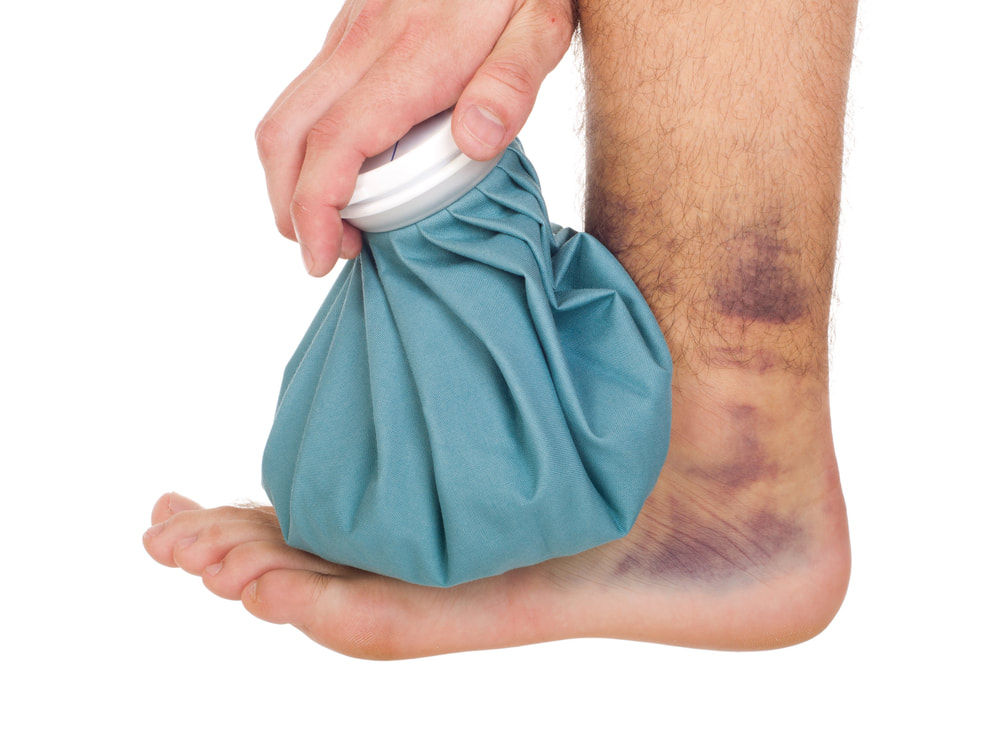
 A couple of months ago, we were given some “new” information about Tylenol. In actuality, there was nothing new about this information, it was just brought to our broader attention through “official” channels. (See, also: The Road Less Traveled, from 2022, where I brought a little light to the darker sides of over the counter (OTC) painkillers for headaches*.) “But, popping a painkiller is so easy!” I know. I truly do. There is a song called “The Sinking Feeling” by the band The The, which says, “The path of least resistance leads to the garbage heap of despair (air-air-aiiir), I think I’d better get back in bed.” I like the whole song, but that one line is what really sticks with me. Taking the easy route is not always the best choice. I am confident in saying that when it comes to dealing with your pain, taking the road less traveled is well worth the time and energy required to figure it out. Using OTC painkillers don’t just block the pain, they block important healing messages to get the job done, doing what the body is meant to do — fixing what’s wrong. “In all the cases, the immense advantage of homeopathy is that it cures in a gentle, quick and lasting manner, according to Hahnemann’s postulates. In this sense, there is no other therapeutic capable of being compared to it. Besides, it is never harmful, it is never dangerous, it never produces side effects because it lacks all chemical substance; thus, it is the best therapeutic ever invented by human beings.” For the sake of discussion, let’s assume we are dealing with a sprained ankle. What exactly is a sprained ankle? A sprain is a trauma to the ligaments by stretching it too far; this causes pain and difficulty with movement. “A mild sprain is really a pulled or strained ligament, with tenderness and mild swelling, but no tearing of tissue. A moderate strain** has partial tearing of the ligament, while a severe strain entails a complete tear, with corresponding degrees of swelling, bruising and inability to move the joint or bear weight” (Hershoff 2000). Conventional treatment involves applying ice to the area and wraps to compress the area. Taber’s also recommends “analgesics and NSAIDs.” As we’ll see below, not all sprains respond well to ice and wraps — another place where homeopathy shines. We can use those data points to help us find the best suited remedy. Let’s get back to the simplicity of the over-the-counter pills… How do they work? If you ask an AI, it will tell you that the exact mechanism of acetaminophen (e.g., Tylenol) is not fully understood, but it is believed to work through the central nervous system to block pain signals. Ibuprofen (NSAIDS/Advil), on the other hand, blocks the production of prostaglandins. What are prostaglandins again? In simple terms, prostaglandins are the chemical messengers that cause pain, swelling, and fever — let’s call that the “alarm system”. In short, Advil turns off the alarm system at the source (blocks the prostaglandins). Tylenol turns the volume down on the alarm sounds in your brain — the alarm is still going, you just don’t “hear” it as loudly, so the pain feels less intense. Sounds like a solid plan to me! What could be the problem with it? Taber’s Medical Dictionary (Venes 2017) tells us that prostaglandins (PGs) “influence a broad range of biological effects, including vasodilation, vascular permeability, bronchoconstriction†, platelet aggregation, dysmenorrhea†, inhibition of gastric acid secretion, stimulation of neural receptors for pain during tissue damage, sleep inhibition†, and maintenance of patent ductus arteriosis†.” That sums it all up, doesn’t it?! Keep reading — we’ll see if we can sort some of this out.
OK. I get it, OTCs are not completely without risk. What do you suggest using for this fictitious sprained ankle? Well, homeopathy, of course!
Or, the combination of Arnica, Ruta and Rhus is an excellent injury go-to, covering many bases at once. I encourage you to read up on the OTC painkillers. Drugs.com is a good place to start. (Hint: keep scrolling down the page on Drugs.com. There is a brief overview at the top of the page, but if you keep going, you’ll find further links for “side effects” that should be known but are a little hidden.) If you purchase/make a good household kit, you will be ready to deal with most common ailments that come your way and be able to skirt the OTCs. Julia Coyte, CHom Classically Practical homeopath #wellnessawaits *Ibuprofen/Advil/Motrin/NSAIDS are used interchangeably throughout this article; likewise acetaminophen/Tylenol, too. **Some sources say a strain is the injury to tendons while sprains are injuries to ligaments. Other sources use strain and sprain interchangeably. †In keeping with the sprained ankle analogy, bronchoconstriction, dysmenorrhea, sleep inhibition and maintenance of patent ductus arteriosis do not pertain to this situation. Reference list
American Association of Homeopathic Pharmacists, n.d. FAQs [online]. The American Association of Homeopathic Pharmacists. Anderson, L. A., 2024. Pain / Fever Drugs and Alcohol Interactions [online]. Drugs.com. Andonian, N., 2020. Rebound (Medication-Overuse) Headaches: How to Stop Them [online]. GoodRx. Dimitropoulos, E., 2014. Acetaminophen Toxicity: What Pharmacists Need to Know [online]. Uspharmacist.com. Durbin, K., 2023a. Acetaminophen [online]. Drugs.com. Durbin, K., 2023b. Ibuprofen [online]. Drugs.com. Fine, M., 2013. Quantifying the Impact of NSAID-Associated Adverse Events [online]. AJMC. Harvard Health Publishing, 2024. Acetaminophen safety: Be cautious but not afraid - Harvard Health [online]. Harvard Health. Hershoff, A., 2000. Homeopathic Remedies. Kindle. Avery Uuuu-Uuuu. Mcconnell, T. H., Paulson, V. A. and Valasek, M. A., 2014. The nature of disease : pathology for the health professions. Philadelphia: Wolters Kluwer Health/Lippincott Williams & Wilkins. Ogilvie, J. D., Rieder, M. J. and Lim, R., 2012. Acetaminophen overdose in children. Canadian Medical Association Journal [online], 184 (13), 1492–1496. Saljoughian, M., 2016. Acetaminophen Intoxication: A Critical-Care Emergency [online]. Uspharmacist.com. Venes, D., 2017. Taber’s cyclopedic medical dictionary. Kindle. Philadelphia: F.A. Davis Company. Waugh, A. and Grant, A., 2023. Ross and Wilson Anatomy and Physiology in Health and Illness. 14th ed. Edinburgh: Elsevier Health Sciences.
0 Comments
 Summer athletes, take heed! ER visits shoot up in the warmer months as the seasonal warriors take on the bats, balls and trails.  SPRAINS This one hits home right now as my husband is in week 3 of his really nasty sprain. Click here for an 18-second visual of what’s involved in an ankle sprain. (For the record, he wasn’t being a weekend warrior, it was just an unfortunate happenstance.) We were hours from medical care, his ankle was huge and looked very wrong. I gave him Arnica 1m immediately, to great effect. Ice. Rest. Elevation. More Arnica repeated as needed. The ER took X-rays and sent him on his way with 2 Ace bandages and told him to take ibuprofen for the pain. That was helpful. Not. The next day we were able to see a proper orthopedist who took more X-rays and this time sent him on his way with a walking/air boot and the same instructions for pain. He never resorted to the over-the-counter painkillers, I am happy to say. What to do after that? Well, some people say the X-rays can be a problem. If you’re worried about that, Nat Mur 6x, (twice daily the day of the X-ray and a few days following) is said to help. Back to sprained ankles… The number one remedy to turn to for any accident or injury is Arnica. Give it early and repeat as needed. As a general rule of thumb, the worse the injury, the higher the potency and then back off the repetition and lower the potency as the pain dictates. The next remedy to consider is Aconite to help reduce the shock which often follows a bad injury. Remember! Aconite rhymes with fright. Any situation that has been a shock to your system can benefit from Aconite. And, in this case, it can benefit not only the person who had the accident, but the person who witnessed the accident. The traditional, much accepted treatment for injuries is RICE: Rest, Ice, Compression and Elevation. Some injuries respond to cold, some respond to heat. Ice restricts blood flow and blood flow is what you need to heal your parts. That same blood flow is also what can cause all the swelling. I am not a physician but I have certainly had more than my fair share of injuries in my lifetime. Some of my injuries felt better with rest and elevation and ice and some felt better getting moving right away. To my mind, your pain (in addition to the input from your physician) needs to be your guide as to what is right for you. What else can help? Here are a few homeopathic suggestions and their symptoms which may help you choose the best homeopathic remedy for your injury. Arnica: Start here. “It is safe to say that 98% of patients who have suffered traumatic injury, however caused, need a dose of Arnica to begin their recovery” (Thomas 2000). A typical Arnica patient does not want anyone to touch their injured area. Sore, they may feel “beaten up” with swelling, bruising and inflammation. Topical Arnica is an option if the skin is intact. Do NOT apply Arnica to open injuries. Rhus tox: for an injury that is better for heat and continued motion. Worse on first moving. Rhus tox is better suited to simple sprains. Ruta: for an injury that is worse for motion and worse for cold application. Bruised, crushed, weak feeling. A remedy for tendons and ligaments, similar to Rhus in its pain. May feel hot to touch. Follows Arnica well to help aid in recovery. Bellis perennis: Think of this remedy if Arnica is not helping as much as you think it should be helping. Bruised pain. Like Rhus tox, a Bellis pain hurts when starting to move but gets better as you keep moving the injured area and is better from heat. A Bellis pain, though, may have the sensation of a band squeezing the injured joint. “Complicated sprains involving tendons, ligaments and soft tissue with swelling, edema and pain” (Ratera 2016). Bryonia: worse for the slightest movement of any kind. Better for rest and immobility. This person might be a little grumpy as a result of their injury. Ledum: when the injured area feels better from cold applications. Ankle feels dislocated and is worse by walking, to the point of being intolerable. The skin may be cold to the touch. Symphytum for tears at the point of tendon insertion into the bone (Ratera 2016). This remedy has been known to speed along recovery. CAUTION: do NOT use Symphytum until you are certain there is no break or fracture. Cell Salts which may be of help for sprains (Weintraub 1999):
Again, let your pain be your guide as to how long and how often you taking the remedies.  STRAINS According to American Academy of Orthopedic Surgeons, a sprain is a stretch and/or tear of a ligament and a strain is an injury to a muscle or tendon. Sprains generally occur in ankles, knees and wrists and strains generally occur in the back or leg, particularly the hamstring. Both injuries can range in severity and neither is necessarily worse than the other — it depends on the person and the injury. Conventional medicine again recommends RICE for strains (see above). Homeopathically, Arnica is the best place to start and may be all that you need. “Forcing, twisting, wrenching strains and tears are most likely to respond to Arnica if it is prescribed within 24 hours of the trauma” (Thomas 2000). The above list of remedies can also be applied to muscle strains with these notations: Rhus tox may be especially helpful in injuries due to lifting or over-exertion. Bryonia is especially well suited to intercostal and rib injuries. Ruta is also useful for injuries due to over-exertion. Follows Arnica well to help aid in recovery. Cell Salts which may be of help for strains (Weintraub 1999): In addition to the above listed cell salts:
 BICYCLE FALLS Number one: wear a helmet. Høye (2018) found helmet use reduced serious head injury by 60%. We just watched an interesting documentary called Bikes of Wrath where 5 young guys re-created the journey from Steinbeck’s novel of a similar name, but this time on bikes. None of them had any head injuries, but they did indeed have some strains and perhaps a sprain — in his case, it was his elbow. They certainly could have benefitted from carrying a little remedy kit with them, that's for sure! Sprains and strains are covered above, let's move on to cuts, scrapes and contusions. Once again, Arnica is the first stop for any injury. If the fall was big enough, take a dose of Aconite for any shock.  ROAD RASH (see this link for more information) Ooof! It’s been a long time since I’ve had to pick gravel out of my knee, but I can still remember how unpleasant that is! In this case, an oral dose of Arnica may be helpful because there is probably some element of bruising that will accompany the road rash, but remember DO NOT to apply Arnica to broken skin. I have no idea who this group is, but they have some clear images indicating whether hospital treatment should be sought following a skinned knee. Assuming the wound is not too bad and does not need professional medical care, clean the area and remove any debris. The Wound Care Society has some nice instructions. Calendula is where you want to start homeopathically for this injury — after the wound has been sufficiently cleaned out, that is. Calendula can be taken orally, or a Calendula tincture or cream can be applied. If you have the homeopathic pellet, but not a tincture, dissolve the Calendula pellet in some clean water and apply that to the wound. Hypericum can be used in this way, as well. Ledum is useful if the wound is deeper. It may be cool to the touch and very painful. Hypericum: like Calendula, Hypericum is very good and soothing to use topically. In fact, they can work very well together. Helios offers a lovely combination cream*. A Hypericum wound is very sensitive and is definitely indicated if any nerves are involved, like fingertips or toes. Hamamelis is very good if the wound continues to bleed. Arnica, too, can help with bleeding, but Hamamelis would be the next stop. Also very good for hematomas which may form as a result of the injury. Cell Salts which may be of help for cuts and abrasions (Weintraub 1999):
 BRUISING Guess what the first remedy is for bruising? You’re so clever! Yes, it’s Arnica! The bruise is painful and they don’t want anybody to touch it! Bellis perennis if the bruising is deeper, and especially if the bruising is in the abdominal area or breast tissue. Ledum shows up again here, too -- if the area feels better with cold application. Ruta or Symphytum if the bone is bruised or the periosteum is affected (the tissues between the bones and the skin — think of the shins or cheekbones). Cell Salts which may be of help for bruising (Weintraub 1999):
 HEAD INJURIES First off — consult a physician if you have hit your head, whether you were wearing a helmet, or not. Once again, Arnica is the place to start. Not only because it’s the go-to first remedy for any accident or injury, but in this case because Arnica is the first choice homeopathic remedy for head injury, period. Bonus! One of my favorite homeopathic books for injuries, First Aid with Homeopathy by Dr. Manuel Mateu Ratera, has a PDF of his Head Injury pages available online. The next-in-line remedy for head injuries is Nat sulph (see cell salts below). Like Arnica, Nat sulph can be used for residual effects from old head injuries. Why choose one over the other? Arnica has the general trauma/injury element to it. When to choose Nat sulph? Nat sulph has a slight edge in terms of residual effects from head injuries: concussions afterward, migraines afterward. However, Nat sulph is more clearly indicated when there is vertigo following a head injury or depression or mental dullness sets in after a head injury. Cell Salts which may be of help for head injuries (Weintraub 1999):
For some research on mild traumatic brain injuries and homeopathy, see Chapman et al. (1999). These remedies, Arnica in particular, should accompany you when you set out for any physical activities this summer. Or, better yet, purchase a little kit to throw in your bag. Taproots has nice one*. Julia Coyte, CHom Classically Practical homeopath #wellnessawaits * Just because NSAIDs are available over the counter does not mean they are without risks. There are plenty of studies out there talking about the downside of taking NSAIDs. Below are just a few of these studies. ** I have no affiliation with these companies, I just like their products. Reference list
American Academy of Orthopedic Surgeons, n.d. Sprains, Strains and Other Soft-Tissue Injuries - OrthoInfo - AAOS [online]. www.orthoinfo.org. Helios Homoeopathy, n.d. Hypericum/Calendula cream: helios-frontend [online]. www.helios.co.uk. Høye, A., 2018. Bicycle helmets – To wear or not to wear? A meta-analyses of the effects of bicycle helmets on injuries. Accident Analysis & Prevention [online], 117, 85–97. Mayo Clinic, 2018. Sprained ankle - Symptoms and causes [online]. Mayo Clinic. Ratera, Dr. M. M., 2016. First Aid with Homeopathy. Kander, Germany: Narayana Verlag. Sonnenschmidt, R., Sankaran, R., Vithoulkas, G., Borland, D., Scholten, J., Kusse, F., Mangialavori, M., Birch, K., Das Kaviraj, V., Perko, S., Welte, U., Le Roux, P., Hahnemann, S., Jus, S. and Chauhan, D., n.d. Manuel Mateu i Ratera First Aid with Homeopathy Reading excerpt First Aid with Homeopathy of Manuel Mateu i Ratera Publisher: Hahnemann Institut [online]. Summers, S., 2022. How can I take care of a scraped knee? [online]. www.truthaboutnursing.org. TapRoots, 2022. SUMMER On-the-Go Portable Homeopathic Kit Including Hard-covered Case, Holds 8 Kit-sized Remedies [online]. TapRoots. Temple ReadyCare, 2021. 6 Reasons for Summer ER Visits and How to Avoid Common Injuries and Illness [online]. Temple Health. Thomas, E., 2000. Homoeopathy for sports, exercise, and dance. Beaconsfield, Bucks, Uk: Beaconsfield Publishers. Weintraub, S., 1999. Natural healing with cell salts. Pleasant Grove, Ut: Woodland Pub. woundcaresociety, 2016. How to heal skinned knee quickly? [online]. Wound Care Society. woundcaresociety, 2019. How Long Does Road Rash Take To Heal [online]. Wound Care Society. Research links - Arnica: Marzotto, M., Arruda-Silva, F. and Bellavite, P., 2020. Fibronectin Gene Up-regulation by Arnica montana in Human Macrophages: Validation by Real-Time Polymerase Chain Reaction Assay. Homeopathy [online], 109 (03), 140–145. Research links Homeopathy & Head Injury: Chapman, E. H., Weintraub, R. J., Milburn, M. A., Pirozzi, T. O. and Woo, E., 1999. Homeopathic Treatment of Mild Traumatic Brain Injury: A Randomized, Double-Blind, Placebo-Controlled Clinical Trial. Journal of Head Trauma Rehabilitation [online], 14 (6), 521–542. Research links: Traumeel: Birnesser, H., Oberbaum, M., Klein, P. and Weiser, M., 2004. THE HOMEOPATHIC PREPARATION TRAUMEEL® S COMPARED WITH NSAIDS FOR SYMPTOMATIC TREATMENT OF EPICONDYLITIS. Journal of Musculoskeletal Research [online], 08 (02n03), 119–128. Conforti, A., Bertani, S., Metelmann, H., Chirumbolo, S., Lussignoli, S. and Bellavite, P., 1997. Experimental studies of the anti-inflammatory activity of a homeopathic preparation. [online]. Lussignoli, S., Bertani, S., Metelmann, H., Bellavite, P. and Conforti, A., 1999. Effect of Traumeel S, a homeopathic formulation, on blood-induced inflammation in rats. Complementary Therapies in Medicine [online], 7 (4), 225–230. Porozov, S., Cahalon, L., Weiser, M., Branski, D., Lider, O. and Oberbaum, M., 2004. Inhibition of IL-1β and TNF-α Secretion from Resting and Activated Human Immunocytes by the Homeopathic Medication Traumeel® S. Clinical and Developmental Immunology [online], 11 (2), 143–149. Schneider, C., Klein, P., Stolt, P. and Oberbaum, M., 2005. A Homeopathic Ointment Preparation Compared With 1% Diclofenac Gel for Acute Symptomatic Treatment of Tendinopathy. EXPLORE [online], 1 (6), 446–452. * Research links: NSAIDs: Allison, M. C., Howatson, A. G., Torrance, C. J., Lee, F. D. and Russell, R. I., 1992. Gastrointestinal Damage Associated with the Use of Nonsteroidal Antiinflammatory Drugs. New England Journal of Medicine [online], 327 (11), 749–754. Bindu, S., Mazumder, S. and Bandyopadhyay, U., 2020. Non-steroidal anti-inflammatory drugs (NSAIDs) and organ damage: A current perspective. Biochemical Pharmacology [online], 180, 114147. Graham, D. Y., Opekun, A. R., Willingham, F. F. and Qureshi, W. A., 2005. Visible small-intestinal mucosal injury in chronic NSAID users. Clinical Gastroenterology and Hepatology [online], 3 (1), 55–59. Risser, A., Donovan, D., Heintzman, J. and Page, T., 2009. NSAID Prescribing Precautions. American Family Physician [online], 80 (12), 1371–1378.  My latest read arrived in the mail today. “Pigs: The Homeopathic Approach to the Treatment and Prevention of Diseases.” Once I have read it, it will sit on the shelf next to “Homeopathy for the Heard: A Farmer’s Guide to Low-Cost, Non-Toxic Veterinary Care of Cattle” and the “Practical Handbook of Veterinary Homeopathy: Healing Our Companion Animals from the Inside Out.” I have more like this on the shelf, but that’s not the point of this article. The purpose of this article is to point out how marvelously well homeopathy works for all creatures. I have recently written about Rufus and his troubles ["An insecure rectum"& "What Hurts?"], but homeopathy has in the past helped our chickens and our peacock, too. Now, let's take a look at our imaginary creatures from the title of this article. I have no doubt this powerful medicine would be able to help “The Lion in Love.” That’s the Aesop’s Fable where the poor lion, in love with the woodsman’s daughter, was de-fanged and de-clawed and still denied the woodsman’s daughter anyway. This poor fellow most certainly could have been helped by Natrum muriaticum, the preeminent remedy for unrequited love. Though tiger balm isn’t made from any part of a tiger (at least not that I can find!), and can be useful for straining injuries — the mechanism behind the active ingredient is to numb and block nerve sensations to make the area feel temporarily less painful. Now, if our imaginary tiger from an Aesop’s fable was in need of tiger balm, I’m not certain it would do him much good due to his thick coat and skin. BUT, homeopathy could help him. Helios pharmacy makes a lovely remedy they call “Helios Injury.” This is a combination of Arnica, Rhus tox and Ruta grav which will bring relief to strains and sprains and bruises (oh, my! — sorry, I couldn’t resist). If you are not near a Helios (located in the UK), you can make your own combination remedy by putting a couple of pellets of each of the 3 remedies in your mouth at one time and letting them dissolve together to create this powerful remedy. The bear in Aesop's “The Bear and The Bees,” who was stung so terribly by the whole hive from whom he was trying to steal their honey… Apis mellifica is the remedy needed if the area is warm, red and swollen. But, if the sting area feels cold and it is relieved by cold, then Ledum palustre is the better choice. Whether it’s a chicken or a peacock or a dog or a pig or a whole herd of cows… homeopathy can help clear up what ails them quickly, safely and non-toxically. If you are interested in setting an appointment for your lion, tiger or bear, I'm willing to give it a try! Contact me at classicallypractical.com. |
Julia Coyte, CHomI am passionate about homeopathy and I love sharing this passion. Having a working knowledge of homeopathy shouldn't be kept a secret. If people have the ability to help themselves, their children and their friends when they have minor ailments, life just gets better for everyone. That is the purpose behind Ruminating on Remedies. Archives
October 2026
Categories
All
|
 RSS Feed