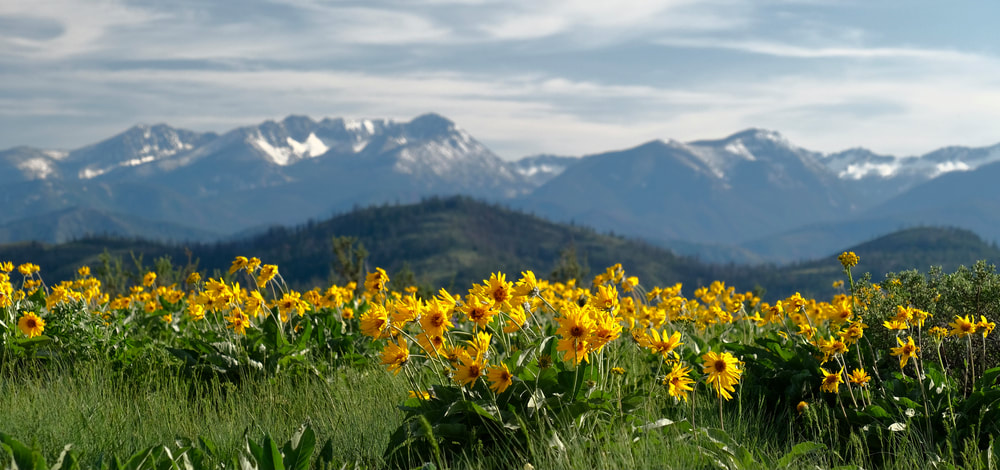
 We've never really talked about it, have we? I mean, I have mentioned Arnica in more than 35 previous articles, (too many to list here, go here or here and search “Arnica” if you would like to read those, or you can keep reading and I have linked to separate articles), but I haven’t really talked about Arnica specifically. I have always just sort of assumed that everybody reading Ruminating on Remedies already had a general grasp of Arnica. Maybe not, though. With that, let’s take a look at what is considered to be the “gateway” homeopathic remedy. Before it was made into a homeopathic remedy, it was used herbally. I remember Arnica being taught to me as a plant that was in a useful place — hikers would be tired and sore after climbing in the mountains and there sits the answer to their troubles, right at their sore feet. Excerpted from Encylopedia of Herbal Medicine (Chevallier 2000, p 172): Arnica montana, also known as Leopard’s Bane, grows in the mountain woods and pastures. It has been used extensively in European folk medicine and is an effective ointment and compress for bruises, sprains and muscle pain and improves the local blood supply and speeds healing. It is anti-inflammatory and increases the rate of reabsorption of internal bleeding. Generally the plant is now taken internally only as a homeopathic dilution, principally for shock, injury and pain. If taken as a decoction or tincture… it can be toxic even at low dosage and thus is rarely used in this way. 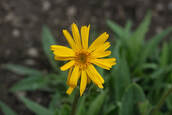 Interestingly, to me, Arnica often looks a little bedraggled in the photos… A little bent and rough around the edges and I think that is very fitting for this remedy. It looks like the Arnica plant could actually use a little bit of homeopathic Arnica itself.😄 “Due to the toxicity of the sesquiterpene lactones it contains, oral use of arnica must be avoided altogether” (Hoffman 2003, p 530). “The homeopathic preparation is entirely safe to take internally, especially when used according to homeopathic directions”(Hoffmann 2003, p 529). Let’s turn to the repertory. I have to say that repertory software makes searching all this so much easier and even more fun! (Look for an upcoming “Quickie” on software👀.) I searched for Arnica and level 4 symptoms, from Dr. Murphy:
A. L. Blackwood (2016) in A Manual of Materia Medica, Therapeutics and Pharmacology (originally published in 1906) says, “The [homeopathic] remedy is indicated following mechanical injuries, strains and wrenching of muscles, in hemorrhages from injuries, injuries of the soft parts that accompany fractures, and bruises, and ecchymosis, and in concussions of the spine and brain, and in inflammation of the skin and cellular tissues, with extreme tenderness to pressure.” Well, that sums up a lot of situations, actually. No wonder it’s the first remedy to think of following an injury. “… when the patient feels as if bruised all over, and everything upon which he lies feels too hard, compelling him to change his position on this account.” INJURIES: Now there’s a big topic… Sprains. Strains. Contusions. Fractures. Overuse injuries. Concussions. Dislocations. Guess what? Arnica would most likely be helpful in all these situations. Why? If for no other reason than they are all painful. Going back to 1855 to Dr. William Helmuth’s Surgery and Its Adaptation into Homoeopathic Practice: “Arnica is useful in all cases and ages to allay the extreme sensibility of the whole body, the general restlessness and intense pain in the seat of injury.” Let’s look again to Dr. Murphy to see where Arnica really shines —pain— using both level 3 & 4 rubrics:
BRUISING - also known as ECCHYMOSIS — is superficial bleeding under the skin or a mucous membrane; a bruise (Venes 2017). Arnica is the only level 4 remedy for skin, ecchymosis in Murphy. (Symphytum is the exception here, level 4 specific for eye injuries — black eyes — but I digress.) Bruising results when blood vessels (external or internal) are broken but the tissue surfaces remain intact (Venes 2017). As we saw above, Arnica in herbal form is known to increase the rate of reabsorption of internal bleeding and it does so also in homeopathic form. If I had a nickel for every time I have heard about an injury that looked like it was going to end up with an enormous bruise only to have disappeared to nearly nothing after taking Arnica… “Sore, lame, bruised feeling all through the body, as if beaten” (Allen). Feels as if been hit by a bus is another way of saying that. Another keynote of Arnica is they feel the bed seems too hard. Not only does the bed just seem hard, Arnica is useful for bed sores. Another injury, actually, in a strange sort of way — a localized injury, a sore, to the skin or the underlying tissue. What else to look for which may strongly indicate Arnica? They say they are fine… “nothing is wrong with me” when there is clearly something wrong with them. (rubric: Mind - IRRITABILITY, general - sends the doctor home, says he is not sick; Mind - REFUSES, general - treatment, every - very sick, in spite of being.) Massimo Mangialavori (et al. 2025) has a new book, Arnica and Similar Remedies. He takes the understanding of Arnica well beyond the gateway to homeopathy remedy for injuries. In Mangialavori’s Suggesta repertory (accessed through Radar Opus software), he shows a level 3 rubric: APATHY, INDIFFERENCE - anosognosia**, thinking that he is not ill. Back to his new book, Arnica & Similar Remedies (2025, p 4): Arnica tends to have a phobia about being sick. In fact, he is one of the most hypochondriacal remedies in the materia medica — and so he does not ‘allow’ himself to be ill… the revelation that he is susceptible is profoundly disturbing.” Prompted by Mangialavori, let’s return to Murphy and see what comes up for the mind rubrics with Arnica (again, using just levels 3 & 4):
SUMMING IT ALL UP: Jo Evans’ Asteraceae: remedies of the sunflower family (2020, p 11) gives us a nice little list of where Arnica is helpful — here are some standouts:
Arnica is without question my number one homeopathic remedy that I would not be without and now you know why. Julia Coyte, CHom Classically Practical homeopath #wellnessawaits Reference list
Allen, H. C., n.d. Keynotes and Characteristics. accessed through Radar Opus software. BLACKWOOD, A. L., 2016. A Manual of Materia Medica Theraoeutics and Pharmacology. accessed through Radar Opus software. B. Jain Publishing. Burt, W. H., 1896. Physiological Materia Medica, Containing All that is Known of the Physiological Action of Our Remedies. accessed through Radar Opus software. Chevallier, A., 2000. Natural health encyclopedia of herbal medicine. New York: Dk Pub. Inc. Evans, J., 2020. Asteraceae: remedies of the sunflower family. Harlem, NL: Emryss. Hellmuth, W. T., n.d. Surgery and Its Adaptation into Homoeopathic Practice. accessed through Radar Opus software. Hoffmann, D., 2003. Medical herbalism: The science and practice of herbal medicine. Healing Arts Press. KNERR, C., 2022. REPERTORY OF HERING’S GUIDING SYMPTOMS OF OUR MATERIA MEDICA. accessed through Radar Opus software. Mangialavori, M., n.d. Suggesta. accessed through Radar Opus software. Mangialavori, M., Heron, K., Sobraske, J. and Wood, B., 2025. Arnica & Similar Remedies. Independently Published. Murphy, R., 2006. Nature’s materia medica : 1,400 homeopathic and herbal remedies. accessed through Radar Opus software. Blackburg, Va.: Lotus Health Institute, November. Venes, D., 2017. Taber’s cyclopedic medical dictionary. Kindle. Philadelphia: F.A. Davis Company.
0 Comments
|
Julia Coyte, CHomI am passionate about homeopathy and I love sharing this passion. Having a working knowledge of homeopathy shouldn't be kept a secret. If people have the ability to help themselves, their children and their friends when they have minor ailments, life just gets better for everyone. That is the purpose behind Ruminating on Remedies. Archives
October 2026
Categories
All
|
 RSS Feed