 OHM is an excellent homeopathic pharmacy located in Texas. They make a nice little kit aimed at pain management. Unfortunately, OHM doesn’t sell to the general public; but, that doesn’t stop you from creating your own little kit based on their suggested remedies.
Let’s see why these 11 remedies are included in this select little kit and why you may want to consider having some handy. Note: this is a quick list to get you started — it is far from complete. Aconite 200c
Arnica 30 & 200
Bryonia 30c
Calc phos 6c
Calendula 30c
Chamomila 30c
Hypericum 30c
Phosphorus 30c
Rhus tox 30c
Ruta 30c
Symphytum 30c
This kit suggests using the appropriate remedy every 15 minutes in acute situations. Reduce frequency repetition upon improvement. I have a number of longer homeopathic pain remedy articles still in the works. Sit tight! Julia Coyte, CHom Classically Practical homeopath #wellnessawaits
0 Comments
I misjudged how much time I actually have had in the last couple of weeks, so here's a little pain teaser to tide you over…
With that, here is a very quick rundown of go-to pain remedies as suggested in the latest arrival to my bookshelf… Weiner’s Pain Management: A Practical Guide for Clinicians (Boswell and Cole 2007). I purchased this hefty tome (coming in over 1600 pages) to learn better how mainstream medicine approaches treating pain: diagnostic criteria, pathophysiology and methods of treatment; associated factors; causations, etc. I was, needless to say, very happy to see a chapter on Homeopathy! Dana Ullman is a co-author of this section with a short overview of homeopathy (remember, this book is aimed at mainstream physicians), followed by brief entries on common painful conditions, each accompanied by relevant research for the homeopathic remedies. Then, they have a short list of “Commonly Used Homeopathic Medicines for Painful Conditions”:
Sit tight for the longer, more in-depth pain articles which are currently in the works. I am not going to get them all posted before the end of the year - my apologies for that. Wishing you a pleasant and pain free end of 2025! Julia Coyte, CHom Classically Practical homeopath #wellnessawaits Boswell, M. V. and Cole, B. E., eds. 2007. Weiner’s pain management : a practical guide for clinicians. New York: Informa Healthcare. 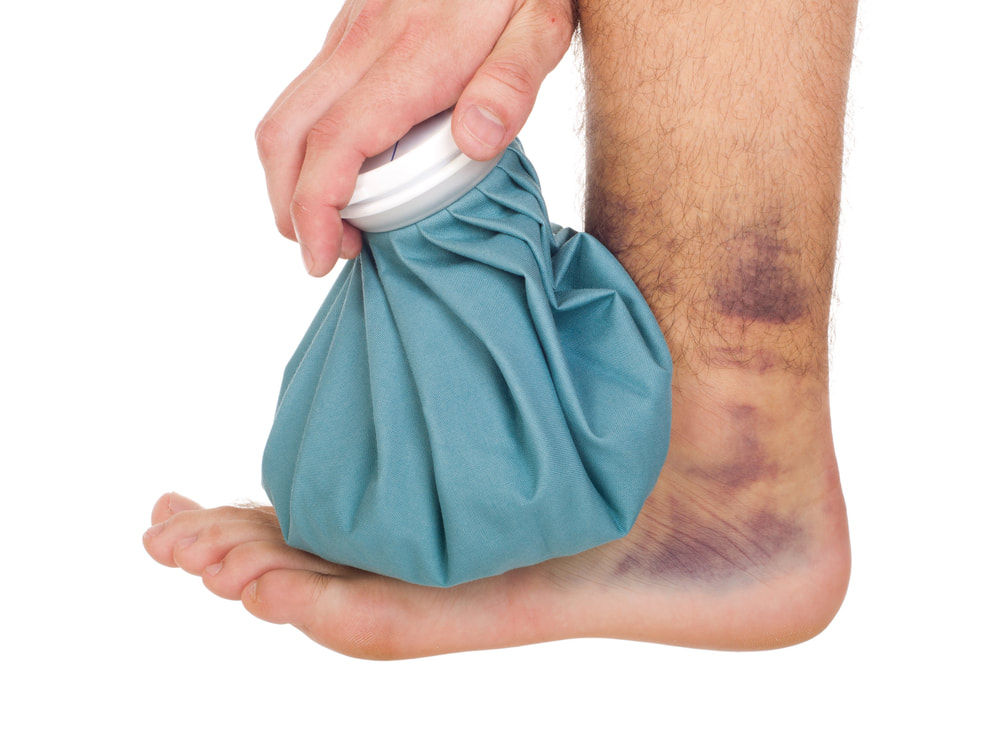 A couple of months ago, we were given some “new” information about Tylenol. In actuality, there was nothing new about this information, it was just brought to our broader attention through “official” channels. (See, also: The Road Less Traveled, from 2022, where I brought a little light to the darker sides of over the counter (OTC) painkillers for headaches*.) “But, popping a painkiller is so easy!” I know. I truly do. There is a song called “The Sinking Feeling” by the band The The, which says, “The path of least resistance leads to the garbage heap of despair (air-air-aiiir), I think I’d better get back in bed.” I like the whole song, but that one line is what really sticks with me. Taking the easy route is not always the best choice. I am confident in saying that when it comes to dealing with your pain, taking the road less traveled is well worth the time and energy required to figure it out. Using OTC painkillers don’t just block the pain, they block important healing messages to get the job done, doing what the body is meant to do — fixing what’s wrong. “In all the cases, the immense advantage of homeopathy is that it cures in a gentle, quick and lasting manner, according to Hahnemann’s postulates. In this sense, there is no other therapeutic capable of being compared to it. Besides, it is never harmful, it is never dangerous, it never produces side effects because it lacks all chemical substance; thus, it is the best therapeutic ever invented by human beings.” For the sake of discussion, let’s assume we are dealing with a sprained ankle. What exactly is a sprained ankle? A sprain is a trauma to the ligaments by stretching it too far; this causes pain and difficulty with movement. “A mild sprain is really a pulled or strained ligament, with tenderness and mild swelling, but no tearing of tissue. A moderate strain** has partial tearing of the ligament, while a severe strain entails a complete tear, with corresponding degrees of swelling, bruising and inability to move the joint or bear weight” (Hershoff 2000). Conventional treatment involves applying ice to the area and wraps to compress the area. Taber’s also recommends “analgesics and NSAIDs.” As we’ll see below, not all sprains respond well to ice and wraps — another place where homeopathy shines. We can use those data points to help us find the best suited remedy. Let’s get back to the simplicity of the over-the-counter pills… How do they work? If you ask an AI, it will tell you that the exact mechanism of acetaminophen (e.g., Tylenol) is not fully understood, but it is believed to work through the central nervous system to block pain signals. Ibuprofen (NSAIDS/Advil), on the other hand, blocks the production of prostaglandins. What are prostaglandins again? In simple terms, prostaglandins are the chemical messengers that cause pain, swelling, and fever — let’s call that the “alarm system”. In short, Advil turns off the alarm system at the source (blocks the prostaglandins). Tylenol turns the volume down on the alarm sounds in your brain — the alarm is still going, you just don’t “hear” it as loudly, so the pain feels less intense. Sounds like a solid plan to me! What could be the problem with it? Taber’s Medical Dictionary (Venes 2017) tells us that prostaglandins (PGs) “influence a broad range of biological effects, including vasodilation, vascular permeability, bronchoconstriction†, platelet aggregation, dysmenorrhea†, inhibition of gastric acid secretion, stimulation of neural receptors for pain during tissue damage, sleep inhibition†, and maintenance of patent ductus arteriosis†.” That sums it all up, doesn’t it?! Keep reading — we’ll see if we can sort some of this out.
OK. I get it, OTCs are not completely without risk. What do you suggest using for this fictitious sprained ankle? Well, homeopathy, of course!
Or, the combination of Arnica, Ruta and Rhus is an excellent injury go-to, covering many bases at once. I encourage you to read up on the OTC painkillers. Drugs.com is a good place to start. (Hint: keep scrolling down the page on Drugs.com. There is a brief overview at the top of the page, but if you keep going, you’ll find further links for “side effects” that should be known but are a little hidden.) If you purchase/make a good household kit, you will be ready to deal with most common ailments that come your way and be able to skirt the OTCs. Julia Coyte, CHom Classically Practical homeopath #wellnessawaits *Ibuprofen/Advil/Motrin/NSAIDS are used interchangeably throughout this article; likewise acetaminophen/Tylenol, too. **Some sources say a strain is the injury to tendons while sprains are injuries to ligaments. Other sources use strain and sprain interchangeably. †In keeping with the sprained ankle analogy, bronchoconstriction, dysmenorrhea, sleep inhibition and maintenance of patent ductus arteriosis do not pertain to this situation. Reference list
American Association of Homeopathic Pharmacists, n.d. FAQs [online]. The American Association of Homeopathic Pharmacists. Anderson, L. A., 2024. Pain / Fever Drugs and Alcohol Interactions [online]. Drugs.com. Andonian, N., 2020. Rebound (Medication-Overuse) Headaches: How to Stop Them [online]. GoodRx. Dimitropoulos, E., 2014. Acetaminophen Toxicity: What Pharmacists Need to Know [online]. Uspharmacist.com. Durbin, K., 2023a. Acetaminophen [online]. Drugs.com. Durbin, K., 2023b. Ibuprofen [online]. Drugs.com. Fine, M., 2013. Quantifying the Impact of NSAID-Associated Adverse Events [online]. AJMC. Harvard Health Publishing, 2024. Acetaminophen safety: Be cautious but not afraid - Harvard Health [online]. Harvard Health. Hershoff, A., 2000. Homeopathic Remedies. Kindle. Avery Uuuu-Uuuu. Mcconnell, T. H., Paulson, V. A. and Valasek, M. A., 2014. The nature of disease : pathology for the health professions. Philadelphia: Wolters Kluwer Health/Lippincott Williams & Wilkins. Ogilvie, J. D., Rieder, M. J. and Lim, R., 2012. Acetaminophen overdose in children. Canadian Medical Association Journal [online], 184 (13), 1492–1496. Saljoughian, M., 2016. Acetaminophen Intoxication: A Critical-Care Emergency [online]. Uspharmacist.com. Venes, D., 2017. Taber’s cyclopedic medical dictionary. Kindle. Philadelphia: F.A. Davis Company. Waugh, A. and Grant, A., 2023. Ross and Wilson Anatomy and Physiology in Health and Illness. 14th ed. Edinburgh: Elsevier Health Sciences.  When one is a homeopath, one sees a lot of [ahem] coincidences.
One evening someone slips and falls and can barely move and they are expecting to need x-rays the following morning and they take a dose of Arnica and coincidentally, they wake up pretty much back to their old self. A nasty burn on the forearm, and they say — “that’s going to be there for a while.” They take Cantharis and when you see them the next day, they are absolutely amazed that the burn no longer hurts. Someone ate something off — the resulting gas and tummy pain is bad. They take some Arsenicum album and all those bad things vanished. A young person scheduled for a tonsillectomy and they take some Silica and they shortly thereafter spit tonsil stones out of their mouth by the spoonful. Surgery cancelled and years later they still have their tonsils. A young person with frequent, gushing nosebleeds and each time they take the Ferrum phos, the nosebleeds stop (sometimes almost instantly). In fact, not only do they stop when taking the Ferr phos, the following nosebleeds become a little lighter and they show up a little less often. Surgery is completed and a full schedule of pain meds has been provided (including the big guns, you know what I’m talking about!), and, after taking the first dose of the indicated homeopathic remedies, not one single pain killer has been used. The dog that is pacing and panting and totally not behaving like his normal self and a few minutes after a dose of Ignatia, he is sleeping peacefully. All these situations could absolutely be chalked up to coincidence… UNTIL, you see them happen over and over and over again. That’s exactly what you see when you use homeopathy… things that seem too good to be true; things that seem totally coincidental, happening over and over again. Julia Coyte, CHom Classically Practical homeopath #wellnessawaits How much of a remedy should one buy at a time? 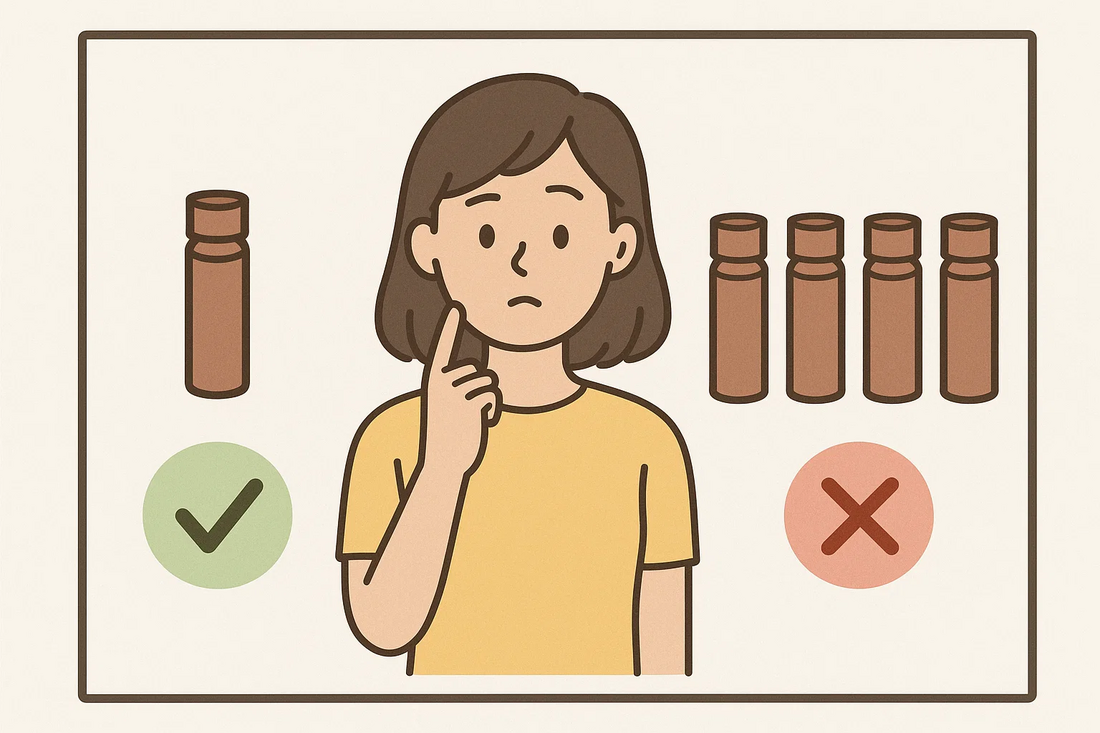 I used to routinely suggest people pick up their Boiron* remedies from Whole Foods, but they yanked them😖. And, I learned just the other day that they no longer carry colloidal silver, either. Alas. Moving on. !!!UPDATE: A kind and astute reader just reached out to remind me that Sprouts carries Boiron remedies. Yes, they do! As does Natural Grocers. With that, it’s time to turn to purchasing homeopathic remedies directly from the pharmacies. However, this article isn’t really about where to purchase the remedies. It’s more about how much of a given remedy to purchase. Thinking back to my early days of homeopathy, my first remedy from my then homeopath/MD was given to me in the office. As I recall, it was just one dose right there and that was it. Yes, it was amazing. Then, when my DOM suggested Belladonna for my ear infection, I had someone pick me up a tube (back when Whole Foods carried them). But, when I was finally going to do this homeopathy thing on my own (see: Thankful for a Yeast Infection), I purchased a few tubes because the article said it may take 3-5 months to fix that problem. I would be willing to bet that all of those original tubes are still in my stash because I never needed to repeat that remedy for that problem. That problem never returned.🎉 Have I used that remedy since then? Yes. I think I gave a couple of doses to my son once and I used it again for myself for an separate issue. I think we have been trained into purchasing large quantities of supplements and medicines. When we’re told something will take 3-5 months to fix (as above), then my brain just assumes (well, used to assume) I’m going to be taking that suggested remedy/supplement/medicine for months — probably every day, too! Generally speaking, this is not the case with homeopathy. As I mentioned above, “one and done” can certainly be a thing when the remedy is well chosen. Unlike allopathy (conventional medicine as we know it), homeopathy is not looking to make a life-long customer of a single homeopathic remedy. The homeopathic remedy is meant to help spur your body into fixing itself and often is never even repeated. There are schools of homeopathy where daily or frequent dosing is required, but even then, it’s extremely common to be “finished” with “a” remedy after about 4-6 weeks. I have had multiple conversations over the last couple of weeks with clients who “stocked up” on a particular remedy.** In fact, I still have a few extra tubes of a few extra remedies which I purchased when I first began learning homeopathy. I assumed I was going to need them. (They were so amazingly helpful, I didn’t ever want to be without them!!) Guess what? Those clients I mentioned, and I, didn’t need all those tubes. The doses we took did what needed to be done and now we are left with a handful of a certain remedy that we may or may not need again in the future. Is it always just one tube that is needed? One tube is an excellent place to start, if, for no other reason than most often 1 tube is our only minimum purchasing option. (Keep reading for other smaller options.) This is a good place to remind ourselves that one dose is one dose. Generally speaking, it doesn’t matter if one pellet is taken (regardless of size) or the entire tube is taken all at once. As long as the pellets are taken at the same time, that is most often considered one dose. Let’s take 5 pellets from any tube as an example.
Of course there is a caveat, though: some homeopathic pharmacies claim that every pellet has been medicated with the homeopathic remedy, making one pellet one dose. Other homeopathic pharmacies say, for instance, that one in four pellets have been medicated, thus 4 pellets equals one dose. However, those pellets roll around in the tube together and one would think that the medicine rubs off on the other pellets while they’re mixing and mingling in there. Having said that, follow the manufacturer’s directions to get the best results. How does one actually take the remedies? In an ideal world, the remedies will not be touched with your hands. For Boiron and Olloïs and Helios, twist the cap until the required number of pellets have fallen into the cap and throw them under your tongue directly from the cap and allow them to dissolve for about 10 seconds or so -- don't swallow them with water. For other brands with a standard cap, pour 1-3 pellets directly into the cap and toss them in your mouth from the cap. Why not touch them? Because the homeopathic medicine is on the outside of the pellets and they begin dissolving pretty much immediately on contact. If the pellets are placed in your hand, any oils or other substances on your hand may interfere with this process. Pellet sizing: Let’s take a look at the size of pellets. Unfortunately, I struck out on searching for a nice image to compare pellet sizes and the corresponding numbering system, but it seems to me that #20 = 2mm; #30 = 3mm, etc.) Using Boiron* as the most readily available brand in the US, their pellets, (according to Grok), are often referred to as size #30 or #40 and are medium sized pellets between 3-4mm in diameter. (Boiron also uses much smaller pellets or “granules”, 1-2mm in diameter, for their Oscillococcinum, in which case Boiron recommends using the entire single dose tube at a time. Here is where it gets tricky again. I don’t think it’s the fact these pellets in the Oscillococcinum tube are smaller that they recommend the entire tube as one dose because other homeopathic pharmacies will advise one single tiny pellet to be used as one dose. Perhaps we are back to the idea that not every pellet has been medicated with Boiron? Or, maybe because Boiron is so commonly found in the west that they are simply standardizing the dosage to avoid any confusion? But, as mentioned above, as long as the pellets are taken at the same time, that is one dose. Now for the packaging: Staying with Boiron, their average tubes are 2-dram. According to this site, a 2-dram vial is about the size of a AA battery or an average adult-sized pinky finger, or 2-1/2 inches. 2 drams — the size of the standard Boiron or Olloïs tubes. Depending on the size of the pellets that are used, a filled 2-dram tube of a homeopathic remedy could last a very long time, indeed. Liquid Remedies Liquid remedies have become a favorite method of dosing for me if I’m going to be taking the same remedy for a while. It’s fast and it’s easy — no waiting for the pellets to dissolve. And, technically, when you give a shake or succuss (bang it from the bottom), you are raising the potency with each dose. NOTE: don’t bother with “medicating potencies” — that’s a whole other ball game for homeopaths who dispense their own remedies in their clinics. The options are many. When ordering directly from homeopathic pharmacies, it can be a little confusing at first. Using Arnica 30c as my test remedy, here are the options available:
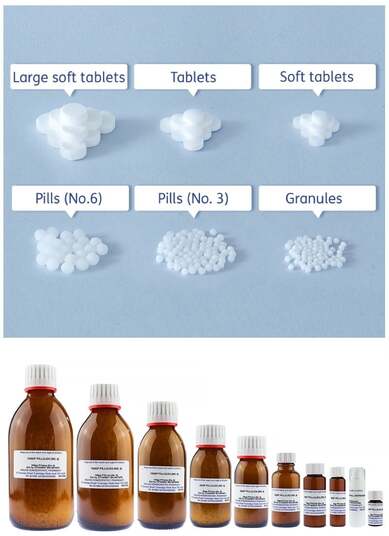 click here for Helios’ description of what they offer
Are there other purchasing options out there? You bet, but these are the most common pharmacies that I use that are available for the general public to purchase their own remedies.
That was a lot of information. Summing up:
Happy shopping! Julia Coyte, CHom Classically Practical homeopath #wellnessawaits * I have no affiliation with any of these or any other companies. ** What to do with all those extra tubes of remedies? Share them with your homeopath friends. A number of clients have found willing takers of extra remedies in various online homeopathic groups. I bet they, too, have some extras they are willing to swap! ‡ I have found as people get a little older and their hands may shake a little bit and their eyesight is not quite so crisp up close that pouring little pellets into caps can be difficult. This tablet option (available primarily from the UK) can solve that problem. *** How Helios’ 4g and Ainsworth’s 7g both seem to equate to the 2-dram I have no idea. But, the actual tubes are very similar in size. 🤷♀️ So, I looked into it. According to Brave AI:
 We've never really talked about it, have we? I mean, I have mentioned Arnica in more than 35 previous articles, (too many to list here, go here or here and search “Arnica” if you would like to read those, or you can keep reading and I have linked to separate articles), but I haven’t really talked about Arnica specifically. I have always just sort of assumed that everybody reading Ruminating on Remedies already had a general grasp of Arnica. Maybe not, though. With that, let’s take a look at what is considered to be the “gateway” homeopathic remedy. Before it was made into a homeopathic remedy, it was used herbally. I remember Arnica being taught to me as a plant that was in a useful place — hikers would be tired and sore after climbing in the mountains and there sits the answer to their troubles, right at their sore feet. Excerpted from Encylopedia of Herbal Medicine (Chevallier 2000, p 172): Arnica montana, also known as Leopard’s Bane, grows in the mountain woods and pastures. It has been used extensively in European folk medicine and is an effective ointment and compress for bruises, sprains and muscle pain and improves the local blood supply and speeds healing. It is anti-inflammatory and increases the rate of reabsorption of internal bleeding. Generally the plant is now taken internally only as a homeopathic dilution, principally for shock, injury and pain. If taken as a decoction or tincture… it can be toxic even at low dosage and thus is rarely used in this way. 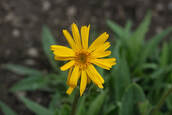 Interestingly, to me, Arnica often looks a little bedraggled in the photos… A little bent and rough around the edges and I think that is very fitting for this remedy. It looks like the Arnica plant could actually use a little bit of homeopathic Arnica itself.😄 “Due to the toxicity of the sesquiterpene lactones it contains, oral use of arnica must be avoided altogether” (Hoffman 2003, p 530). “The homeopathic preparation is entirely safe to take internally, especially when used according to homeopathic directions”(Hoffmann 2003, p 529). Let’s turn to the repertory. I have to say that repertory software makes searching all this so much easier and even more fun! (Look for an upcoming “Quickie” on software👀.) I searched for Arnica and level 4 symptoms, from Dr. Murphy:
A. L. Blackwood (2016) in A Manual of Materia Medica, Therapeutics and Pharmacology (originally published in 1906) says, “The [homeopathic] remedy is indicated following mechanical injuries, strains and wrenching of muscles, in hemorrhages from injuries, injuries of the soft parts that accompany fractures, and bruises, and ecchymosis, and in concussions of the spine and brain, and in inflammation of the skin and cellular tissues, with extreme tenderness to pressure.” Well, that sums up a lot of situations, actually. No wonder it’s the first remedy to think of following an injury. “… when the patient feels as if bruised all over, and everything upon which he lies feels too hard, compelling him to change his position on this account.” INJURIES: Now there’s a big topic… Sprains. Strains. Contusions. Fractures. Overuse injuries. Concussions. Dislocations. Guess what? Arnica would most likely be helpful in all these situations. Why? If for no other reason than they are all painful. Going back to 1855 to Dr. William Helmuth’s Surgery and Its Adaptation into Homoeopathic Practice: “Arnica is useful in all cases and ages to allay the extreme sensibility of the whole body, the general restlessness and intense pain in the seat of injury.” Let’s look again to Dr. Murphy to see where Arnica really shines —pain— using both level 3 & 4 rubrics:
BRUISING - also known as ECCHYMOSIS — is superficial bleeding under the skin or a mucous membrane; a bruise (Venes 2017). Arnica is the only level 4 remedy for skin, ecchymosis in Murphy. (Symphytum is the exception here, level 4 specific for eye injuries — black eyes — but I digress.) Bruising results when blood vessels (external or internal) are broken but the tissue surfaces remain intact (Venes 2017). As we saw above, Arnica in herbal form is known to increase the rate of reabsorption of internal bleeding and it does so also in homeopathic form. If I had a nickel for every time I have heard about an injury that looked like it was going to end up with an enormous bruise only to have disappeared to nearly nothing after taking Arnica… “Sore, lame, bruised feeling all through the body, as if beaten” (Allen). Feels as if been hit by a bus is another way of saying that. Another keynote of Arnica is they feel the bed seems too hard. Not only does the bed just seem hard, Arnica is useful for bed sores. Another injury, actually, in a strange sort of way — a localized injury, a sore, to the skin or the underlying tissue. What else to look for which may strongly indicate Arnica? They say they are fine… “nothing is wrong with me” when there is clearly something wrong with them. (rubric: Mind - IRRITABILITY, general - sends the doctor home, says he is not sick; Mind - REFUSES, general - treatment, every - very sick, in spite of being.) Massimo Mangialavori (et al. 2025) has a new book, Arnica and Similar Remedies. He takes the understanding of Arnica well beyond the gateway to homeopathy remedy for injuries. In Mangialavori’s Suggesta repertory (accessed through Radar Opus software), he shows a level 3 rubric: APATHY, INDIFFERENCE - anosognosia**, thinking that he is not ill. Back to his new book, Arnica & Similar Remedies (2025, p 4): Arnica tends to have a phobia about being sick. In fact, he is one of the most hypochondriacal remedies in the materia medica — and so he does not ‘allow’ himself to be ill… the revelation that he is susceptible is profoundly disturbing.” Prompted by Mangialavori, let’s return to Murphy and see what comes up for the mind rubrics with Arnica (again, using just levels 3 & 4):
SUMMING IT ALL UP: Jo Evans’ Asteraceae: remedies of the sunflower family (2020, p 11) gives us a nice little list of where Arnica is helpful — here are some standouts:
Arnica is without question my number one homeopathic remedy that I would not be without and now you know why. Julia Coyte, CHom Classically Practical homeopath #wellnessawaits Reference list
Allen, H. C., n.d. Keynotes and Characteristics. accessed through Radar Opus software. BLACKWOOD, A. L., 2016. A Manual of Materia Medica Theraoeutics and Pharmacology. accessed through Radar Opus software. B. Jain Publishing. Burt, W. H., 1896. Physiological Materia Medica, Containing All that is Known of the Physiological Action of Our Remedies. accessed through Radar Opus software. Chevallier, A., 2000. Natural health encyclopedia of herbal medicine. New York: Dk Pub. Inc. Evans, J., 2020. Asteraceae: remedies of the sunflower family. Harlem, NL: Emryss. Hellmuth, W. T., n.d. Surgery and Its Adaptation into Homoeopathic Practice. accessed through Radar Opus software. Hoffmann, D., 2003. Medical herbalism: The science and practice of herbal medicine. Healing Arts Press. KNERR, C., 2022. REPERTORY OF HERING’S GUIDING SYMPTOMS OF OUR MATERIA MEDICA. accessed through Radar Opus software. Mangialavori, M., n.d. Suggesta. accessed through Radar Opus software. Mangialavori, M., Heron, K., Sobraske, J. and Wood, B., 2025. Arnica & Similar Remedies. Independently Published. Murphy, R., 2006. Nature’s materia medica : 1,400 homeopathic and herbal remedies. accessed through Radar Opus software. Blackburg, Va.: Lotus Health Institute, November. Venes, D., 2017. Taber’s cyclopedic medical dictionary. Kindle. Philadelphia: F.A. Davis Company. 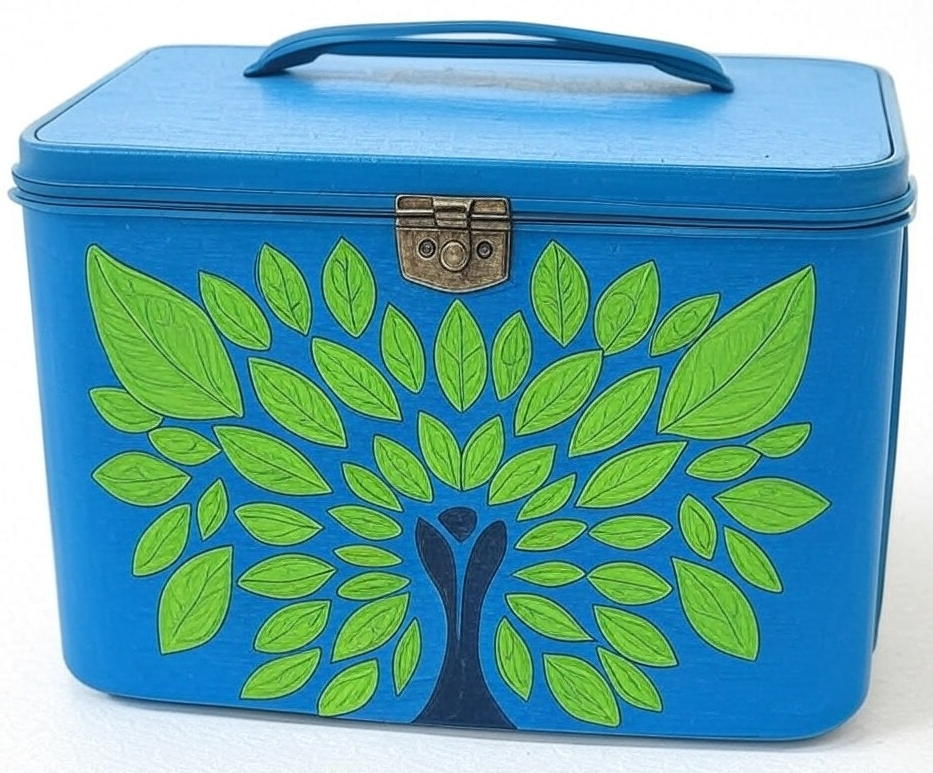 “Wellness Box” image created by AI, with my help. Everything else was done by lil’ old me. Do you have a homeopathy kit yet?
If not, why not? It doesn’t take anything fancy. Any old box or bag will do. You could purchase a kit, ready to go. (See here and here for some ideas.) Or, you could make your own kit by purchasing remedies as you need them. Start with one. Add another couple and put a rubber band around them to keep them together. Add a few more and put them in a little ziplock bag. Add a few more and put them in a shoebox. Once you have them, you are then good to go. As long as you keep them safe and together, then you have your kit. I could give you a list of suggested remedies. Would that help? (Almost all of these Ruminating on Remedies articles are written with common, easily sourced remedies in mind. Read through and find a few remedies that might serve you and your family well. It’s actually one of the hardest things to do — narrowing down to just 10, but here goes! Top 10 — in no particular order: 1. Arnica
Two people have independently spoken to me about their homeopathic kits in the last two weeks. The first one purchased a Narayani kit and there is no other way to say it — she is over the moon with it. (She didn’t purchase the little one mentioned in the link above, she went for the whole kit and kaboodle!) The second person, just this morning told me how much she loved her little kit of 50 remedies. She said she wants to carry it around with her everywhere. The other day her son was feeling a little off — Nux took care of that. She slammed her finger tip in a drawer and Arnica and Hypericum took care of that. Done. Easy. Return the remedies to where they belong and your kit is once more ready to go for the next thing that comes along. What are you waiting for?!? Julia Coyte, CHom Classically Practical homeopath #wellnessawaits  a quick look at what I affectionately call "rhoids" They are very common. 1 in 20 Americans and almost half of people older than 50 have them (Fox et al. 2014). Sometimes they are embarrassing to talk about. There’s no such thing as an embarrassing topic in my world. This stuff is important and needs to be talked about!! They are sometimes painful. They are objectively a pain in the rear! I’m talking about hemorrhoids, also known as piles, which “are tortuous masses of dilated and inflamed veins situated in the ano-rectal area” (Rahmathullah 2003). These can be inside the rectum (internal) or outside (external), or, if you’re really unlucky, the internal hemorrhoids can prolapse and can actually then be on the outside. They can bleed. They can become irritated. They can be irritating. They can be painful. They can burst. These veins are at risk of becoming thrombosed if a blood clot forms inside the hemorrhoid. I have been told that it is at this point that the bearer of such piles doesn’t care who is in the operating room when these get addressed! How does this little pile of goodies arrive in the nether regions? I’m glad you asked… Apparently, “everyone has them, the pillow-like clusters of veins that lie just beneath the mucous membranes lining the lowest part of the rectum and the anus” (Harvard Health Publishing 2019). The problematic part shows up if these veins get enlarged. How do they get enlarged? Chronic constipation and straining at toilet. Pregnancy: up to 35% (Lawrence and McLaren 2020). Sitting on the toilet for long periods of time. (If this is a thing for you, you may want to leave your phone by the sink to keep things moving along.) Heavy lifting. Being overweight. A couple of other possible causes: uterine displacement and pelvic inflammatory diseases (Enache and Soare 2022). The internal hemorrhoids are often painless, though they may bleed. The external hemorrhoids are easily irritated, as one might imagine and as Harvard Health Publishing tells us, “When a hemorrhoid protrudes, it can collect small amounts of mucus and tiny stool particles that may cause an irritation called pruritis (a tingling or faintly burning skin sensation that prompts a person to rub or scratch; an itch (Venes 2017) ani (around the anus). Wiping constantly to try to relieve the itching can worsen the problem.” That indeed sounds like a problem. Maybe somebody should invent some 4-wheel drive toilet paper to get around all the obstacles! Could it be something other than hemorrhoids you’re feeling down there? You bet. Click here and read the “Differential Diagnosis” paragraph. Fox (et al. 2014) recommends that even if hemorrhoids can be seen on examination, patients with rectal bleeding who are at risk of colorectal cancer should still undergo colonoscopy to exclude cancer as the etiology. What can help? Drinking lots of water and eating foods high in fiber to help prevent constipation and straining during bowel movements. Avoiding harsh toilet paper. Some companies seem to take the “paper” word too seriously! Since we don’t have a soft, “off-road” toilet paper yet, here are a few options to help keep the nether regions clean:
Why witch hazel wipes? I first learned about these lovely little things after the birth of my first son. Witch hazel is an astringent, meaning it can cause tissues to tighten or shrink and it has been shown to be beneficial on pain, bleeding and swelling, as well as preventing recurrence (Admuthe et al. 2025). Witch hazel has another name: Hamamelis virginiana and it is, wait for it… a homeopathic remedy! In fact, this homeopathic remedy is part of the Banerji protocol for varicose veins which is relevant here because hemorrhoids are essentially varicose veins of the rectum. The full protocol is Hamamelis 200c mixed with Arnica 3c taken twice daily. If things are particularly acute and uncomfortable, repeat this every 3 hours. A hemorrhoid which may respond well to Hamamelis may be chronic; external or internal; large and swollen and it may disturb your sleep. Why is Arnica part of this protocol? I thought Arnica was for sore muscles? Well, part of the reason Arnica is used for sore muscles is because Arnica can help reduce inflammation and pain and bruising and trauma. If you think those little dangly bits don’t suffer any trauma, think again! Arnica is also helpful to improve circulation which can definitely help because a hemorrhoid is part of the vascular structure (remember from above, a hemorrhoid is an inflamed vein). Are there any readily available homeopathic remedies that can help? Absolutely, though the Ham/Arn combination is a very good place to start. Boiron* makes a couple of combos, all with the name HemCalm. Each of these contain similar, but slightly different ingredients. HemCalm pellets and tablets contain the following remedies for the following reasons (looking at Murphy’s high level symptoms in the top row, as well as their small rubrics (unique symptoms) in the bottom row)**:
Forces of Nature* is another homeopathic combination which is for topical use only. It contains both Aesculus and Hamamelis and is combined with essential oils. WHP Be gone* from Washington Homeopathy is an ointment with Aesculus, Collinsonia and Hamamelis. Are there other combinations out there? Yes! A quick look on the internet turns up all sorts of hemorrhoid relief — some of them are homeopathic, most are not. Choose carefully! To see why you may want to choose the homeopathic remedies over the others, see these studies:
If you have tried everything and are still struggling, consider booking a consult. Julia Coyte, CHom Classically Practical homeopath #wellnessawaits *I have no affiliation with this or any other company. ** Many of these remedies may be found in many of these rubrics. I have only highlighted the level 3 & 4 rubrics as well as small (fewer than 5 remedies) rubrics. I have touched on the most common homeopathic remedies for hemorrhoids in this article, but there are more. To read further on homeopathic hemorrhoid remedies, consider subscribing to Ruminating on Remedies: Digging Deeper. Reference list
Admuthe, N. B., Karajgi, S., Uikey, J., Bhimraj, N. M., Prakash, V., Babar, T. P., Karra, T. and Shrivastava, R., 2025. Natural Products in Hemorrhoid Management: A Comprehensive Literature Review of Traditional Herbal Remedies and Evidence-Based Therapies. Cureus [online], 17 (5), e83397. Enache, T. and Soare, D. E., 2022. Doppler Ultrasound Testing Suggests Hemorrhoids in Females may be a Consequence of Impaired Blood Flow Associated with Pelvic Organ Prolapse. Journal of Coloproctology [online], 42 (03), 228–233. Fox, A., Tietze, P. H. and Ramakrishnan, K., 2014. Anorectal conditions: hemorrhoids. FP essentials [online], 419, 11–19. Harvard Health Publishing, 2019. Hemorrhoids and what to do about them - Harvard Health [online]. Harvard Health. Kamlesh Bagmar, 2020. Management of Haemorrhoids with Individualized Homoeopathy in Improving Quality of Life: An Observational Study [online]. International Journal of Research. Lawrence, A. and McLaren, E. R., 2020. External Hemorrhoid [online]. PubMed. Lohsiriwat, V., 2012. Hemorrhoids: From basic pathophysiology to clinical management. World Journal of Gastroenterology [online], 18 (17), 2009. NIH, 2016. Definition & Facts of Hemorrhoids - NIDDK [online]. National Institute of Diabetes and Digestive and Kidney Diseases. Rahmathullah, S., 2003. Compendium of human diseases and their cure by homoeopathic treatment : a modern book of homoeopathic therapeutics with concise description of the diseases. London: S. Rahmathullah. Venes, D., 2017. Taber’s cyclopedic medical dictionary. Kindle. Philadelphia: F.A. Davis Company. Washington Homeopathic Products, 2025. WHP Be goneTM Hemorrhoids [online]. Homeopathy Works.  Head injuries can encompass many things: concussion, skull fractures, contusions, subdural hematomas, scalp wounds, or even injuries to the underlying tissues and blood vessels in the head. For this article, we’re going to address those head injuries which involve a real whack to the noggin (or, not, as it turns out!), generally resulting in a traumatic brain injury (TBI) or mTBI (mild traumatic brain injury). When I was a kid, you would hit your head and that was the end of that. Unless you hit it so hard you got a concussion — that got the parents’ attention. Turns out a concussion is a mild traumatic brain injury (Mayo Clinic 2022). And, it also turns out you don’t have to hit your head all that hard (if at all!) to get a concussion/brain injury. How could you get a concussion without hitting your head? Anything that can cause the head and brain to move rapidly back and forth… Sudden stops like car crashes, violent shaking, contact sports, even blast injuries (McKee and Robinson 2014). (I’m beginning to understand, all these years later, that a head injury is a head injury and probably shouldn’t be dismissed too easily.) How do you know if you or your child has suffered a concussion? John Hopkins Medicine tells us to look for:
What to do if you or your child suffers a mild concussion? Specific treatment will be determined by your doctor, but generally speaking may include:
How can homeopathy help? First Aid with Homeopathy (Ratera 2016, p. 199) talks about the “usefulness of homeopathic remedies as adjuvant to necessary conventional measures.” In case you didn’t already know, homeopathy works so well alongside conventional medicine! There are two major go-to homeopathic remedies for head injuries: Arnica and Natrum sulphuricum. Every book I looked in for homeopathic remedies for head injuries lists Arnica as the first remedy to use. Why? Number one, Arnica is pretty much the first remedy for any injury. Number two… well, it’s Arnica! So good for so many things!! Let’s see how Arnica and Nat sulph stack up in the following head injury rubrics†: 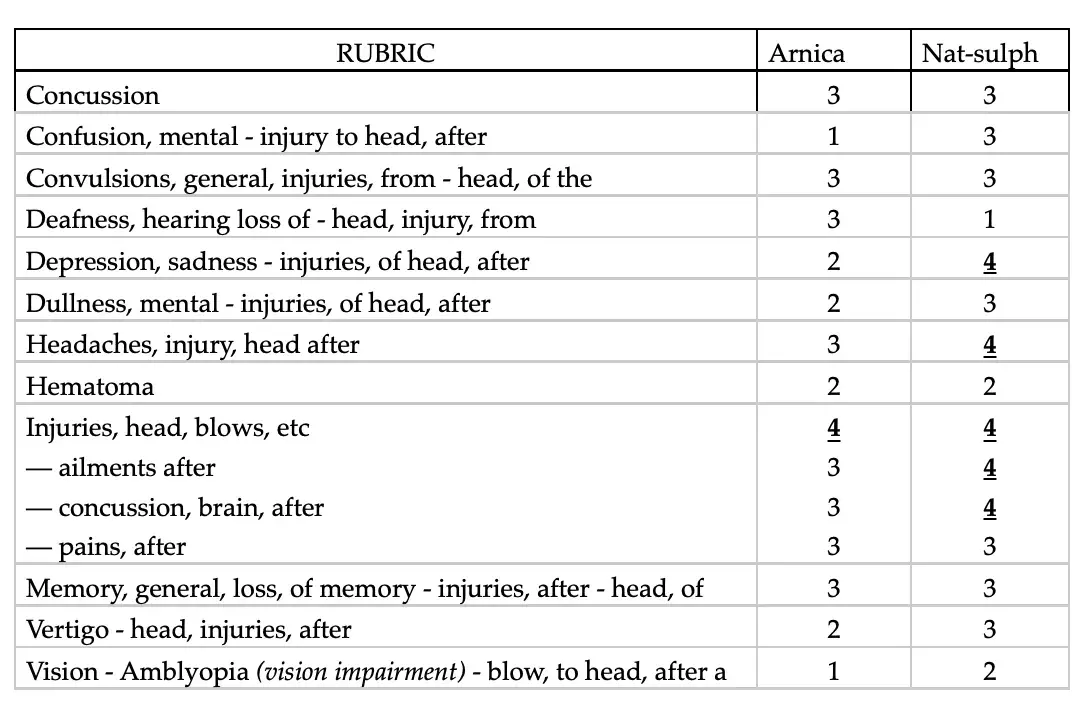 One might think looking at these two brief comparisons of the remedies* that Nat sulph would be the go-to remedy for a head injury. However, look a little closer… most of the rubrics say, “after.”
E.A. Farringon (2018, p 270-271) says, “Arnica is applicable to both the acute and the chronic effects of injuries. The acute injuries for which it is useful are the following: simple bruises… concussions of the brain or spine or of both. We have no remedy which equals Arnica in these last-named cases. Even compression of the brain comes within the range of Arnica, whether this compression be the result of a displaced fragment of bone in cranial fracture, or the result of effusion of blood within the cranial cavity. Arnica can not, of course, cure in the former of these cases; an operation is demanded in order to obtain permanent relief.” Richard Pitt (2015, p. 48) says, “as we know, all injuries basically start with Arnica. It fits the nature of so many injuries, especially at the beginning of an injury, but also very much for chronic consequences of injuries.” This is an important point in differentiating Arnica and Nat sulph. To sum it up too neatly, Arnica is more indicated immediately after the head injury and Nat sulph would come in later as a clean up crew. However, that’s not exactly true; there are more nuances to it, of course. But, it’s a good place to start. Let’s keep looking… (It is true that most home users of homeopathy have Arnica at hand — it is, after all, known as “the gateway” homeopathic remedy because it has such a huge range of uses in treating so many conditions, especially as related to trauma, injuries and surgeries. Arnica is included in virtually every basic homeopathic remedy kit.) Some of the keynotes of Arnica (Morrison 1993):
Some more Arnica keynotes from Morrison’s new book, Clinically Verified Materia Medica, Volume 1‡ (2025):
To clarify further on Arnica from Dr. Morrison’s new book (2025, p. 186), the “trauma created various defensive reactions — the first of which is denial… immediately declaring, ‘I’m fine.’… Other patients said that they were unable to ask for or accept help no matter how dire the circumstance… patients stated a need to remain in control by which they meant to hide or minimize the trauma.” Natrum sulphuricum keynotes (Morrison 1993‡):
Dr. Ratera (2016) says of Nat sulph: “Consequences of head trauma: vertigo, absences, blindness, coma, concussion, convulsions, headache, dullness, madness, sadness, suicidal thoughts, and memory loss.” (The key word to me, here, is “consequences.”) “Often, people who have suffered head injuries present immediately or after some time, with headaches, dizziness, memory loss, bouts of distraction, absences or epileptiform (brain activity that resembles that of epilepsy) seizures, and other disorders of concentration. These disorders can become chronic and be extremely annoying” — Nat sulph is his answer. But, once again, it’s not as clear cut as recent head trauma = Arnica and lingering effects of head trauma = Nat sulph. (That would be too easy!) Arnica, too, can be very helpful way down the road for old head traumas. (A quick search of “Arnica” and “ailments from” in Radar Opus software shows: “Head - injuries, head, blows, etc - ailments, after” and there sits Arnica in bold type. Nat sulph is there, too, in bold underline.) Back to Farrington (2018, p. 271), “In the chronic effects of injury we may use Arnica when diseases (which may even be entirely foreign in their appearance to the ordinary symptomatology of the drug) may be traced to a traumatic origin. No matter what that disease may be whether of the brain, eyes, lungs or nerves, if the injury is the exciting cause, the administration of Arnica is proper.” (See? not so clear cut, right?) So, what does Dr. Farrington (2018, p. 849) have to say about Nat sulph? “In the chronic effects of injury, especially to the head, Natrium sulph is almost indispensable.” … But, then again, it is as simple as what I wrote earlier. If you have hit your head, start with Arnica. If there are lingering effects of that head injury and Arnica isn’t taking care of business, swap to Nat sulph. … and, if years down the line you think, “you know, I haven’t felt right ever since I hit my head,” give Arnica a try. If you readily take part in “brain rattling” activities, you might want to keep both Arnica and Nat sulph handy. Julia Coyte, CHom Classically Practical homeopath #wellnessawaits Arnica and Nat sulph are not the only two well-indicated remedies for head injuries — they are just the most commonly available and well known remedies for head injuries. To read further on homeopathic head injury remedies, consider subscribing to Ruminating on Remedies: Digging Deeper. The first of the next two head injury comparisons will be out in the next week (or so). *Homeopathic repertories are laid out giving a number for each remedy and how well indicated that remedy is for the specific rubric. In Murphy, 4 is the highest (most well-indicated) remedy. **Be certain to seek medical assistance in these conditions! †All the remedies listed in these rubrics (sometimes a couple, sometimes dozens) are all potentially appropriately indicated — it’s just that some are more strongly indicated in a stand-alone rubric. For today, we are just comparing Arnica and Nat sulph. However, it’s important to remember that the right remedy in a case is the right remedy, regardless of how strongly indicated the remedy may be. Homeopathy is so full of nuance and minutiae! ‡This is a bit unfair to Nat sulph as volume 1 stops at Euphrasia! I wish I had the other volumes but they have yet to be published!  I was beginning to think the flu season may have just skimmed over the world this year, but here it is… a little later than usual, but, just like always, it is no fun. And, just like always, a little prevention can go a long way. (See also: Calming the Cold; Flu Remedies to Consider; Ho Ho Ho, (not Oooooh No!); Ahh-choo; On the 4th Day of Cell Salts… Ferr Phos.) Let’s jump ahead to the unfortunate situation we see in the picture above where those early signals were missed (or, ignored) and, here we are, unable to get out of bed… feeling just awful and the kids are hungry. (Oh, man, I remember those days. So painful!) So, where would one start in this scenario? Below are seven MAIN COMPLAINTs, followed by 4 or 5 commonly found remedies with 4 or 5 symptoms each which may help to choose a remedy to get back on your feet quickly. Remember! We are not looking for perfection. We are looking for improvement. We are looking to move the worst symptom out of the way for a minute so you can do what you need to do and then, when that’s done, get back into bed to rest properly. This is far from a complete flu repertory. The intent here is to put as many remedies as possible in a quick list. All of these remedies could (pretty much) be listed under all of the headings. In other words, they are (for the most part) wide-reaching flu remedies. Choose the worst MAIN COMPLAINT (found in BOLD CAPS) you are experiencing at the moment and then choose the remedy that best fits your current symptoms. Notes:
 ACHING BODY: Arnica
 COUGH: Antimonium tart
 FEVER*: Aconite
 GASTRO: Arsenicum album
 HEADACHE: Belladonna
 NOSE: Arsenicum album
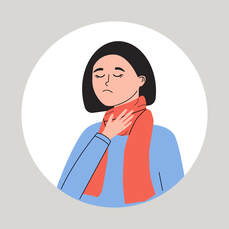 SORE THROAT: Causticum
It’s important to remember that there are many, many homeopathic remedies for each of these main symptoms. This is just a brief list which may help to get dinner on the table or that important email answered. Julia Coyte, CHom Classically Practical homeopath #wellnessawaits * Be sure to seek treatment if the fever is very high, continues to climb or is accompanied by seizure or fainting or severe headache or stiff neck (to name but a few concerning symptoms). For more information:
If you have already been through the worst of the flu, check out “Get Well Soon” to find a few helpful tips on recuperating. |
Julia Coyte, CHomI am passionate about homeopathy and I love sharing this passion. Having a working knowledge of homeopathy shouldn't be kept a secret. If people have the ability to help themselves, their children and their friends when they have minor ailments, life just gets better for everyone. That is the purpose behind Ruminating on Remedies. Archives
October 2026
Categories
All
|
 RSS Feed