 Where has the summer gone? I spoke with someone yesterday who told me their son started kindergarten that morning. I really don’t know how it happens, but once again, school is here! I thought summer vacation seemed short as a kid, but I think it seems even shorter as an adult.
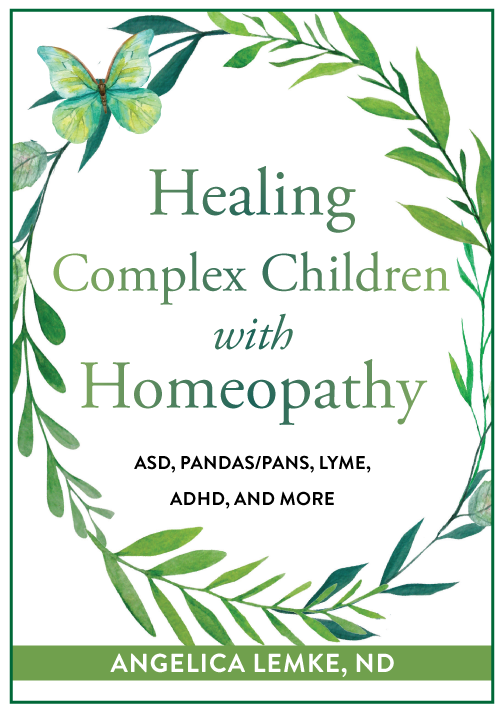
I no longer have school-aged youngsters but there is no escaping all the “back to school” stuff everywhere right now. To read some previous articles about some homeopathic remedies which may help with all the emotions that come along with heading back to the classroom, check these out: Today, though, I’m going to take a little different angle. School is school for most kids — but not all kids. “Among children 8 years in 2022, ASD (Autism Spectrum Disorder) prevalence was 32.2 per 1,000 children (one in 31)” (Shaw 2025). Almost 1 in 6 US children have a developmental disability (Zablotsky et al. 2019). That translates to an awful lot of kids who may need a little extra help in school. Angelica Lemke, ND has written a really amazing book and this little review is not going to do the book justice. Healing Complex Children with Homeopathy: ASD, PANDAS/PANS, LYME, ADHD, and more is a packed (400+ pages), but straightforward and clear book written by “a homeopath and naturopath who specializes in the complex cases of children through an empathic, heart-centered approach. She has empowered many of the parents she works with to ‘find the healer within’, using homeopathy to support their family and the health of their communities.” “Invit[ing] parents to be active participants in the healing of their children” (Lemke 2021*). Before you cast this book aside because the children in your life are not “complex” and don’t suffer from any of the above listed conditions, just know that this book is pretty much a good overview of homeopathic remedies and how to use them in general. I have read a gazillion books on homeopathy and this one provided me with more than a few “aha” nuggets. Here is a link for the table of contents and introduction so you can get an overview of what’s in it. “I wrote this book to empower parents, homeopaths, and healers to use their intuition, along with homeopathic remedies, to heal the growing number of today’s children who suffer from a wide range of complex conditions.” The keyword here for how Angelica works is “intuition.” She teaches parents how to tune into their intuition and their “inner knowing” to connect their child with an appropriate homeopathic remedy. Healing Complex Children begins with chapters on the history and practice of homeopathy and then dives right into miasms (see also: Miasms, a very brief introduction). Unlike most homeopathic books written for the general public, she doesn’t just touch on the explanation of miasms, she shows us how to see them in our children and includes information on some nosodes and what physical and mental symptoms to look for which may indicate the use of these remedies. Her conclusion to this chapter is a nice list of the miasms with key remedies for each. Chapter 4: Animal Remedies: what they are made from, why they would be prescribed and how to recognize the symptoms which may lead to an animal remedy. This chapter looks at lacs (milks), spiders, insects, birds, mollusks, fish, reptiles and amphibians. Within each sub-section is a list of “notable features” which can be found in complex children. Before describing those remedies, though, Lemke provides us with a short and sweet differential list of how these remedies may show up on the physical plane, followed by a few questions which may help find an animal remedy. Each sub-section has a generalized overview of the remedy family, followed by a succinct paragraph or two with a basic introduction to each remedy — as is the case for all her remedy write-ups, they are just enough to whet the appetite and send one digging further into the materia medica. Chapter 5: Plant Remedies: includes another nice little list of a few physicals/organs and some commonly associated remedies. She writes, “While there are thousands of plant remedies that could be included here, this chapter focuses on those that I have found to be most useful in complex children. In particular, plant remedies can be critical to help address pain sensations in the body. When a child is in pain and their life revolves around it, this is the main symptom that should be addressed and plants become prime candidates.” At this point, she has a sidebar/box with a little information about Gemmos and Bach flowers. I love Gemmos and Bach flowers and am always happy to see that info being shared!! Next are questions to help find a plant remedy, followed by each plant family with a short overview and then the paragraph or two of each remedy. Chapter 6: Mineral and Periodic Table Remedies: "Mineral remedies assist with issues of structure, function, and deficiency in the body… For children who are building up their bodies, their sense of self, and their ability to process information, mineral remedies are key to helping them develop in a solid, stable way.” Lemke touches on Jan Scholten’s Element Theory and proceeds essentially through the periodic table in her listing of remedies. Within the many sub-sections are tables listing the various remedies within certain elements, e.g. carbon-based remedies; the multiple Natrum remedies, Magnesia remedies, Kali remedies, etc. We are just over halfway through this book and the huge number of remedies already covered is impressive! Chapters 7 & 8: Nosodes & Sarcodes. As mentioned above, not many homeopathy books aimed at the general population (as opposed to being written for homeopaths) include much information on Nosodes and Sarcodes. Lemke lists core sensations, physical symptoms, and gastrointestinal symptoms which may lead to the use of a nosode, followed by how to use them. In my estimation, this chapter on nosodes alone is worth the price of admission. There is so much amazingly useful information here! There is also a really nice, long section on Lyme disease and concurrent co-infections. The Sarcodes section is divided into matridonal remedies and hormones, glands and neurotransmitters — again with a paragraph on each remedy. Sarcodes are another area where there is a dearth of useful information and Healing Complex Children helps to shed some light on these important remedies… what they are, how to use them, why to use them. She explains that, “the purpose of the treatment with a sarcode is to heal the tissue so it can go back to its normal job, not to replace the energy of the tissue, such as with thyroid medication.” Chapter 9: Tautopathy. Another topic for which good information is hard to find. This book is chock-a-block full of useful stuff! Chapter 10, the final chapter in the book, is “Remedies by Categories of Complex Kids.” Sub-sections include, among others: Children with Acute Rage and Panic; Highly Anxious Children; Sad, Serious Children; Angelic Children; Hyperactive Children and ends with Common Remedies for Parents, noting: “It is of utmost importance for parents to heal themselves along with their children.” There are plenty of “woo woo” ideas in this book, which I have heard some homeopaths object to, e.g. if they “flit” from one thing to the next, they may need a Butterfly remedy. Let’s be honest here — all homeopathy is a little “woo woo.” If you have a complex child for which nothing has been able to help, maybe finding a remedy based on the fact the child “flits” is exactly what that child needs! Going beyond her book, back in 2015, based on Angelica Lemke’s practice of focusing on special needs children, she began the School of Intuitive Homeopathy: “Integrating an intuitive approach with a traditional homeopathy foundation, creating a new paradigm for the future of medicine.” Courses include:
Healing Complex Children with Homeopathy is available in the usual places, but it’s also available on her own website. And, I’m really excited about this… I just learned this book is now available on Kindle. I have a well-loved, well-thumbed, dog-eared, underlined copy and I have been hoping for an electronic version because this is a book that I return to over and over again and now I can search it electronically. Yay!! If you are interested in learning homeopathy, don’t discard this book because “children” is in the title. Know that this book is an incredibly helpful overview of this amazingly powerful modality called homeopathy; touching on all the important topics and introducing us to many remedy families as well as a large range of individual remedies. Happy reading! Julia Coyte, CHom Classically Practical homeopath #wellnessawaits * All further quotes in this article are coming from Angelica Lemke’s Healing Complex Children with Homeopathy.
0 Comments
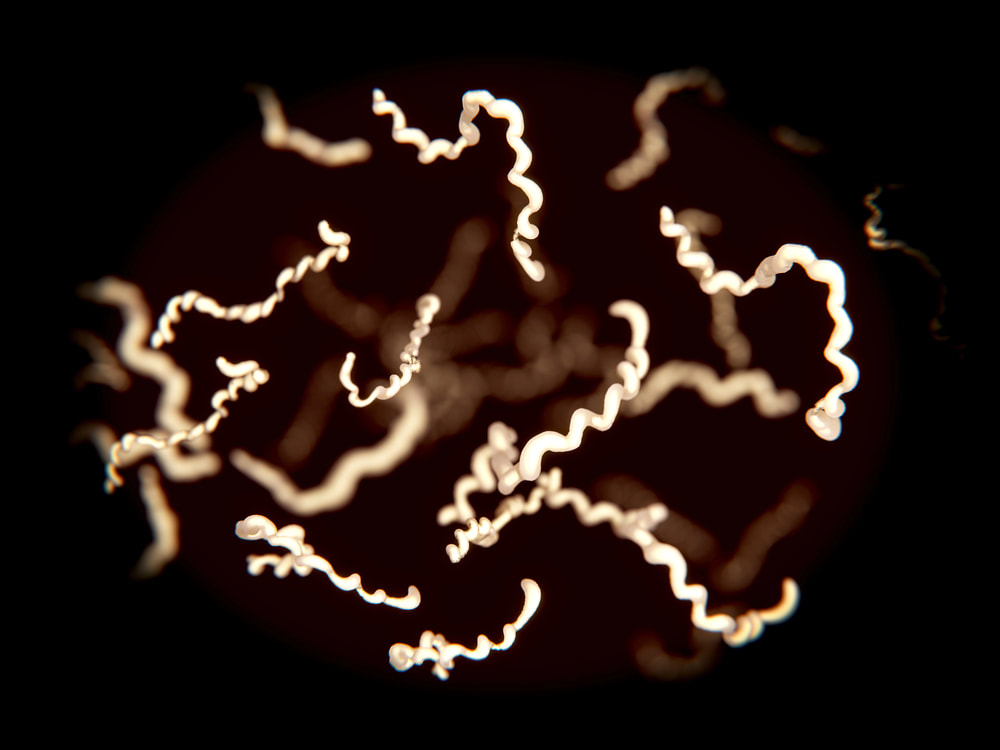 Back in August I sent out a post saying, “Please Stand By.” I mentioned that I was returning from vacation and I had been ready to hit the ground running but that life had other plans for me. We are now to February and I think, hope, I have moved (most of) life’s other plans to the wayside and I can resume as previously planned. What happened? An awful lot, and I suspect that plays a part in what ultimately put the roadblock in my way. However, I will share with you the shortened version of what happened after my summer vacation. We were all checked in for our flight the next morning and late that afternoon things changed. Eventually, we learned our flight had been cancelled and the airline gave us various flight choices for return flights many days later. That wasn’t an option, though, because there were plans set in stone for some of our group and we had to get back. Many hours later (and many dollars, too!) all 5 of us were booked on a flight home the following morning. Phew! What a to-do! But it was done. Fast forward a few hours and literally the minute I stepped on the plane, I had a bad headache. It was really bad. I slept. I looked in my bag for my Aconite/Bryonia combination (see here and here and here and here for more on this fabulous Banerji protocol) but then I remembered I gave it away on the trip. I knew I had remedies in my carry on but I really couldn’t think about what I had, where I had them or what to do with them if I were even able to muster the energy to get them out of the overhead bin. I kept sleeping instead. Back on terra firma, waiting for our final flight home I was unbelievably grumpy. Grumpy actually doesn’t begin to touch my mood — I was foul and angry and I hated the world. My headache was still raging. I felt feverish on and off. I was miserable. Now home, I confirmed my low-grade fever and then I slept. The next morning my headache was a little better, the fever was barely there, but still there it was. The next day things got worse. Now my headache was really terrible. Fever remained low. I slept and I slept and then I slept some more. Now on day 3, I could barely walk my hip hurt so badly. My neck was killing me. My head was so awful I even took ibuprofen — something I have not done in almost 10 years. That lessened the pain for a few hours and I was able to sleep without pain. The headache returned the next day and I again had to take the painkiller so I could sleep without pain. It was a truly debilitating pain. The other thing this ibuprofen did for me was allow my brain to function enough to contact some homeopath friends for some help. Help they did and two days later, I was feeling better, but the low fever stuck around. One week to the day from stepping on that plane, my fever broke. Hallelujah! That night, as I was getting ready for bed, I found an awful looking thing on the outside of my left knee. It was a big, ugly, dare I say garish looking thing and I can’t for a moment think that I could have missed seeing this if it was there before. I booked an on-line appointment for the next morning to confirm my suspicion of and immediately began homeopathic remedies for Lyme disease. It all made sense now as to why I felt so horrible and why none of the homeopathy I was trying was working. This was not a little bug I picked up… well, it was, actually a really little bug, but you know what I mean. My otherwise well chosen remedies were not doing anything to touch those little spirochetes that were busy burrowing themselves deep into my system. The nurse I spoke with during my on-line consultation advised that it looked like Lyme but that she recommended I turn up at the ER for “eyes on” to make sure I wasn’t suffering from cellulitis or some other nasty thing. So, the next day, I did just that and 7-1/2 hours later I was discharged (after never actually getting to speak with a medical doctor but there were plenty of physician’s assistants who stopped by to see my colorful leg. You see, Lyme technically exists in the desert in which I live, but conditions are apparently too dry for them. The most senior of these PAs told me he had seen Lyme in New Mexico only 2 other times in his many years of working here and, like me, both those cases had recently traveled, but I digress…) with a prescription of what turned out to be a nasty antibiotic which I learned a week into the 2-week protocol that it doesn’t have a great track record for “curing” Lyme. However, if you get a tick bite and you immediately take a single dose of Doxycycline, that provides a statistically significant level of protection. Not surprisingly, though, side effects were more common in the Doxycycline group than in the placebo group (Zepf 2002). (Click here to read a literature review.) How did I handle my Lyme disease? Right off the bat, I was remarkably calm (after a little Holy Shamoly moment when I found the rash). I started looking everything up online and confirmed in my mind what was going on. I was both excited (I had a plan in mind) and terrified (it’s Lyme!) to have this answer to what had been ailing me. I made my tele-health appointment and then immediately began taking homeopathic remedies and I slept a good, fever-free sleep. What remedies did I take? I turned to the Banerjis (Parekh 2022) for my first round of homeopathic remedies because the Banerjis are always a very good place to start, especially when you have a diagnosis. The Banerji protocol for Lyme begins with homeopathic Ledum and uses other remedies to address pain as well as specific remedies and nosodes to address the infection itself. Why are these remedies recommended for Lyme disease? Ledum is the remedy for puncture wounds and a tick bite is indeed a puncture wound! Some say Ledum can be used prophylactically and if taken at the first noticing of a tick bite, it may be able to nip a potential infection in the bud. I put this in the can’t hurt, might help category. If you frequent tick-y areas, keep a tube of Ledum with you, just in case. Plus, Ledum is really good for insect bites in general and can be helpful if you are Poked by a Branch, (and, I addressed Lyme and Ledum in Summer Fun #3: Flying Things (mainly.)) The Lyme nosode is exactly what it says — a homeopathic remedy made from the Lyme microbe. (See Sodes and Codes.) These are not the only remedies which are indicated for Lyme disease. Dr. Robin Murphy lists Arsenicum album, Mercurius sol, Tarentula and Thuja in his Lyme disease rubric. Beyond that, there are many, many homeopathic remedies which may be useful in a chronic Lyme case. Work with a professional homeopath and see what relief can be found. After taking those first doses of homeopathic remedies, the next morning I felt better than I had for a week. Granted, it was my first fever-free night’s sleep, but something felt different. And, that afternoon, for better or for worse, after spending hours in the ER, I began the Doxycycline because that is what every medical source I read said to do. A couple of weeks into this rotten scenario, I was still having pretty bad hip pain. I went to my Doctor of Oriental Medicine who addressed my right hip through my left hand (acupuncture is mind blowing). While those needles were doing their thing, I did some breathing exercises I read about in a book prior to having a surgery many years ago. I breathed in deeply, envisioning white, healing light going into my hip and as I exhaled, I pictured whatever color came to mind (usually grey or black) while at the same time conjuring up an image of the spirochetes being unscrewed from my hip. (This, too, goes into my “can’t hurt, might help” bucket of tricks.) I find the breathing in white and exhaling whatever ickiness comes to mind to be very helpful for all sorts of things that come along. What else did I do? I read a few books on Lyme (some helpful, others just slightly informative). I scoured the internet. I watched professional webinars on how to treat Lyme naturally. I purchased a whole bunch of naturopathic remedies after watching these webinars… but, I never needed them. Homeopathy fixed me all up. I didn’t stop with the Banerji Lyme protocol remedies. I needed to pivot a few times to tackle my symptoms. I also encountered some pretty big yuckiness as a result of the conventional meds. I worked with my homeopath to help clean that up, too. It was quite the learning experience on many levels. I feel pretty confident that Lyme disease is in my rearview mirror and I can’t begin to tell you what a relief that is. I had my Lyme diagnosis the middle of August and due to one thing or another (not just Lyme, remember I had a lot going on at the time) it really wasn’t until the beginning of December that I was feeling completely back to myself. It was quite a trek. The other thing I did was to purchase a tick remover and I have put it in my little travel bag to make sure I always have it with me whenever I visit tick-land.
This post is a shortened version of the first of my “Digging Deeper” paid articles. “Digging Deeper” is exactly that — posts that dive deeper into whatever subject is taking my fancy at the moment. To become a paid subscriber and to read the full article, click here. Julia Coyte, CHom Classically Practical homeopath #wellnessawaits Sutton, D. and Spry, C., 2019. One Dose of Doxycycline for the Prevention of Lyme Disease: A Review of Clinical Effectiveness and Guidelines [online]. PubMed. Zepf, B., 2002. Single-Dose Doxycycline to Prevent Lyme Disease. American Family Physician [online], 65 (4), 714–717. This post is a shortened version of the first of my “Digging Deeper” paid articles.  Amazingly to me, some homeopaths won’t tell their clients what remedy they have given them.
“Wow!” is all I can say. I’m in the more information, the better camp. Why would a homeopath not want their remedy to be known to the person taking it? Some homeopaths think it’s just not relevant. Some homeopaths don’t want their clients to get confused with such information, especially if they think the client will look it up and find unreliable information. Some homeopaths think they know best and their expertise shouldn’t be questioned. Some homeopaths don’t want their clients to be influenced with such information. (This is the only reason which holds any water for me — I can see how understanding the remedy and its actions might possibly interfere… but, not really — ultimately, the remedy works or it doesn’t… known or unknown. However, I do have a homeopath friend whose homeopath sends the remedies to my friend’s husband and he does whatever he does to cover up the names of the remedies so she has no idea what she is taking until the next time she meets with her homeopath. As a homeopath, I find this idea kind of fun and intriguing.) The most common reason I have heard about though is that the homeopath thinks the client would freak out at hearing they were taking a remedy made from… fill in the blank: Arsenic, Mercury, Hemlock, or they would read that the pleasant sounding Belladonna is made from the deadly nightshade. All scary sounding things to be certain. (Read Anger and Fear for more information on the homeopathic benefits of otherwise dangerous substances.) Other substances from which homeopathic remedies are made can sound pretty freaky, too. Take for instance, the group of remedies called nosodes. Nosodes are powerful remedies made from microbe cultures, viruses and pathological secretions and excretions. Similar to the power found in poisonous substances, there is likewise great power in bacteria and diseased tissue. You won’t find these remedies on your local health food store shelves; they are generally only available through physicians and professional homeopaths. When I first learned about nosodes, they kind of freaked me out. I actually thought to myself that I would be a homeopath who just worked with “regular” homeopathic remedies. Then I was suggested one to take by my homeopath and, boom!, any questions I had as to their safety and efficacy were vanquished. One nosode I have written about before is Ambra grisea, made from the secretion from the intestine of the sperm whale… here, here, and here. Bowel nosodes are a sub-group of these remedies. Bowel nosodes are made from pure cultures of bacterial flora of the intestinal tract. Bowel nosodes were originally discovered by Dr. Edward Bach (of Bach Flower Essence fame) while working as a bacteriologist in a hospital in London in the early 1900s. As legend has it, he got to the point where when he saw a high level of certain bacteria in a patient’s stool, he was able to say what symptoms brought the patient to the hospital in the first place. (For a little introduction to the Bowel nosodes, see here.) Remember, with all properly prepared homeopathic remedies, nothing of the original substance remains… unless you are taking very low potencies. (For more information on potency, see here.) Sarcodes are another strange-sounding group of remedies out there in the world of homeopathy. Sarcodes are made from healthy tissues. One example of these would be endocrine glands (thyroid, pituitary. etc.) made from the gland of a healthy sheep or calf, for example, and prepared into a homeopathic remedy. Homeopathic sarcodes have been used for a very long time as a means of rebuilding tissue and helping to repair damaged organs. Again, sounds kind of yucky but this sort of thing has been used in conventional medicine for years, too -- Armour thyroid, for example is made from dessicated porcine thyroid gland. So, similar but different because, of course, the homeopathic version is diluted and succussed. Like all homeopathic remedies, nosodes and sarcodes should be respected for their power and used judiciously, but fear should be set aside. A well indicated nosode or sarcode suggested by a professional homeopath can play a very important role in healing. There will be no keeping of the secrets around here. If you have any questions about any of this, book a free 15 minute phone call and ask away. Julia Coyte, CHom Classically Practical homeopath #wellnessawaits |
Julia Coyte, CHomI am passionate about homeopathy and I love sharing this passion. Having a working knowledge of homeopathy shouldn't be kept a secret. If people have the ability to help themselves, their children and their friends when they have minor ailments, life just gets better for everyone. That is the purpose behind Ruminating on Remedies. Archives
October 2026
Categories
All
|
 RSS Feed