 A homeopath-client relationship is a true partnership… 1. Qualifications & training? How long have you been practicing?
There is no right answer to this question. Homeopaths come in all shapes and sizes and some are excellent right out of school, some need some time under their belts and some seemingly old and wisened homeopaths still have a few things to learn. There are lay homeopaths (non-professionals) who do excellent work and there are homeopaths who have taken years of advanced studies with lots of letters behind their name but somehow still seem to miss the mark. It is important that you find a homeopath with whom you are comfortable and are able to have open and honest communication. 2. How do you work? Do you practice strictly classical homeopathy, or are you open to other homeopathic approaches? Strictly classical homeopathy would (generally speaking) involve a long initial consultation resulting in one remedy to cover the entirety of the person — one remedy to match the totality of the individual at that moment, including:
For more clarification between styles of practicing, see here. 3. What fees are charged? Do you take insurance? What is included in your fee? Are any follow-up consultations included in your initial fee? Do you have a family plan? Can you help with my pet, too? 4. How often will follow-up consultations take place? What is the price of each follow-up consultation? How many consultations will I need? The number of consultations varies greatly, depending on many factors: the person, the condition and how long the person has been suffering the condition. 5. How available are you in case of (non-emergency*) emergencies? What happens if I come down with a cold or break an arm or require emergency dental treatment (for example) while I am consulting with you? Do you charge an extra fee if an acute condition pops up when I am a current client? 6. Will I be able to contact you if I have questions once the consultation is complete? Is there any charge associated with this? 7. Do you have any experience treating my specific condition? There are a lot of conditions out there. It is true that homeopathy treats the person and does not treat specific conditions. However, there are tips and tricks and nuances for many conditions and sometimes having a track-record for specific conditions can make a difference. 8. What do you expect from me, as a client? Some homeopaths still adhere to (in my opinion) old thoughts and ideas, such as:
9. Do you tell me the name of the remedy/remedies or is it kept secret? Some homeopaths don't want their clients to know what remedy has been suggested. I personally don't understand this line of thinking. See here for my further thoughts on this topic. 10. Do you use sac-lac, or placebo? What does this even mean? Some homeopaths give one dose of an actual remedy and then follow that up with “blank” pellets -- or, pellets without the homeopathic medicine applied to them -- for the client to take repeatedly with the belief that their clients will feel better if they think they are taking something more frequently. 11. How do I get the remedy/remedies? Are remedies expensive? Do you provide the remedies to me? Do I have to use your pharmacy or distributor to purchase the remedy?
12. What should I expect after taking the remedy/remedies? 13. Do you offer any other healing modalities? Nutrition? Gemmotherapy? Flower Remedies? Cell salts? Detox therapies? Herbs? Lifestyle/wellness coaching? Lab testing? Energy work? If the answer is yes, further questioning on their training/qualifications in these areas may be well advised. Was it a weekend course or do they have actual training in herbalism, for instance. Now, you are pretty well equipped to go ahead and take the first step to finding a homeopath. Julia Coyte, CHom Classically Practical homeopath #wellnessawaits *If you are experiencing an actual emergency, contact your doctor or call 911!
0 Comments
 Recently, I posted To repeat, or not to repeat? Acute version. I gave many examples of “classical”* homeopaths recommending the rather frequent repetition of the remedies for acute cases. If classical homeopaths are in agreement it’s OK to repeat remedies acutely, why do a lot of classical homeopaths think it’s not OK to repeat remedies when addressing chronic issues? Once again — keeping the individual as the main focus is the Let’s recap from last week:
When we get to chronic treatment, these guidelines are often set to the side… pushed away… locked up… verboten. Small Doses, Big Results by Karl Robinson, M.D. (2014, p xv) begins his introduction thusly: "There is only one medicine, holistic or otherwise, that treats mind and body at the same time with only one medicine and does so with one dose repeated infrequently." Lisa Strbac (2024, p 22) explains the classical thinking quite succinctly in The Trailblazer’s Insight into Homeopathy: "‘I felt so good on my remedy; why can’t I keep taking it?’ Homeopathy follows the principle of the minimum dose — using the smallest amount of remedy needed to stimulate the body’s healing response. Repeated doses of a well-matched remedy, especially when not needed, can disrupt the healing process with a risk that the individual may prove the remedy. Once improvement is noted, it’s best to stop taking the remedy and only repeat if symptoms return." Dr. Lockie (1993) adds: "In chronic conditions, 6c remedies are usually taken 3 times a day for up to 14 days, and 30c remedies every 12 hours for a few days.” “for a few days”… hmmm I have noticed classical homeopaths actually often repeat doses, especially at the beginning of treatment, even when they otherwise do not recommend repeating doses. I frequently hear or read of classical homeopaths opening a case with a “split dose” (another name for a single repeated dose, e.g., take a dose at night and repeat it the following morning); or, they may repeat a dose for 3 to 5 days in a row, right off the bat (as above), and then stop and see what happens. Aren’t they risking disrupting the healing process? I could spend hours listing all of Hahnemann’s aphorisms and Dr. James Tyler Kent’s lecture points and digging through all my books, but I’m not going to do that. I am going to ignore them when it comes to whether or not it is OK to repeat dry remedies. What?! You’re going to ignore the masters?! Yes. Instead, I am going to turn to Dr. Francisco Xavier Eizayaga** (1991, p 211) who decided to test these theories: "This subject has always worried us. After about eighteen years of collecting a rich experience with many thousands of patients, we decided to put some order to the matter. We have usually followed certain traditional rules according to the powerful influence Kent exercised with instructions stated in his Homoeopathic Philosophy [first published in 1900]. In the chronic cases we employed only one dose followed by placebo… We had always started with a 200c or MC potency and we waited for the results. The great majority of our patients suffered the initial homeopathic aggravation followed by the different contingencies described by Kent in his Lecture XXXV.…" We disregard the position taken by Hahnemann and Kent concerning the dangers of repeating doses because they never justified their reasons for this position by performing experiments, collecting statistical data, or mentioning clinical experiences. "This question intrigued us for a very long time as certain clinical experiences of ours seemed to deny this presumed truth. After a lot of thought, we decided that the only acceptable way to solve this problem was the objective, strict, clinical experimentation, leaving all theoretical speculation aside… We thus decided to experiment on ill individuals under homeopathic treatment, not with healthy individuals as Hahnemann required for his pathogenesis." Cutting to the important bit for this article [emphasis from original text, pp 214-218]: "The second point was whether the administration of identical (‘unchanged’ according to Hahnemann’s terminology) doses which were repeated every day during weeks and months could cause the damage announced by Hahnemann and Kent.… We carried out strict experimentations on more than a thousand patients during more than three years.… Two hundred and fifty (250) cases treated with the method of potency repeated in globules.… - Therapeutic result: high efficacy in all cases studied. Without appreciable differences to the Plus Method,*** but with results very superior to those obtained with the unique dose followed by placebos. We do not think we are cheating ourselves if we affirm that we have obtained the highest satisfactions of our life as physicians by employing this simple, positive method. We do not ignore that these conclusions will cause surprise and will even be resisted by many traditional homeopaths who blindly believe in Kent’s and in some of Hahnemann’s statements. … Instead, his opposition to the method of repeated potency is seemingly not confirmed by experimental or clinical facts.…" So, what’s the upshot? Dose repetition by means of globules does not bring on the inconveniences stated by Hahnemann in paragraph 247; on the contrary, there are many patients who take high potencies† for months and even years without showing the least bother. (p. 218) "-Some patients only feel well while they are having the remedy, not while they are having the placebo.… -There is no difference between the homoeopathic aggravation due to a unique dose or due to repeated doses, even when taking a remedy during the reaction. -The late aggravation of which Hahnemann speaks takes place in 4% of cases, some of them susceptible to being interpreted in another way, and, in any case, it never is anything more than a temporary bother with no other pathological significance.… When an individual has daily and repeated doses, we are referring to a chronic case, only one of those doses will modify that susceptibility, by either aggravating first and then causing recovery, or causing recovery directly…. The proof of this is that the patient’s response to the therapeutic action is the same one with a unique dose as with repeated ones…." Many colleagues fear that repetition will bring on an added or late pathogenesis, As a reminder, I was “raised” on the Banerji Protocols which repeat doses often, so, to me, this was normal and “right.” Then, I attended classical homeopathic training which told me repeating doses was very bad. I was left a little perplexed for a few years. Repeating doses was working for myself and it was working for my clients. What was I missing? Then I read Dr. Eizayaga and it turns out I wasn’t missing anything! The research conducted by Dr. Eizayaga was enough for me to put any hesitation I had been harboring about repeating dry doses away for good. Phew! So, what are we talking about in terms of repeating doses for chronic situations? #1 — the individual is the most important piece of this decision making process. I can’t stress this enough.
Now, let’s do a little comparison between “classical” and “practical” dosing. Most of the books written for home users list primarily acute conditions, so I turned to Hemorrhoids which is often a chronic condition for many people. Drs. Jonas & Jacobs (1998, p 222): "For acute†† hemorrhoidal problems, take the remedy twice daily in the 30c potency or 4 times a day in the 12x. Stop the remedy as soon as improvement occurs, or after two days if it is not giving relief." [They recommend one of 5 remedies: Aesculus, Sulphur, Nux vomica, Nitric acid or Hamamelis.] Dr. Andrew Lockie (1993, p 258) recommends the same selection of remedies, plus, Aloe, Collinsonia, Pulsatilla, Ammonium carb or Causticum “to be taken 4 times daily for up to 5 days.” The Banerjis (2013), on the other hand, recommend for hemorrhoids in their first line of treatment:
Interestingly, in this instance, we see a similar repetition of remedies between classical and practical methods††. So, to repeat or not repeat? Is it even still a question? Julia Coyte, CHom Classically Practical homeopath #wellnessawaits *For this article, “classical” refers to homeopaths using one remedy at a time; “Practical” refers to homeopaths who use multiple remedies at one time. **If you can find this book, buy this book… You won’t be disappointed. ***Plus Method, according to Eizayaga (1991, p 213): "…if the succeeding dose is changed slightly every time, namely potentized somewhat higher then the vital principle may be altered without difficulty by the same medicine (the sensation of natural disease diminishing) and thus the cure brought nearer.” †Eizayaga does not clarify what he means by “high potency.” ††To be accurate, the “classical” recommendations are not necessarily referring to chronic hemorrhoids, but let’s be real — hemorrhoid pain is hemorrhoid pain! Reference list
Banerji, P. and Banerji, P., 2013. The Banerji protocols : a new method of treatment with homeopathic medicines. India: Pratip Banerji. Eizayaga, F. X., 1991. Treatise on Homoeopathic Medicine. Estilos Graficos S.A. Jonas, W. B. and Jacobs, J., 1998. Healing with homeopathy : the doctor’s guide. New York, Ny: Warner Books. Lockie, A., 1993. The family guide to homeopathy : the safe form of medicine for the future. New York: Simon & Schuster. Robinson, K., 2014. Small doses big results : how homeopathic medicine offers hope in chronic disease. Strbac, L., 2024. The Trailblazer’s Insight into Homeopathy.  I have been sidetracked from writing about repeating remedies this week, but, fortunately our friendly, homeopathic dentist has written some words for us. I have been seeing a lot of articles in my feeds on tooth health — teeth are alive, how to heal cavities, etc, so I turned to Samantha Jugdev, our friendly, homeopathic dentist to see if she would be so kind as to write another article for us. (Samantha previously contributed a very well received guest post to “Ruminating on Remedies, “Straight from the Dentist’s Mouth.”) My email request turned into a little back-and-forth exchange because I realized how little I really understand about our teeth in general. Here is our email discussion. I hope you find it as enlightening as I did! Julia The formation of teeth is something quite miraculous. They start to develop at 5-6 weeks in utero, so the mother might not even realise she is pregnant yet and already the teeth are forming. They start as a ribbon of ectoderm [the outermost layer of cells or tissue of an embryo] and mesenchyme [a loosely organized, mainly mesodermal embryonic tissue which develops into connective and skeletal tissues, including blood and lymph — according to OED], a few of them move away from each other depositing hydroxyapatite crystals as they go. The ameloblasts (enamel forming cells) lay down the enamel, the hardest material in the body; beautiful hexagonal pillars that, under an electron microscope, resemble the Giant’s Causeway* in Northern Ireland. Once these cells have done their job of forming the enamel and the shape of the crown of the teeth they are lost to us forever. What does hydroxyapatite do? My son was suggested by his dentist to get toothpaste with this in it. It is the name of the mineral that makes up our enamel. It is indeed an ingredient of some toothpastes. Emerging evidence is suggesting that this mineral in toothpaste can help protect the surface of the teeth, help with sensitivity and even positively affect the oral microbiome. So, I’m thinking this sounds like all of this happens as we become us – not something we have control over? Yes, correct. The development of our teeth is programmed into our DNA just like our spinal cord, brain and all of our other organs. Malformed teeth are rare and usually genetic. On the other side of the ribbon are the odontoblasts [a cell in the pulp of a tooth that produces dentin] that lay down the dentine making up the bulk of the tooth including the roots. Rather than being lost, a few of these remain and continue depositing dentine whilst the tooth remains vital. Dentine has its own beauty and complexity of minerals and organic components and also house fine nerve endings accounting for our teeth being notoriously sensitive. Again, dentine formation is dictated by our genetic code but how much dentine continues to be deposited around the nerve later in life can be influenced by stress, wear and tear and how close any fillings are to the nerve. The nerve needs to be protected and if fillings are large or deep dentine is laid down in protection. From this initial formation of the teeth we can see that enamel, once damaged or lost, cannot naturally be repaired or replaced. The main causes of wear are: erosion from eating or drinking acidic foods; abrasion from excessive pressure whilst tooth brushing or using an abrasive toothpaste; grinding teeth often in response to stress. Having said this, the surface is constantly under a microscopic flux between mineralisation and demineralisation caused by eating and drinking, creating an acidic, enamel dissolving, environment. Thanks to our saliva, our mouths are good at balancing the equilibrium. The dentine, on the other hand, in the centre of the tooth, has some ability to undergo some repair as some odontoblasts continue to work in order to be able to protect the pulp and nerves. Our teeth have potential to remain perfectly healthy, other than natural slow wear and tear, for the whole of our lives. Dental decay and disease is essentially preventable, not inevitable. How can we prevent disease? Cleaning and good oral hygiene is essential, physically cleaning off the plaque and biofilm twice daily from the surfaces of our teeth. We can do this with tooth-brushing and interdental brushes, floss, toothpicks whatever works for you. Toothpaste is also very useful but I won’t go into ingredients here because this is a subject in its own right. Do we need toothpaste? Good question! The most important part of brushing our teeth is the mechanical removal of debris and bacteria so what does the toothpaste add? You could argue not a lot if you are brushing well. What do you want to achieve by using a toothpaste? Remineralisation; help with sensitivity; probiotic; antibacterial; healing; anti-inflammatory; fresher breath; or you just like the sensation? Diet is possibly the most important factor with sugar being universally associated with dental decay. Other things that can contribute to destruction of the tooth structure are acidic foods and drinks that dissolve away the crystalline structures and refined carbohydrates having similar effect to pure sugar. Crackers and refined breads can be just as destructive as sugar as the carbohydrate is readily available to the bacteria and they can often cling to the tooth surface. Dried fruit and juices also have a high level of available sugar that the bacteria can easily feed on and when we graze on these throughout the day we increase the risk of getting tooth decay. Other factors are our general health. Recent research is showing that low vitamin D levels carry a higher risk of dental decay and gum disease. Vitamin D is essential for bone health, our immune system and sense of wellbeing which are all intricately connected to our dental health. Other vitamins and minerals that can support our immune system and dental health are Vitamin C, Vitamin B12 and Zinc. All medications also cause dry mouth to some extent reducing the protective effect of saliva to bring back the oral environment and enamel surface into equilibrium. Unfortunately, the management of dry mouth is very difficult with saliva substitutes often not performing as well as their advertising promises. In the case of dry mouth prevention of dental disease is of the utmost importance and only some relief can be achieved by sipping water throughout the day. What role can homeopathy play? Whilst improving diet, oral hygiene techniques and general health we can use homeopathy to support dental health and prevention. Tissue salts have a valuable role to play in supporting healthy tissues and can be used almost like a vitamin supplement. For teeth and bone health Calc Carb, Calc Fluor and Calc Phos are of particular value with the beauty that these remedies come from minerals that predominantly make up the structure of the teeth and bone. Silicea can also be value to support bone and gum health. However, one of the keynotes for Silicea is expulsion of foreign bodies. Those with implants may wish to avoid this remedy even though this is only a theoretical risk of contributing to their failure. Many more remedies have characteristics and rubrics that are associated with dental decay. The fantastic thing about homeopathy is that we can truly individualise the presentation and experience of the decay. Just looking at the Murphy’s repertory and the rubric Teeth, DECAYED, teeth rotten, hollowed, there are 102 possible remedies with 14 of these strongly associated with this situation. There are also sub-rubrics of “appears, as soon as they”, “crown at”, “enamel, loss of”, “gums, at edge of”, “internal”, “premature, in children”, “rapid”, “roots, at”, “sensation, of” and “sides, of teeth”. Other rubrics we might consider might address the feeling of the teeth, other disease in the mouth, general health and even looking at the desire for sweets. Once decay has started on the surface of the teeth we can manage this with preventative measures such as good oral hygiene practices and alterations to diet and general health. This is why it is recommended to see your dentist regularly so decay can be spotted early and then monitored. Once decay in the teeth has progressed beyond the enamel we often cannot avoid further intervention and the tooth is likely to need a filling. Homeopathy can play a valuable role alongside dental care whether it is in an acute situation to help with pain, during dental treatment and healing and as long term measures to promote whole person health and prevention. The mouth is reflection and a window into our inner world and the health of the whole body and person and dental decay can give us vital clues and rubrics into discovering the remedy that fits the similimum. Can teeth be repaired without intervention from the dentist? The internet and social media will offer the promise of healing teeth by various methods such as crushed eggshells amongst other remedies (homeopathic and non-homeopathic). Sadly, once the tooth structure is damaged beyond a few micrometres it cannot be replaced naturally. But what we can do is halt early progression and maintain the remaining structure with prevention, cleaning, diet, whole health and we can use the support of homeopathy. Samantha -- Dr Samantha Jugdev BSc(Hons), BDS(Brist), PGCME, FFHom(Dent) www.thirtythreedental.co.uk Thank you, Samantha! Julia Coyte, CHom Classically Practical homeopath #wellnessawaits *Being unfamiliar, I asked an AI to compare ameloblasts and the Devil’s Causeway: Ameloblasts are tall, columnar cells that secrete enamel in tightly packed, organized rows, forming the prismatic structure of tooth enamel. The Devil’s Causeway (and similar formations like Devil’s Tower or Giant’s Causeway) consists of hexagonal basalt columns formed by the cooling and contraction of lava. Here is a picture of ameloblasts to compare to the above image: 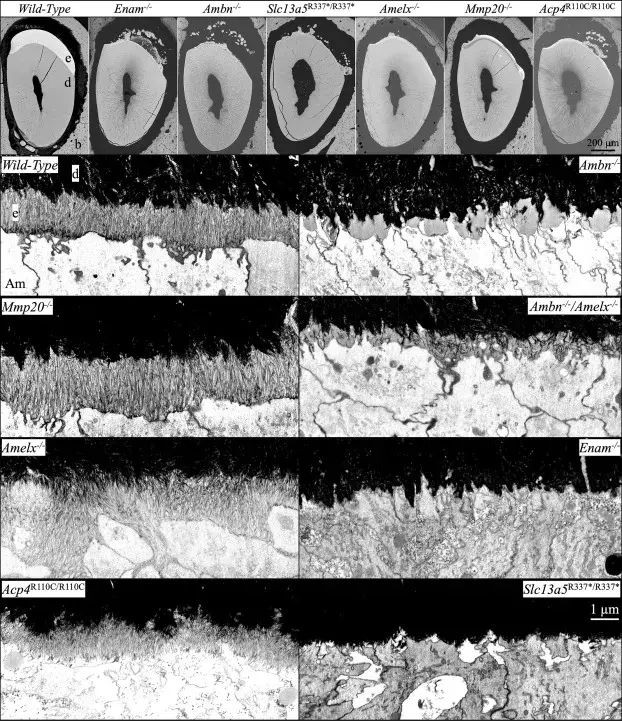 and, another cuz it’s just so very cool!  |
Julia Coyte, CHomI am passionate about homeopathy and I love sharing this passion. Having a working knowledge of homeopathy shouldn't be kept a secret. If people have the ability to help themselves, their children and their friends when they have minor ailments, life just gets better for everyone. That is the purpose behind Ruminating on Remedies. Archives
October 2026
Categories
All
|
 RSS Feed