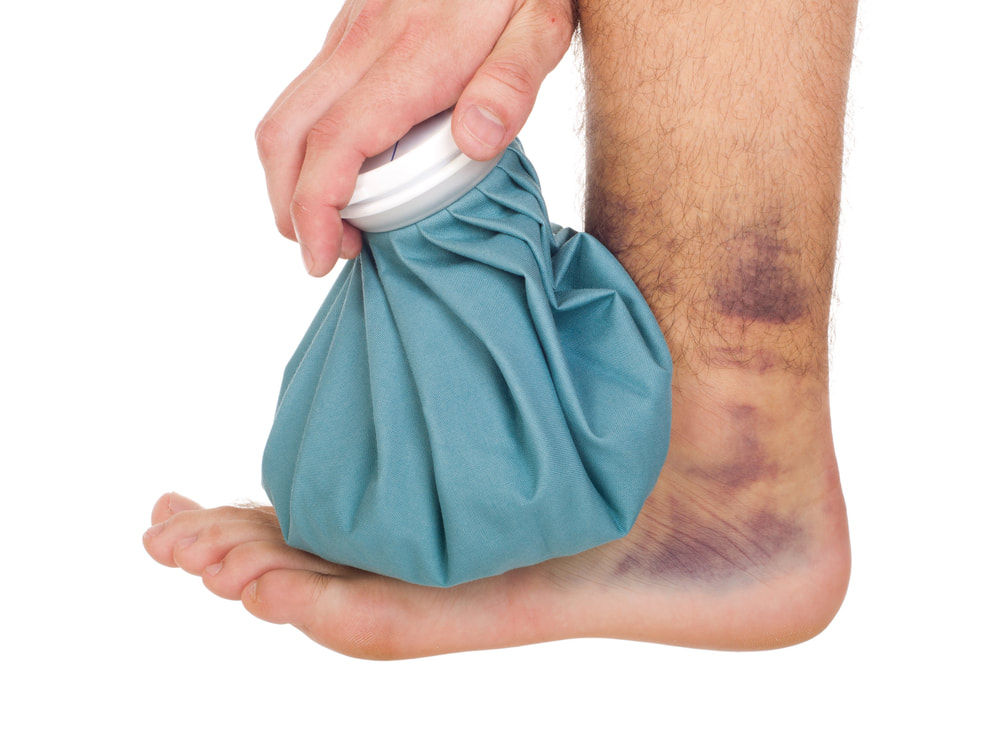
 A couple of months ago, we were given some “new” information about Tylenol. In actuality, there was nothing new about this information, it was just brought to our broader attention through “official” channels. (See, also: The Road Less Traveled, from 2022, where I brought a little light to the darker sides of over the counter (OTC) painkillers for headaches*.) “But, popping a painkiller is so easy!” I know. I truly do. There is a song called “The Sinking Feeling” by the band The The, which says, “The path of least resistance leads to the garbage heap of despair (air-air-aiiir), I think I’d better get back in bed.” I like the whole song, but that one line is what really sticks with me. Taking the easy route is not always the best choice. I am confident in saying that when it comes to dealing with your pain, taking the road less traveled is well worth the time and energy required to figure it out. Using OTC painkillers don’t just block the pain, they block important healing messages to get the job done, doing what the body is meant to do — fixing what’s wrong. “In all the cases, the immense advantage of homeopathy is that it cures in a gentle, quick and lasting manner, according to Hahnemann’s postulates. In this sense, there is no other therapeutic capable of being compared to it. Besides, it is never harmful, it is never dangerous, it never produces side effects because it lacks all chemical substance; thus, it is the best therapeutic ever invented by human beings.” For the sake of discussion, let’s assume we are dealing with a sprained ankle. What exactly is a sprained ankle? A sprain is a trauma to the ligaments by stretching it too far; this causes pain and difficulty with movement. “A mild sprain is really a pulled or strained ligament, with tenderness and mild swelling, but no tearing of tissue. A moderate strain** has partial tearing of the ligament, while a severe strain entails a complete tear, with corresponding degrees of swelling, bruising and inability to move the joint or bear weight” (Hershoff 2000). Conventional treatment involves applying ice to the area and wraps to compress the area. Taber’s also recommends “analgesics and NSAIDs.” As we’ll see below, not all sprains respond well to ice and wraps — another place where homeopathy shines. We can use those data points to help us find the best suited remedy. Let’s get back to the simplicity of the over-the-counter pills… How do they work? If you ask an AI, it will tell you that the exact mechanism of acetaminophen (e.g., Tylenol) is not fully understood, but it is believed to work through the central nervous system to block pain signals. Ibuprofen (NSAIDS/Advil), on the other hand, blocks the production of prostaglandins. What are prostaglandins again? In simple terms, prostaglandins are the chemical messengers that cause pain, swelling, and fever — let’s call that the “alarm system”. In short, Advil turns off the alarm system at the source (blocks the prostaglandins). Tylenol turns the volume down on the alarm sounds in your brain — the alarm is still going, you just don’t “hear” it as loudly, so the pain feels less intense. Sounds like a solid plan to me! What could be the problem with it? Taber’s Medical Dictionary (Venes 2017) tells us that prostaglandins (PGs) “influence a broad range of biological effects, including vasodilation, vascular permeability, bronchoconstriction†, platelet aggregation, dysmenorrhea†, inhibition of gastric acid secretion, stimulation of neural receptors for pain during tissue damage, sleep inhibition†, and maintenance of patent ductus arteriosis†.” That sums it all up, doesn’t it?! Keep reading — we’ll see if we can sort some of this out.
OK. I get it, OTCs are not completely without risk. What do you suggest using for this fictitious sprained ankle? Well, homeopathy, of course!
Or, the combination of Arnica, Ruta and Rhus is an excellent injury go-to, covering many bases at once. I encourage you to read up on the OTC painkillers. Drugs.com is a good place to start. (Hint: keep scrolling down the page on Drugs.com. There is a brief overview at the top of the page, but if you keep going, you’ll find further links for “side effects” that should be known but are a little hidden.) If you purchase/make a good household kit, you will be ready to deal with most common ailments that come your way and be able to skirt the OTCs. Julia Coyte, CHom Classically Practical homeopath #wellnessawaits *Ibuprofen/Advil/Motrin/NSAIDS are used interchangeably throughout this article; likewise acetaminophen/Tylenol, too. **Some sources say a strain is the injury to tendons while sprains are injuries to ligaments. Other sources use strain and sprain interchangeably. †In keeping with the sprained ankle analogy, bronchoconstriction, dysmenorrhea, sleep inhibition and maintenance of patent ductus arteriosis do not pertain to this situation. Reference list
American Association of Homeopathic Pharmacists, n.d. FAQs [online]. The American Association of Homeopathic Pharmacists. Anderson, L. A., 2024. Pain / Fever Drugs and Alcohol Interactions [online]. Drugs.com. Andonian, N., 2020. Rebound (Medication-Overuse) Headaches: How to Stop Them [online]. GoodRx. Dimitropoulos, E., 2014. Acetaminophen Toxicity: What Pharmacists Need to Know [online]. Uspharmacist.com. Durbin, K., 2023a. Acetaminophen [online]. Drugs.com. Durbin, K., 2023b. Ibuprofen [online]. Drugs.com. Fine, M., 2013. Quantifying the Impact of NSAID-Associated Adverse Events [online]. AJMC. Harvard Health Publishing, 2024. Acetaminophen safety: Be cautious but not afraid - Harvard Health [online]. Harvard Health. Hershoff, A., 2000. Homeopathic Remedies. Kindle. Avery Uuuu-Uuuu. Mcconnell, T. H., Paulson, V. A. and Valasek, M. A., 2014. The nature of disease : pathology for the health professions. Philadelphia: Wolters Kluwer Health/Lippincott Williams & Wilkins. Ogilvie, J. D., Rieder, M. J. and Lim, R., 2012. Acetaminophen overdose in children. Canadian Medical Association Journal [online], 184 (13), 1492–1496. Saljoughian, M., 2016. Acetaminophen Intoxication: A Critical-Care Emergency [online]. Uspharmacist.com. Venes, D., 2017. Taber’s cyclopedic medical dictionary. Kindle. Philadelphia: F.A. Davis Company. Waugh, A. and Grant, A., 2023. Ross and Wilson Anatomy and Physiology in Health and Illness. 14th ed. Edinburgh: Elsevier Health Sciences.
0 Comments
Your comment will be posted after it is approved.
Leave a Reply. |
Julia Coyte, CHomI am passionate about homeopathy and I love sharing this passion. Having a working knowledge of homeopathy shouldn't be kept a secret. If people have the ability to help themselves, their children and their friends when they have minor ailments, life just gets better for everyone. That is the purpose behind Ruminating on Remedies. Archives
October 2026
Categories
All
|
 RSS Feed