 There has been an explosion of homeopathy apps since I first wrote this a couple of years ago… and, a few of them look really good! “The greatest triumph of a science is when it becomes the common property of the people and thus contributes to the common wealth.” — motto inscribed in The Homeopathic Domestic Physician Learning to use homeopathy can be a little overwhelming and daunting. A little technology may make it a little easier. I went through my old list and then I scrolled through the app store on my iPhone, iPad and Mac. A lot of the original apps are still around — a few of them have been nicely updated and a bunch of new stuff, too.
There were so many new (to me, anyway) apps, that I divided them into categories.
If it appears on the iPad app, I have noted that. NOTE: I did not test the iPad app to see if it works properly on that device. I have simply made mention of the fact that it appears on the iPad App Store. Note: There are a couple of apps which seem to be essentially the same, but I have to admit I gave up trying to figure out that minutiae. Desktop Apps (via the Apple app store) *Beladonna [sic]: The Complete Companion for Professional Homeopaths. Using Kent’s repertory, it allows you to repertorize your symptoms and the possible remedies pop up on the right hand side of the screen.
Phone apps I was pleased to see the surprisingly large number of mobile apps on the iPhone if you search “Homeopathy” in the app store. (If they mention the app being available for Android, I have included that information.) I played around with a few of them so you don’t have to. From here, they are divided into AI apps; General Homeopathy apps; Homeopathy-adjacent apps; Homeopathic Literature apps; Homeopathic Pharmacies; Homeopathy for Pets; Professional Homeopathy apps; and, Web-based apps. AI apps *Dr. Senan Homeopathy: Smarter Homeopathy Practice & Prescribing with Interactive AI.
*Materia Medica AI does not require an account but there is an option to have one and I’m not sure if there would be a difference, or not. It asks you to “prepare your library” and download 111 mb of books. It says, “One-time download. Works fully offline after this.”
*My Materia - Homeopathy looks like an AI chat bot. The first screen asks you to tell it what’s going on. If you want to save your conversations, you need to sign up. Then, as promised, comes the materia medica with an overview for each of the 619 remedies, followed by Symptoms & Indications for relevant bodily systems, modalities, remedy relationships and dose information.
*Your Master Homeopathy says: “Answer 30 carefully crafted questions to uncover which of 48 classical homeopathic constitutional remedies best matches your unique physical and emotional profile.” Sounds fun!
General Homeopathy Apps *Boger: CM Boger’s repertories app
*Cliniq Homeopathique opens with a disclaimer and then requires registration.
*Dr Moolchandani’s Homeopathy appears to be for registered patients.
*Eureka Homeopathy Game requires a $1.99 premium 3-month subscription. I took the bait and learned that it auto-renews after 3 months, FYI. You then choose your avatar (I’m assuming they are all famous homeopaths but I did not recognize the first 2 options which were available at the basic level). “Hot or Chilly” is the game. Remedy names pop up and you choose whether they are hot or chilly. You can play in Timer Mode or Life Mode and apparently can play multiplayer. That’s it. Arcade-music is played, you’re presented with remedy names (a few I have never heard of) and then you choose if they are hot or chilly. If the game progresses beyond Hot or Chilly, there is no indication.
*Hcura Pro requires registration.
*HealingArtist: Classical Homeopathic Analysis opens with a privacy policy that you have to opt in to use. On the next page, an ad for a local rug cleaning company shows in the middle of the screen and asks if the problem you are experiencing is a new issue or an old issue. Acute or chronic, it appears. To continue, you have to enter your personal details… which I did not do. You can “Unlock Expanded Insight” which claims to give additional review layer for each case; richer remedy details and additional context; ad-free experience; view results without ad-based unlocks and support a small team building classical homeopathy tools. Pricing: Yearly: $14.99. Monthly: $1.99. One-time payment: $34.99.
†Healio Homeopathy (at the time of this writing 7/26) offers a monthly plan for $2.99/$6.99; a 3 month plan for $5.99/$14.99; and $11.99/$29.99 for the yearly plan. For this trial run, I searched for “post-nasal catarrh” and what comes up is a long list of remedies with color coded buttons on the side of “low,” “medium,” and “high” to help you wade through them. Once you click on one of the listed remedies you then get more information on that remedy. The information provided comes from Kent and there is a lot of it. (Note: I did not purchase a subscription and it appears you just have to sit through a momentary ad to get to your information. It looks like you can have the “analysis” feature if you subscribe.)
*Homeo Guide: Homeopathy for all & Homeopathic Guide (I thought were one and the same, but now I’m not so sure. Apologies if I messed this up.) When this app opens, it goes immediately to an alphabetical list of remedies. Each remedy lists the substance from which it is derived (Example: Abrotanum. “Lemongrass. This remedy is recommended for regulating intestinal disorders (alternating diarrheas and constipations). It is especially recommended for treating infants.)”
*Homeo Mate: Your homeopathic reference library. This app looks very promising but it’s by subscription. Lifetime: $64.99 and Weekly: $2.99/week.
*Homeo Treatment Guidelines — is actually STGH, listed below. “Access Latest Standard Treatment Guidelines in Homeopathy.”
*Homeocare International requires registration. “Get Treated with Constitutional Homeopathy Treatment for 100 plus diseases at your fingertips using our App. First corporate Homeopathic clinics to use genetic constitutional treatment method. 15+ Million People Treated, 300+ Doctors, 50+ Clinics across South INDIA. Sign up Now! Online consultation. Homeopathy Treatment. Serving from 36+ years. Expert Homeopathy Doctors.”
*Homeopathic Cure lists, for example: Children Diseases; Female and Male Diseases; Brain Diseases. It’s important to note that “diseases” may not be the most apt word — the first “brain disease” that pops up is “Anger,” followed by 3 short remedy descriptions. When I clicked on “Neck, Shoulder” it gives postural/positional suggestions followed by “Neck- Stiff” and 5 suggested remedies followed by a few more specifics and their remedy suggestions. “Other Diseases” is 46 pages beginning with “Frost Bait” [sic] and “Drowning” and what to pay attention to if you are caring for someone suffering from one of those.
†Homeopathic Helper is an app for Apple and Android phones ($14.99 at the time of writing, 2024). The app includes a free book which is a nice little introduction to homeopathy with some sample cases and dosage instructions.
†Homeopathic Prescriber teaches how to take a case as well as an A-Z of symptoms. I was randomly clicking around and stumbled on the entry for “screaming children” with further differentiation of symptoms, like: night screaming; piteous crying; before urine passes — followed by the suggested remedy. They have a button for Video News which says the videos will change periodically. Today it showed only one video for Homeopathy for Depression and Anxiety.
*Homeopathic Treatment opens with an ad and then has icons for various conditions: Eyes Diseases, Ear Diseases, Brain Diseases.** I had to click on the Brain Diseases again… Anger is the first listed and it offers a little introduction: “When a person has to work against or mental tensions take birth in the mind because of any disease, he shows his tension through his way of speaking or behavior. It is called anger. The voice of an angry person is heavy and he speaks with irritation. A person suffers from bilious disorders, neural disorder or mental tension. Showing anger in normal conditions or while talking is kind of symptom of bilious disorder.” Not how I would describe anger, but I can’t disagree with what is written here. Five remedies with a little write up of each are offered to help with Anger. **Astute readers will see a separate entry which includes “Brain Diseases.” I’m not certain the two apps are related, but I wouldn’t be surprised to learn they are.There is an alphabetical materia medica at the end (called “Homeopathic Medicines”). It’s quite small and some expected remedies are not present (Aconite, Nat mur are two that I looked for) but what is there, is useful.
*Homeopathy at Home, is developed by Mary Greensmith (who, I believe, is the brains behind Homeopathy 247). The layout is very smooth and pleasing. Below each symptom/remedy suggestions section, there are tabs for Potency & Dose; Disclaimer; References; Chronic Prescribing; Understanding Your Symptoms and More Information (which directs you to the “Learning” tab for case studies, homeopathic courses, prescribing methodology and videos). The videos take you to Mary’s YouTube channel while remaining in the app. You can access the Homeopathy247 podcast from the app, too.
†Homeopathy Clinical Tips (see also Homeopathy Tips below, from the same company) asks you to register, but it appears you can use it without doing so. This is not as user friendly as some of the others but it does offer some potency and dosing suggestions. When clicking the “Useful Tips,” up pops many little pictures of information. For instance, “Examination Fear” says “Argentum nitricum 200c offers instant relief” and names the author of the suggestion, in this case, Dr. Foubister. “Clinical Tips,” shows three remedies for “Abscess” and provides some more specifics when you click on it. It also offers potency and dosing and again lists the contributing authors. “Clinical Tips” lists remedies, not alphabetized, some of which have a condition listed beneath and others do not. There are buttons for “Organ” and “System.”
†Homeopathy for Everyone, AKA HPE appears to be free and is a little different than the other listings in that they provide some combination remedy suggestions as well as potency and dosing guidance. Note: A number of the suggested remedies are unusual remedies. When you click on “whiplash” for example, it lists a remedy combo, suggests taking it 3 times a day for a maximum of a week and that’s that. It appears to be just that for every condition clicked.
*Homeopathy - HomeoMate — I think this is the same as “Homeo Guide reviewed above. Homeopathy Tips seems to also be called “Visual Tips” (from the same company as Homeopathy Clinical Tips listed above) offers Visual Tips, divided into “Clinical Tips,” “Diet & Nutrition Tips,” “Health Tips,” “Amazing Facts” and “Celebrity Testimonials.” The Clinical Tips are images for conditions, such as “Mountain Sickness” with remedy/dosing suggestions. Diet and Nutrition Tips, like: “Chili,” for example, states “They stimulate the release of feel-good endorphins in the brain.” Health Tips, like: “Learn to Relax” says, “unwind, take up a hobby and start socialising. This fights stress and depression.” Amazing Facts, like: “If all muscles in your body worked together, you could lift more than 10 tons.” Celebrity Testimonials come from everybody from John d. [sic] Rockefeller to Prince Charles to Pamela Anderson. The “More” button connects you to Mind Technologies and other “Hompath Products” such as Hompath Firefly, Zomeo, MMLive, Miasms (among others).
*Homeopathy UK — it appears I already had this app on my phone; it bugged out when I tried to use it the first time, but it booted up OK the second time. It lists the “10 Most Common Conditions” and then “Conditions.” Each Condition has a short description, followed by commonly used remedies with fairly detailed write ups of each, including “Key Rubrics.” At the bottom of the page, it says, “Remedy Finder Content provided by The School of Homeopathy.” After having taken a few of their courses, I am a big fan of this school and would assume this app would have good, solid, reliable information. There are buttons for: Donations; Advice (promising online chat coming soon); the History of Homeopathy; Clinic locations in the UK and finally, Success Stories.
*Homeopathy247, again, as above, is developed by Mary Greensmith. This app appears to be more aimed at those who are using the services of Homeopath247. The first screen gives you the option to “Search your Homeopath,” “Meet the Team,” and “Get Consultation.” The “Learning” button takes you to a list of links for free books, such as: Homeopathy for Back Pain; Breaking Free from Anxiety and Manage Your Cholesterol and Find Better Health with Homeopathy… among others. The Webinar button promises more webinars coming soon, but it’s empty today. A button to the Homeopathy247 podcast, right in the app. Links to homeopathy courses, such as: Natural Detoxing for Dogs and Natural Support and Balancing for Adrenal Fatigue… among others. Link to Facebook Groups for Ask a Homeopath 247, Homeopathy for Allergy and Homeopathy for Kids & Teens… among others.
*Homeorep: Boenninghausen’s Method App “Chapters and rubrics are editable, patient’s data synchronized via iCloud.” “Homeorep is an advanced and flexible homeopathic software for the repertorisation of symptoms. It has been developed for the demanding homeopaths who need a tool capable of helping them solve the ever different clinical cases encountered in daily practice.”
†Lotus Smart Charts is a neat little app from Robin Murphy and Judith Toscano. Choose from Kids and Babies, First Aid, Furry Friends and Digestion. Once you choose your main category, you then choose the issue. For example, under First Aid, you can choose: Bleeding, Black Eye, Puncture wounds, etc. and when you click on your issue a couple of remedies pop up with a few differentiating features.
*Materia Medica Live Lite shows a colorful (and loud) screen for a bit at the beginning, but appears to let you opt out of that for future visits. The Video page lists “Plants,” “Animals,” “Minerals” and “Nosode.” Clicking on “Plants,” I am greeted with a list of 10 remedies. Clicking on the top one (China officinalis), shows an infographic overview of the remedy followed by “Fast Tips.” Most of the remedies have infographics but Cannabis sativa goes to a quirky video describing the mental/emotional symptoms.
*Mindwell Homeopathy requires registration. No hint as to what the app offers.
†MyHomeopath allows you to use a reduced version of the app for free, or, you can choose to subscribe for a low annual fee. The free version only offers “general,” “fever” and “head.” To use this app, choose your condition and then on the right hand side of the screen it has a check list where you can click the symptoms you are experiencing. Once you make your selections and click “remedies,” it provides a ranked choice of possible remedies. It also provides instructions for making a water dose.
*Rescue Homeopathy has you choose “Google” or Apple” — then you have to create an account to move further.
*Similia Home Prescriber is the phone app associated with the Similia website, which I really, really like. I’m excited to try this one! The first screen has you agree to call for emergency help if you need it. Then, it asks if you have a kit. If you say yes, it gives you many kits from which to choose (Olloïs, Ainsworths, Helios, etc.) and then asks if you would like to filter the remedy suggestions to your kit. So cool! Next, it asks you, “How do you feel today?” After typing your response, it says “you have one free search to try Similia. After this, you’ll need a subscription to continue.” Fair enough. While waiting for the next question, it gives some homeopathic trivia. After answering the questions, it suggests a remedy with a “How to take this remedy” button, followed by the reasoning for the suggestion. A “Micro Materia Medica” is then offered. Similia is a subscription based service. Because I was not able to log in to the Similia phone app with my Similia web password, I’m going to go out on a limb and say these are two different subscriptions (and, the pricing is different).
*STGH: Standard Treatment Guidelines in Homeopathy requires registration to continue.
*Symptomly: track symptoms & remedies
*Theory of Acutes, AKA TOA has a lot of information from the author, Dr. Prafull Vijayakar. Then, I really just sort of stumbled into using the app, though I wasn’t intending to at that moment. In other words, the interface could be improved. I did not read all the opening pages from the author, nor have I read any of the author’s books. Had I done so, I may be more informed on the “Theory of Acutes.” First page gives you 3 buttons from which to choose in regard to Activity levels since the acute disease began. The next page depends on your answer — you may be given remedies right off the bat or asked more questions. When you click through your symptoms and arrive at a possible remedy, it shows a triangle with keynotes of the remedy, followed by “Other Indications” and ends the page with a “Remedy Relationship Chart” — which I like. It has a section for Patient Notes and for Personal Notes.
*WelcomeCure Homeopathy requires an account to use.
Homeopathic Literature apps †Homeopathy Materia Medica is an app that lives on my phone and I do refer to it fairly often and I believe it is free (but it has been on my phone for a long time, so I’m not certain). This is a straightforward materia medica. Choose a letter, find your remedy and read up on it. It has a button where you can add your own notes. (I have never used this feature.) It also has videos of well known homeopaths discussing remedies. It is not a complete materia medica, but that would be asking a lot.
*Soul of Remedies appears to be Dr. Rajan Sankaran’s book in iPhone format.
Homeopathic Pharmacies †Boiron’s Medicine Finder appears to be free and when I searched “postnasal drip” only 1 remedy popped up. Of the few conditions I scrolled through, only 1 or 2 remedies ever popped up. There is a “shop” button that takes you to the Boiron website to purchase remedies. They have an electronic version of their “Easy Guide” and a button for their new products. It does, however have a handy dandy video for how to open a Boiron tube, something I found incredibly frustrating when I first used one (click here to read about my first time trying to get into the blasted tube!) Additionally, there is a link to the internet to watch Boiron videos on various remedies.
*Corrigo Homoeopathy for purchasing Corrigo homoeopathic combination remedies. Looks like it’s in India. It doesn’t appear they ship further afield. Has their blog posts on the app.
*Helios Homoeopathy is primarily for ordering remedies. Appears to be free.
*SBL Homoeopathy — there is no indication they ship outside India. Homeopathy-adjacent apps Bach Flowers Remedies is another app that lives on my phone… providing a nice overview of each of the Bach Flower Essences. It also offers the “Quick Prescriber” where you can search by symptom. Click your symptom and the app provides the one or two essences appropriate for each symptom.
†Biochemic Tissue Salts appears to be free and has a pretty in-depth overview of each of the 12 cell salts: what the substance is, preparation, physicochemical data, what a deficiency of the substance can cause, normal function in the body, general indications and then a nice, long list of symptoms and “particular indications.”
*Visual Tips might be linked to “Homeopathy Visual Tips” listed above? This one, however, is not limited to homeopathy. It has Diet and Nutrition Tips, Health Tips and Amazing Facts. Homeopathy Pets apps *Homeopathy for Dog Owners - $2.99.
*Homeopet Natural Pet Care Information
*Hompath Vet -- $9.99
Professional Homeopathy Apps *Complete Dynamics: listed as “professional homeopathy” and sells for $239.99. Further down the list, it shows the “amateur edition” for $22.99.
*Hompath FireFly Prime “is a Homeopathy Repertory Software, with 11 repertories including Q-Rep, Repertory of Mental Qualities by Jeremy Sherr, kent, Boericke, etc.” “109 Homeopathic books from Allen, Rajan Sankaran, Farokh Master etc. Ideal app to manage your patients’ cases, Repertorise, Prescribe; anytime, anywhere.”
*OpusGo is RadarOpus’ phone app. “The ultimate homeopathic app for professionals! Repertorize, browse References and save patient info in seconds.” The purchase price comes with Kent’s Repertory and Lectures on Homeopathic Philosophy, Boericke’s Pocket Manual, Hahnemann’s Organon of Medicine You can purchase additional repertories, like: Schroyens Synthesis Adonis, Mangialavori’s Suggesta 2.0, Hering’s Guidine Symptoms [Vol. 1-10] and more. When I played with it for a few minutes, it looks very promising. It has the ability to list and store patient details and consultations.
*Synergy Mini - though I use Synergy software on my computer (now known as VIVA), I have not signed up for the mobile version.
*Synthesis
*Vithoulkas App requires an account to use and I decided to create one this time, perhaps, because George Vithoulkas is a homeopath I admire and I refer to his books very frequently. Once in, the Discover page offers the following choices: Clinical Cases; Scientific Papers; E-Learning Course; Webinars; Courses in Alonissos; Videos; UDiHoP (whatever that is) and General News. I clicked on the Clinical Cases and was met with some cases much beyond a stubbed toe, like: “A case of a comminuted subcapital fracture of the humerus treated with classical homeopathy” and “Homeopathic treatment for prolonged postoperative coma.” Me thinks this app is not really aimed at home users. The E-learning course offers a free trial and then explains the 2-year course. The webinars offered are focused (naturally enough) on George Vithoulkas. The videos: I clicked on “The Depth of Healing” and I see a description of it, but no video. Same thing happened when I clicked on “The Qualities of an Ideal Healer.” I now know that UDiHoP is Union for Diplomate Homeopathic Physicians.
*Zomeo Homeopathy — $699.99
Web-based apps Homeopathic Housecall has been around for a number of years. Based on Constantine Hering’s The Homeopathic Domestic Physician from 1835, Homeopathic Housecall brings this classic book into the modern world through an internet-based app. The interface is pretty easy to navigate. You begin each case by searching by Complaints, Locations or Stressors. From there, the program leads you through a series of questions to help you find an appropriate homeopathic remedy. At the end of that, they give you a few remedies (and some basic information for each) for you to parse through to see what looks like the best fit. Homeopathic Housecall is a subscription based service beginning at $65 per year for a 2-year annual subscription; $89 for a one year subscription; or, $11.99 per month. They also offer a 7-day free trial.
Vithoulkas Compass is web-based homeopathic software. As this article is primarily focusing on home users, their “An Occasional Prescriber” plan is €21/month and their student version of the same-named plan is €15/month.
There you have my 2 cents on a handful of available homeopathy technology. As I mentioned earlier, there are a lot of apps out there and I just took a quick look at a few that were not prohibitively expensive.
I’m so excited about all these many options! Whether you are new to homeopathy or have been playing with it for a while or even practice professionally… there is an app for you! Julia Coyte, CHom Classically Practical homeopath #wellnessawaits
0 Comments
 It seems there are a few issues across the US at the minute…
Tummy bugs are in the news. Apparently, there are a couple somethings going around: Cyclosporiasis and the dreaded Norovirus. I asked Grok how to tell the difference.
With that in mind, here is an article from a couple of years ago about Norovirus listing some possible homeopathic remedies which could prove helpful regardless of causation. Nobody needs a nasty, nauseating norovirus Since Cyclosporiasis is more bottom oriented, you may want to check out The Doo Doo Documents 3: Diarrhea, too. The other thing floating around out there is smoke from the forest fires. Agy the Buffalo Herbalist (I have no affiliation, I just really like her stuff) has an excellent article on wildfire smoke and what herbs may be helpful. The Buffalo Herbalist What Wildfire Smoke Does to Your Body (and How to Support It) Smoky Skies, Burny Eyes offers a few homeopathic options which may help, too. Take good care of yourself out there! Julia Coyte, CHom Classically Practical homeopath #wellnessawaits  It is the 4th of July — a big holiday for us Americans as it recognizes the day when the USA signed the Declaration of Independence to mark the official separation of the North American colonies from Great Britain. Flagging the day (so to speak) when we, as a country, became free and independent.
I’m a big fan of independence… autonomy, sovereignty, freedom, liberty — all the things in all the ways. It’s difficult to distinguish which freedom is more important than another because they are all pretty gosh darned important. One freedom that doesn’t get enough airtime (in my opinion) is health freedom — the freedom to choose medical treatments… or, not, as the case may be. If you, too, are interested in health freedom, check out National Health Freedom Coalition. One beautiful way to exercise health independence is to learn about a handful of homeopathic remedies. Just a little homeopathic knowledge can go an awfully long way to keeping you and your family happy, healthy and well. For the record, I am a big proponent of getting things checked out by a physician. I like to dot my i’s and cross my t’s. Doing so, however, is becoming increasingly difficult. I recently had a non-emergency issue for which I perhaps would have liked to have seen a physician. I did an on-line consult with a nurse and was instructed to call the physician’s office to make an appointment — she said that she would put in the notes that she recommended I do so in hopes of expediting an appointment. I called. They saw the note and I was told the nearest appointment was 6 months out. Never mind. I took care of it homeopathically. Over the counter meds are easy, but they are not without risks. There are beautiful homeopathic remedies which can fill this gap. (See Painkillers and The Road Less Traveled.) Antibiotics can lose their oomph after a while. (See here, here and here for a few articles.) There are absolutely times where antibiotics are absolutely needed. There are many more times when antibiotics are used injudiciously (see here and here). Homeopathy is an excellent alternative for non-urgent situations, e.g., ear infections. Emergency Room/Urgent Care wait times vary greatly, but unless you are in dire straits, who has 4-8 hours to wait to see a doctor (maybe, but more likely not actually a doctor) for common conditions like sore throats*? (See also, Tis the season for… Sore Throats.) A few years ago, UK homeopaths (Alliance of Registered Homeopaths; Homeopathy International (HINT); Society of Homeopaths; and, The People’s Health Alliance) put out a really nice PDF called, “The 35: Homeopathy’s answer to the 35 conditions no longer routinely prescribed for in primary care.” These are what they call “minor conditions considered to be self-limiting and so do not need treatment as they will heal or be cured of their own accord.” Well, they may heal on their own in due time, but that doesn’t mean that time is spent comfortably! This is where homeopathy can help. A few of the conditions listed in “The 35” which, generally speaking, could benefit from some sort of treatment include:
What do you do with these little tubes you have accumulated? Well, I have a bunch of answers for that, too. There are plenty of excellent books for homeopathic home use. Here is a very short list: There are apps out there to help us use homeopathy. (Here is a link to Homeopathy Helpers which I wrote in 2024… and most likely needs a little update. I’ll get there one day!) This is the year! is chockablock full of helpful tips to get underway with using homeopathic remedies. Recently, I updated my Substack home page with a “New to Homeopathy? Start here…” section. This can help fill in some of the “now what do I do” blanks when you’re getting started in your homeopathic journey. It’s not just people who need some independent health care. Our pets can benefit from some homeopathic remedies, too. (See also, Homeopathy to the rescue for…) Take Independence Day to the next level, and learn how to treat your family and friends (and pets!) minor inconveniences. You won’t regret it. Julia Coyte, CHom Classically Practical homeopath #wellnessawaits *Most sore throats are not a problem. The American College of Emergency Physicians recommends seeking medical attention when: the pain is severe or lasts more than a few days; if the sore throat is accompanied by swollen glands that cause difficulty breathing or prevent the person from swallowing fluids; in children in particular, if there is presence of excessive salivation, inability to swallow liquids, difficulty speaking, irritability or the inability to move the neck. Reference list Alliance of Registered Homeopaths, n.d. Home Page [online]. Alliance of Registered Homeopaths. Cleveland Clinic, 2023. Antibiotic Resistance [online]. Cleveland Clinic. Homeopathy International, 2018. Home - Homeopathy International [online]. Homeopathy International - Delivering excellence in Homeopathy. Hyun, D., 2017. Why Doctors Prescribe Antibiotics—Even When They Shouldn’t [online]. Pew.org. Mayo Clinic, 2022. Antibiotics: Are You Misusing Them? [online]. Mayo Clinic. National Health Freedom Coalition, n.d. Home [online]. National Health Freedom Coalition. NIH Library of Medicine, 2017. Do antibiotics help fight common colds? [online]. Nih.gov. Queen, J., Zhang, J. and Sears, C. L., 2020. Oral antibiotic use and chronic disease: long-term health impact beyond antimicrobial resistance and Clostridioides difficile. Gut Microbes [online], 11 (4), 1–12. Society of Homeopaths, 2026. Homeopathic treatment of a genetic case with a twist [online]. Society of Homeopaths. The People’s Health Alliance, 2023. Home [online]. The People’s Health Alliance. Available from: .  I am currently on vacation but had to share this “super quickie”…
I have a brand new dentist. It took a figurative minute to find one that seemed like a good fit. I was nudged into speeding up this process of finding a new dentist because my tongue wouldn’t leave a tooth alone. I could feel a little hole in the tooth, but no pain. I assumed it was an old filling that had come loose. Nope. Turns out I chomped really hard and damaged two teeth. I was 2 minutes late to the appointment to have this filling and I was back in my car, headed home in 30 minutes. Fastest dental appointment ever for me. He filled the tooth and then he gave me another injection. I’ve never had that before. He told me he injected Traumeel* to reduce the inflammation! Works for me! The other tooth has a very small hole that doesn’t currently need filling. I told him I was working on fixing it homeopathically. He used the little tooth camera and took a picture and said we will keep an eye on the process. I look forward to returning here one day and telling you my tooth has repaired itself. That’s a big goal and I’m excited to see what can be done! 🤞 Julia Coyte, CHom Classically Practical homeopath #wellnessawaits *He did not inject the topical version of Traumeel. They make a special one for injecting. (Once upon a time, I had an acupuncturist who dipped the needles in it.)  It doesn’t matter what you call it: Studying. Revising. Cramming. “It” is overloading your brain with information. One may be forgiven for thinking school is out for summer, but that is not the case for everyone. One person reached out the other day, saying they and their friends are sharing some problems:
Let’s look at these problematic symptoms. What is causing the inability to focus? Is it distraction? Is it burnout? (These people did just finish law school. I should think the desire to keep at the books right as summer hits could be pretty difficult!) What is getting in the way of feeling well-rested? Is there insomnia? Is all the legalese swirling through your mind when you’re trying to sleep? Is the candle being burned at both ends? Are nutrition needs being met? What is the stress that is being managed? I’ll go in reverse order this time — are nutrition needs being met? This is so hugely important! Is the stress a direct result of not getting sufficient sleep? Is there a hyper-focus on learning the law, thereby causing a lapse in attention to the rest of the details of your life resulting in new levels of stress? I’m going to go out on a limb and say it’s a little bit of everything. Let’s think about this in terms of the repertory. Another way of saying needing to stay focused is being distracted. Dr. Murphy ranks Phosphorus at the top of this list (in terms of remedies which are readily available). I really hate to do this to you when you are already wiped out from studying, but you’ll have to read through these short descriptions to find the best-suited remedy to your specific symptoms! Phosphorus Carroll Dunham’s Lectures on Materia Medica (1878): Phosphorus - Sensorium - Weakness of memory, indisposition (moderate) to exertion; difficulty in collecting and concentrating thoughts; weak feeling in the head, aggravated by thinking and by loud noise, music or hard stepping; these things produce throbbing in the head, a feeling of confusion, dullness and distraction, but especially of weakness in the head. Frans Vermeulen (2015) says it a little more simply: Phosphorus is “easily distracted.” Clarke (1902): “Headache as if too full of blood from intense study.” Douglass (1903): Cannot study nor keep his mind on any particular subject long at a time. Disinclination to study or converse. Gibson (1987): “Is full of fears… of study (owing to mental exhaustion)…” RELEVANT RUBRICS:
Phosphoric acid Douglas Borland says in Digestive Drugs (1940): The mental picture is that of those who are just dead tired. They feel generally indefinite, do not want to talk, cannot concentrate, their thoughts wander away from the subject. Any mental effort is liable to produce an acute headache with a sensation of extreme pressure on the top of the head. On any effort at all these patients are liable to feel giddy. Gibson (1987) adds: The mind is confused, and any effort to concentrate brings on a dizzy feeling. There is great sensitivity, notably to music and also to odours. The subject is easily startled. May complain of various odd sensations such as widespread formication*; may be afflicted with homesickness. Leeser (1935) goes a little further: Poor comprehension and concentration, poor memory, indifference, dullness, inability to perform mental work, lack of ideas, moreover, depression, apathy, dissatisfaction with one’s self, aversion to speaking, in particular homesickness, indicate the psychic state in phosphoric acid. But nervous excitation with sleeplessness and sensitivity to all noises is also observed… a brief sleep may often remove the fatigue and be sufficient to refresh…
Picric acid Blackwood (1906) says: This remedy is indicated in restoring the wasted and worn-out systems of those who are suffering from the effects of close application to study or business and become anaemic and neurasthenic** and asthenic**. Clarke (1902): a patient of mine, previously a good sleeper, to lie awake a long time at nights, exhaustion after the day's studies, fatigue even from a short walk, twitchings of muscles when asleep or awake; hysterical state, loss of will power; constant headache, irregular menses. Any attempt to study = burning along spine; with great weakness of back and legs; soreness of muscles and joints. agg. By study or slightest mental exertion. Inability to keep eyes open when studying. Gibson (1987): The chief characteristic is extreme muscular weakness, accompanied by a compelling desire to lie down and a complete absence of anxiety. Is utterly exhausted; can neither think nor study. Darting pains may be felt in various sites, possibly involving bones.
Then, of course, we have our good old Nux vomica, and, I think this would be my first stop. We know Nux is helpful when things are too much: too much studying; too much not enough sleep; too much snacking while studying. Farrington (1955): "Lesson twenty-five - Nux vomica - General characteristics - Ailments from ANGER; grief; EXCESSIVE MENTAL LABOR; SEDENTARY HABITS; LOSS OF SLEEP; DEBAUCHERY; SEXUAL EXCESSES; ALCOHOL; COFFEE; NARCOTICS; TOBACCO; GETTING CHILLED; suppression of sweat or HAEMORRHOIDS. HYPERSENSITIVENESS; IRRITABILITY; …IMPATIENCE; MALICIOUSNESS; IMPETUOUSNESS; hurry; sadness; …weeping; timidity; dullness; CONFUSION; DIFFICULT CONCENTRATION; weakness of memory; INDOLENCE; IMBECILITY; delirium; INSANITY; MANIA; HYSTERIA; INCREASED SEXUAL DESIRE; debility; trembling." Those are some strong words in there. Suffice it to say, that would be an extreme picture of a Nux vomica state. Gunavante (1998) always sums things up succinctly: “Concentration difficult while studying.” Now, let’s look at a few applicable rubrics for Nux vomica:
SUMMING UP THE REMEDIES (I know your attention span is already shot, so I’ll keep this brief): Phosphorus may be a good place to start if:
Phosphoric acid may be a good place to start if:
Picric acid may be a good place to start if:
Nux vomica may be a good place to start if:
Are these the only remedies? Nope. Far from it. But, I know you’re tired, so I tried to keep it simple. Good luck on your exams! Julia Coyte, CHom Classically Practical homeopath #wellnessawaits * Formication: the feeling that bugs are crawling on your skin **Neurasthenia: an ill-defined medical condition characterized by lassitude, fatigue, headache, and irritability, associated chiefly with emotional disturbance (Oxford University Press 2021). **Ashtenia: abnormal physical weakness or lack of energy (Oxford University Press 2021). Reference list
Blackwood, A. L., 1906. A Manual of Materia Medica, Therapeutics and Pharmacology. accessed through Radar Opus software. Boericke & Tafel. Borland, D., 1940. Digestive Drugs. accessed through Radar Opus software. Choudhuri, N. M., 1916. A study on materia medica and repertory. accessed through Radar Opus software. New Delhi: B. Jain. Clarke, J. H., 1902. A Dictionary of Practical Materia Medica. accessed through Radar Opus software. Douglass, M. E., 1903. Pearls of Homoeopathy. accessed through Radar Opus software. Farrington, H., 1955. Homeopathy and homeopathic prescribing : a study course for graduate physician. accessed through Radar Opus software. New Delhi: B. Jain. Gibson, D. M., 1987. Studies of homoeopathic remedies. accessed through Radar Opus software. Kandern, Germany: Narayana Publishers. Gunavante, S. M., 1998. The ‘genius’ of Homoeopathic Remedies. accessed through Radar Opus software. Leeser, O., 1935. Textbook of homeopathic materia medica : inorganic medicinal substances. accessed through Radar Opus software. New Delhi: Jain. Oxford University Press, 2021. Oxford Dictionary of English. 14.1.1.47 ed. Oxford University Press accessed through mobisystems.com app. Vermeulen, F., 2015. Concordant reference : complete classic materia medica : 1284 remedies. accessed through Radar Opus software. Glasgow: Saltire Books. 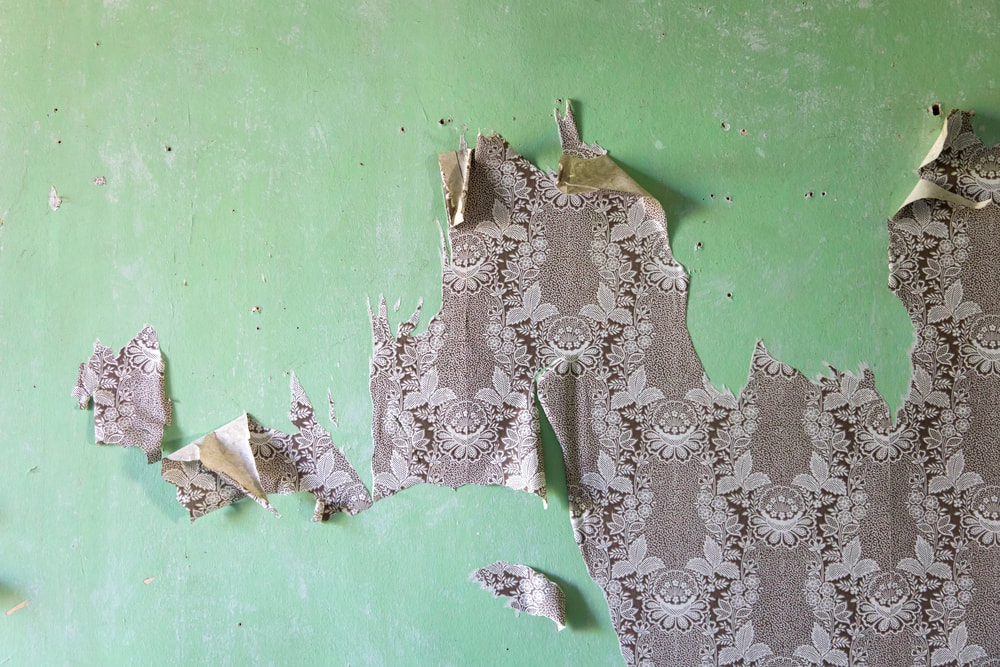 Sticta has been stucta in my mind lately. Not sure why, but it won’t let go. Let’s take a quick look at this tiny, little, sticky remedy. Choudhuri’s Study of Materia Medica (1916) says: "This is comparatively speaking a little known and a rarely used remedy but that does not render it any the less important, for those cases that will call for Sticta will need Sticta; there Sticta and none but Sticta will help." This little remedy, Sticta pulmonara, also known as Lobaria pulmonara, is even kinda stucta where it grows. It’s a form of lichen which grows on tree trunks.
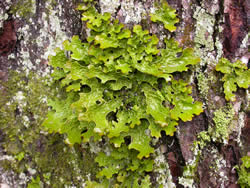
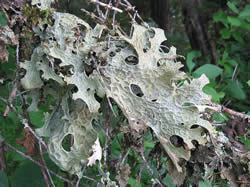
wet Lobaria pulmonara & dry Lobaria pulmonara The second part of its name, pulmonara, is kind of handy, too. Pulmonary = relating to the lungs. Clarke (1902) says: “There cannot be much doubt whence Sticta received its name of Pulmonaria. The likeness of the plant to lung tissue is self-evident.”
"'It was first used’ says Hale, ‘for severe harassing cough,’ and such good results accrued that provings were made to ascertain its full value. 'It was found to cause severe coryza, with violent sneezing, intense headache, and conjunctivitis. 'These attacks were preceded or followed by rheumatic pains and swelling of the small joints.’ The catarrh of Stic. is for the most part obstructive, and if there is discharge it dries quickly, and forms crusts or scurf. Constant need to blow the nose, but no discharge comes on account of dryness." (Clarke 1902) Sticta is known for its “excessive and painful dryness of the mucous membrane is not due to any want of secretion; for secretions occur but they dry up very rapidly leaving thick crusts behind them.” If you have ever experienced the crusts in the nostril problem, it’s easy to envision that wet Lobelia plant above just instantly shriveling up to the dry Lobelia. This is what I refer to as “wallpaper.” Sticta may be useful when there is stuckness in the respiratory system and it also may be useful for stuckness in the joints. Bursitis is the inflammation of a bursa. Bursa is a small, fluid-filled sac that cushions bones and tendons and muscles near the joints. When there is overuse, for example, the bursa gets inflamed resulting in pain and tenderness. Many people with bursitis describe a “stuck” feeling in the affected joint due to the stiffness, swelling and pain rather than a true mechanical lock. The inflamed bursa swells, thickens and irritates surrounding tissues, resulting in a tight feeling. The hip may feel stiff or stuck when standing from sitting. There may be difficulty raising the arm overhead — it feels frozen or stuck halfway. The knee may feel like it’s kind of stuck - unable to bend or straighten all the way. Here is a quick look of grade 3 & 4 rubrics for Sticta:
"Feels as if she must talk, about everything and anything, whether listened to or not.… Confusion of ideas, patient must talk." — Murphy This little remedy has a surprising number of one remedy rubrics, like:
Feeling stuck? Try some Sticta to become unstuckta. Julia Coyte, CHom Classically Practical homeopath #wellnessawaits 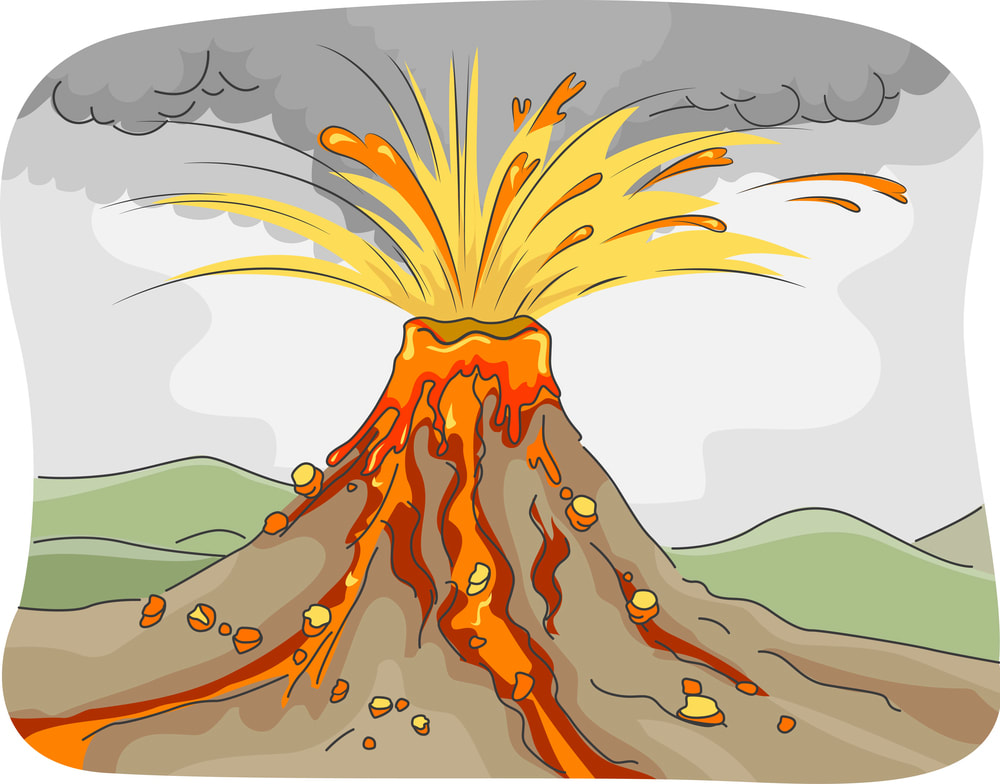 My first experience with Hekla lava (sometimes also spelled Hecla, hence the title) was a bunch of years ago. Turns out I had heel spurs — and I was seriously questioning my ability to walk in the future. Literally. I thought a wheel chair was waiting for me in the wings — that’s how bad the pain was. This pain was not letting up after months of otherwise well-chosen homeopathic remedies.
You see, I had been operating under the idea that I had plantar fasciitis (see also, The Importance of a Proper Diagnosis). I then had an x-ray which showed the bone spurs. Early in my homeopathic training, I was taught that plantar fasciitis and heel spurs can, generally speaking, be treated with the same remedies. While I can see the logic behind this, I now know that is not necessarily the case. So, with my new diagnosis, and because I was leaving on a trip a couple days later, I ordered this excellent remedy for bone spurs, Hekla lava, to arrive at my hotel. The day before getting on the plane, I also had a pretty big dental procedure and I had quite a bit of discomfort there, too. With the homeopathic remedies I was using, I was simply taking the edge off of the pain, not really getting to the root of the problem — just making do. My remedy arrived at the hotel the day after I did and I popped the Hekla lava under my tongue and soon after, I had a little relief in my heel pain. I also had serious relief in my tooth. I mean, serious relief. After many months of excruciating pain when standing and walking, within a week, the pain was gone. Poof! Not better, gone. My tooth stuff healed up beautifully, too! And, that is actually the reason I keep a little tube in my little travel kit… I don’t need to be waylaid by a toothache when traveling and it had already proved itself to me in that regard. Fast forward to now… It’s early days, but I’m feeling pretty confident. I was traveling again earlier this month and I was speaking to someone who was diagnosed with bone spurs. They described the pain along the lines of having a cigarette put out in the area where it hurt. ouch! This was not a client; this was an acquaintance. I happened to have my little travel kit with me and I put my little tube of Hekla lava on the table and said they were welcome to try it if they felt so inclined. That person did try it and a few hours later asked, “Should it be feeling any different already — because I think it is feeling a little better.” They decided to wait for morning when the pain is usually at it’s worst for the real test as to how the remedy was working. The next morning, the pain was improved further. On the third day, I asked how the pain was. Response: “I had forgotten about it.” Boom! That’s what we’re looking for! I checked in by text just before writing this and they said, “Oh my gosh I’m not reminded of it, so not even an awareness!” As I said, it’s early days, but I’m feeling pretty good about this remedy for this person’s pain. This brings up the idea that not all homeopathic consultations need to be deep dives into a person. Sometimes, there is a superficial layer which can be quite easily removed. A homeopathic remedy doesn’t always have to address all the general symptoms a person may experience or relate to their sleep or their food cravings or touch the deepest parts of who they are. Sometimes, simply applying a little practicality to some homeopathic knowledge can go a very long way in a very short amount of time. If you have some niggling something or other that you would like to address, try a focused consultation and let’s see what we can accomplish together. Julia Coyte, CHom Classically Practical homeopath #wellnessawaits  I was in my then homeopath/MD’s office. I was trying to surreptitiously sneak a look at the books on his shelves. If I recall correctly, Morrison’s Desktop Guide is what I first spied. This was way back when we didn’t carry phones in our pockets or I would have just snapped a photo of the titles on his shelf.
Why didn’t I just ask him about good homeopathy books?!? Good question! Somehow it felt illicit. It makes no sense to me in hindsight. I have only ever been in a homeopathic bookstore in my dreams (and the nice image above Grok just made for me… I couldn’t get it to remove the crystals, though. oh, well). The closest I came was when I visited Natural Health Supply in Santa Fe, NM. They had flat shelves full of little treasures, mostly from B. Jain Publishers in India. They still have a web presence, but I don’t think they are actually in business any longer. A shame — they made nice remedies. Morrison’s Desktop Guide was not the first homeopathic book I purchased. (See here for a review of my first homeopathic book purchase.) I did eventually buy Morrison’s Desktop Guide (and I definitely recommend it) and hundreds of homeopathic books later… I have no regrets! Where to find homeopathic books Ainsworths has a tiny selection of books but an excellent selection of remedies! Aurum Project has their “book barn” listing many titles. Prices are in Australian dollars, so be sure to factor in the exchange rate and shipping. (At the time of writing, they appear to ship to the US.) BookScouter is a new one to me. Apparently, bookstores compete for your order. Try it out — some good titles on there! Emryss is the home to the publisher of the same name. In addition to some of the most beautiful books on homeopathy (Asteraceae and Sea Remedies), they also sell “test boxes” of remedies. For instance, Waterworld test box is a collection of remedies found in the books Waterworld and Sea Remedies in potencies 30, 200 and MK. Prices are in Euros so be sure to factor in the exchange rate and shipping. (At the time of writing, they appear to ship to the US.) Helios has a nice selection of books, including their own The Narayani Combination Remedies which is the least expensive version I have found. If you need to order some remedies, be sure to check out their books, too! They are in the UK, so remember to factor in the exchange rate and shipping. Dana Ullman’s homeopathic.com (one of my first stops when I began collecting homeopathic titles). An excellent selection. Quick service. A section for discounted books. Sometimes he offers a little bundle of books at an even greater discount. His titles are broken out into handy-dandy subjects, (i.e., introductory, women, history, miasms & nosodes, rare & antique.) He also sells some remedies and other goodies. The Homeopathic Book Company is part of The School of Health so you can see and buy the books which are used in their various courses. It appears you can buy each year’s books in a bundle at a nice discount. They also have a section of reduced/used books. They are in the UK, so remember to factor in the exchange rate and shipping. HSC Online is where I purchase a lot of my vials. While you’re picking up some 1/2 dram tubes, check out their selection of books. They are in the UK, so remember to factor in the exchange rate and shipping. (I just received a shipment from them the other day so I know they are currently shipping to the US.) Inner Traditions offers a small assortment of homeopathic books. Minerva Homeopathic Books has an excellent selection, all listed by various categories: methodology, dose and potency, bargains, new, etc., as well as some CDs and DVDs. They are in the UK, so remember to factor in the exchange rate and shipping. They send out too-tempting emails. You have been warned! Narayana Verlag is the website of the publisher by the same name. A few of their titles are: First Aid with Homeopathy, Burnett Rediscovered and Wondrous Order. They have an excellent selection of books and journals. However, they are currently NOT shipping to the US. Prices are in Euros, so be sure to remember to factor in the exchange rate and shipping (when they actually ship to us again). Taproots offers a small selection of books, but an excellent selection of remedy kits. Washington Homeopathic Products has an eclectic selection of books as well as Paola Brown’s homeschool curriculum. And, of course, you can buy their remedies, while you’re there! I love their kit refills — 1/2 drams!! Other sources for actual books: Some homeopathic titles (like Healing Complex Children with Homeopathy — so much info in that book!) are available for download on Amazon & Books — making it easier to search for relevant information later). Ebay and Abe Books are good options, too. Sources for online reading and downloading: American Institute of Homeopathy doesn’t sell books, but they do have a list of recommended titles. Free Book Centre has a very small collection of titles. Homeomart has a few interesting free titles, like Hahnemann’s Treatise on the Effects of Coffee and they sell remedies. Homopath International has a large selection of online books, including Paterson’s The Bowel Nosodes. Materia Medica has a handful of books available to browse for free. Including Boger and Boericke. National Center for Homeopathy doesn’t sell books, but they do have a list of recommended titles. Scribd is a subscription based service, but they sometimes have some complete books available for download, as well as many other resources (some of which appear to be student papers or other non-official information… not that it matters, necessarily… just letting you know). Happy Reading! Julia Coyte, CHom Classically Practical homeopath #wellnessawaits Note: A number of these sources also sell homeopathic remedies. Some of the brands I recognize and others, I do not. Beyond the good quality remedies from Ainsworths, Washington, Taproots, Helios and the brands offered by Dana Ullman, I have no opinion. Make sure to do your own research as to whether they are quality remedies.  This article began its life as a review of a book called “Practical Homeopathy.” When I picked Vinton McCabe’s book off my shelf, sitting next to it was Colin Griffith’s book with a very similar title. That got me thinking and then digging a little deeper. Whoa! There is no shortage of books with this title. In fact, the earliest book I could find was written in 1882 (actually, before that, because that date is from the 14th edition downloaded on my computer). Here are the “Practical Homeopathy” books I found:
Then, there are a few more with slightly different takes:
Let’s define “practical” (Oxford University Press 2021) to see if we can figure out why all these books share that word in their titles:
A quick recap of the history of homeopathy (See also, The Organon of the Medical Art.) In the late 18th century, Samuel Hahnemann was experimenting with cinchona bark (quinine) and observed it produced malaria-like symptoms in healthy people, leading to the core principle of homeopathy: “like cures like,” also known as similia similibus curantur. In plain English, this means that substances which can cause symptoms in healthy individuals can then treat similar symptoms in the unwell. Following this, Dr. Hahnemann began diluting the substances in order to lessen the strong symptoms which were often toxic in full doses — “law of the minimum dose.” Additionally, he began succussing (banging) the dilutions which he found actually made the remedies stronger — “law of infinitesimals,” also called “potentization.” Voilà! Homeopathy in a tiny nutshell: like cures like in a minimum dose of potentized substances. From its inception, people tried to stop the mere existence of homeopathy. Remember, these were the days of bloodletting and mercury treatments and other quite horrific means of “cure” and this new, gentle, safe and effective homeopathy was quite a threat to allopathic practitioners who, in turn, worked hard to shut homeopathy down. Wilhelm Ameke’s History of Homeopathy: Its Origin & Its Conflicts (2007) writes about censorship in the 1800s: “One very favourite weapon of the opponents of homeopathy was the censorship of press.” In present day, homeopaths may now be free to publish their thoughts and ideas on remedies and methodology but the field has been washed in decades of being called “quacks” and having good and valid research disregarded. On the surface, this actually makes sense. When making remedies, they are diluted and succussed and when done more than a 12C, (see also, X? C? Homeopathic potency briefly explained) no original molecules remain. You see, science has yet to catch up with homeopathy, hence the witch hunt. Conflict in homeopathic history does not always involve “the other side.” Sometimes homeopaths themselves get into a bickering match. Some classical homeopaths look down on practical homeopaths; some practical homeopaths look down on classical homeopaths. This is a little reminiscent of Dr. Seuss’s “The Sneetches” where those in one group (“with stars upon thars”) think themselves superior to Plain-Belly Sneetches (those without the stars). Chaos ensues and in the end, only Sylvester McMonkey McBean (the man with the machine to put on and remove the stars) wins. This is a child’s introduction to the idea that if you’re not in the “right” club, you don’t count. It’s not just homeopathy where this infighting occurs. I have heard from herbalists of similar in-fighting complaints. Perhaps it’s because herbs, like homeopathy, are not new. People maybe are trying to claim something for themselves which actually belong to all? Herbs and homeopathy aren’t patentable. Herbalism and homeopathic materia medicae are common knowledge, passed down through the ages and new people are introduced to these marvelous modalities through casual word-of-mouth. Harkening back to Digging Deeper: Remedy Repetition and the word in the title of that long list of books above, it is my opinion that the idea of “practical” homeopathy results from a backlash to the harsh and “barbaric” early methods of what we refer to now as “classical” homeopathy. Accordingly, there was one way to practice “pure” homeopathy. Period. If you diverged from that path, you were labeled a wrong ‘un. Plenty of practical-minded homeopaths from the very earliest days of homeopathy, however, came up with alternate methods which were (most likely) equal to, or, even superior to, the original classical homeopathy. It’s not like they came up with new remedies; they simply came up with new ways of using the existing remedies: how often to use them or combining them or using them in higher potencies, for instance. Siegfried Letzel (2006), in his article “History of the German Homeopathic Hospitals” refers to the quarrel among the “pure” and the “free” homeopaths; (he also uses the term “half-homeopaths”) in the early 1800s: "About the years until 1839 it is known that the therapeutic practice included also blood-letting, clysters [enemas] and also physiotherapeutic measures. Homeopathic remedies usually were prescribed as 30 C and low potencies. Not infrequently, more than five (but also more than ten) remedies were applied, but the case records don’t show, whether simultaneously or successively." The article carries on with interesting hospital dramas and the progression/regression (depending on one’s point of view) of homeopathic practice in multiple homeopathic hospitals. It seems to me there was a little push-back on homeopathic methods right out of the gate. Turns out, I have a few of these above-listed “practical homeopathy” books on my shelves. Let’s look at the prefaces to see if we can get an idea of why these books have been written. J. S. Douglas writes in his 1882 edition of Practical Homoeopathy: For the People (Third motive): "…others, who have a higher regard for their own pockets than for their professional reputation of the interests of the public." Douglas was speaking of a homeopath who was bottling his own remedies without naming the specific remedies included — a true “keeper of the secrets.” He goes on to say: I do not aim to make accomplished physicians of the public, nor expect that every case of disease can be safely treated domestically. But I do know, from numerous examples of domestic practice, that a long catalogue of acute and serious diseases, as well as lighter disorders, will be treated much more safely and successfully by families, by following the directions here given, than they are treated by the best drugging physicians. Keep in mind how the “drugging physicians” he refers to were treating people, as mentioned above. He wraps up thusly in the penultimate paragraph of his preface: "In short, my one great object in this issue of medicines, with appropriate directions, is to make known and extend the blessings of Homoeopathic remedies properly applied, by bringing the community to a practical acquaintance with them, and inducing them to witness their beneficent effects under their own administration and experience. I hope that very many who have never used Homoeopathic remedies will be induced to make the trial." From the early days of homeopathy, homeopaths were sharing the homeopathic love! Carrying on with the prefaces, Dewey (1901), too, is interested in making homeopathy more accessible: "Should this volume in any way tend to the furtherance of homoeopathic prescribing and lessen the growing tendency to neglect our therapeutics for easier but less satisfactory methods, the writer will consider that the time occupied in its compilation was not spent in vain." Modern “practical homeopathy” books are generally aimed at acute and first aid situations, but, again, for use in the home. Colin Griffith (2012**): "People want to know about home practice; they want to participate in their own healing; they want to understand what and why and when to take responsibility.… Once a home prescriber has tasted the sweet satisfaction of success in dealing with a cold or a headache or a menstrual cramp, she will want to do more. Homoeopathy is moreish. Once you’ve got the bug, it doesn’t let go." Vernon McCabe (2000), (likening homeopaths to the Sneetches, actually): "Homeopaths tend to be an odd breed of people as well. Often it seems that they do not play well with others.… Given all the oddities of homeopaths and the homeopathic community — and these oddities as well as the failure of homeopaths to ever be able to gather in support of one another…" He continues in his long and interesting preface… "But the question of whether or not homeopathy could ever be thought of as being practical or not never really occurred to me until it was thrust on me in a classroom setting.… A woman asked, ‘Is any of this practical?’ The question rather stunned me in that the issue of practicality never really seemed important to me one way or the other.… Is homeopathy practical? And can it ever be considered practical? I guess the answer is yes— and no.… So, back to practicality. How do we take something as philosophical as homeopathy and make it practical? How do we take what Hahnemann has written and put it into practice in our lives, on a day-to-day basis? I think that we start with the admission that homeopathy is impractical in its nature.… … but it is not only practical but feasible for an average person to learn enough homeopathy to know what to do for the little emergencies that arise in all our homes.… That’s what puts the practical in Practical Homeopathy.… When I am in pain, I do not want a practical medicine; I want a miraculous medicine. I want a form of medicine in whose core philosophy is the notion that healing is always possible and is, in fact, an innate part of my nature. That medicine for me is homeopathy. A most practical medicine." I think McCabe sums things up quite nicely — homeopathy in its “pure” form is a daunting prospect. It’s not easy to enter the world of classical homeopathy. It takes a lot of study and time and effort to learn these methods and, just as importantly, this way of thinking. I’m with Douglas and Dewey — I want the good word of homeopathy spread far and wide! I want to sing the praises of homeopaths doing good things, whether they be classical or practical or using a mishmash of theories or a parent at home who is helping their unwell child feel a little better all with those inexpensive, generally safe, little, white pellets! Now, let’s look at what classical homeopathy is — a term that is a little newer than one might expect. George Vithoulkas’ International Academy of Classical Homeopathy says on its “Definition of Classical Homeopathy” page: "Classical Homeopathy is a term introduced by Prof. George … in 1978. It describes a precise and disciplined approach to homeopathic practice, based on the original teachings of Samuel Hahnemann, the Founder of Homeopathy. These teachings were later refined through the clinical insights of James Tyler Kent and further developed, systematized, and clarified by George Vithoulkas." Vithoulkas’ books were a big part of the curriculum in my first school. I would imagine that most “classical” homeopathic schools use his books. Let me be clear, I am a big fan of purely classical homeopathic methods. I have been trained in those methods and I have full respect for them. Having said that, I do not always follow the “pure” path. Why? Because I find practical methods (generally speaking) faster and more satisfying for my clients. As I was writing this article, I was listening to a lecture by a classically trained homeopath who has recently begun using some combination remedies in specific circumstances. He said he was taught in homeopathy school that “it was not okay, and it was bad, and it was not homeopathy” to use combination remedies. He said he finally tried a couple and saw “pretty good results.” He went on to say that when a homeopath gives just one remedy at a time and that one remedy doesn’t complete the job, how many times will your client return to you to give you another chance? When practical methods are applied to homeopathy, the chance of quickly providing some level of relief to a suffering person increases. In my never-to-be-humble opinion, it takes a special person/client to stick it out through purely classical methods. Let’s get back to the obscure Sneetches reference I made earlier. Comedian George Carlin critiqued the elite and powerful who he said worked against the ordinary people and famously said, “it’s a big club and you ain’t in it.” Homeopathy is, indeed, a big club with Hahnemannian homeopaths and Kentian homeopaths and Boenninghausen method homeopaths and Boger method homeopaths and practical homeopaths and classically practical homeopaths and sensation method homeopaths and clinical homeopaths and complex homeopaths and biochemic/cell/tissue salt homeopaths and detox therapy homeopaths and lay homeopaths and pluralistic homeopaths and home prescribing homeopaths and constitutional prescribing homeopaths and LM/Q potency homeopaths and therapeutic homeopaths and medical homeopaths and homeopaths using only protocols and miasmatic homeopaths and veterinarian homeopaths and dental homeopaths and polarity analysis homeopaths and high potency homeopaths and polycrest-only homeopaths and agro homeopaths and those who practice this method and that method… it truly is a big club and if it isn’t an all-inclusive club, that is just a darned shame. All homeopathy relies on the basic principle of “like cures like.” How a homeopath arrives at the “right” remedy for the person sitting in front of them is pretty irrelevant. Hours-long consultations can be spent digging into every aspect of a person followed by days being spent finding the one right remedy that works absolutely beautifully for that person but that does not mean the person will feel any better at the end of the day than if the homeopath applied practical methods and immediately found a different remedy to relieve their current suffering. One of my early teachers of homeopathy used to say often, “there is more than one way to skin a cat.” Note: I understand and appreciate the classical homeopathy argument that these impure methods of homeopathy “upset the case” and the belief that remedies can hinder, antidote or alter the others’ effects in unknown ways and that using multiple remedies at once lacks empirical foundation (though Hahnemann himself tolerated dual-remedy experiments in specific complex cases (Team Homeopathy 360, 2017). I have to say that I have not seen that. I haven’t seen it with my clients and I haven’t seen it with myself and I haven’t seen it with my pets. I haven’t even read about it being the case in actuality. I only know of this “upsetting the case” in a philosophical/theoretical sense. Conversely, 3 hours of consultation followed by days of searching the materia medica can also have lousy results just as a quickly found protocol can also miss the mark by a long way. There is no one right way to practice homeopathy. There is only what works for the homeopath and the client. As Vinton McCabe said, “Therefore, right from the first meeting, the practitioner and patient meet as equals and teammates and not as expert and victim” (2000). Let’s now look at the founder of homeopathy, Dr. Samuel Hahnemann. Dr Hahnemann stated in the Organon: §1: The physician’s highest and only calling is to make the sick healthy, to cure, as it is called. Dr. Hahnemann treated all social classes and he used a sliding scale of fees. He was going to make the sick healthy. Period. His final resting place in Paris refers to him as the “Benefactor of Mankind.” He fulfilled his first aphorism. He believed homeopathy was for the people. §2: The highest ideal of cure is the rapid, gentle and permanent restoration of health; that is, the lifting and annihilation of the disease in its entire extent in the shortest, most reliable, and least disadvantageous way, according to clearly realizable [in-seeable] principles. §17: The only thing the physician has to do to remove the entire disease is take away the entire symptom complex.… When the disease is annihilated, health is restored. This is the highest, the only goal of the physician who knows the meaning of his calling which is to help, not to engage in learned-sounding prattle. Aphorism 17 certainly fits the OED definition of “practical” mentioned above: of or concerned with the actual doing or use of something rather than with theory and ideas. Though he does go on with many aphorisms describing exactly how to do this, he does not say that 2-hour interviews are necessary. There are no guarantees that a 3 hour in-depth consultation will result in any better alleviation of symptoms than a well-trodden therapeutic remedy or protocol. Homeopathic remedies began with Dr. Hahnemann in the early 1800s and he himself proved and documented around 100 substances. (See also The Original Drug Testing.) When the first Practical Homeopathy book was published in the late 1800s, there were ~400 remedies (according to Constantin Hering’s 10-volume Guiding Symptoms of Our Materia Medica published in the 1870s-1880s). As of 2020, we have 8,661 remedies according to The Aurum Project. Yet, one could argue that good results could be obtained by using just those original couple of hundred remedies. This, too, could be described as “practical homeopathy” — keeping it simple and not even delving into the 8,000 other new remedies. To borrow and distort George Carlin’s 2005 stand-up routine: It’s a big club and we’re all welcome! Julia Coyte, CHom Classically Practical homeopath #wellnessawaits *”Classical? Practical” website page **It looks like this one was updated with a slightly different subtitle - I’m not certain which version of the title came first and the Kindle edition shows yet another pub date. Reference list
Ameke, W., 2007. History of Homeopathy, Its Origin & Its Conflicts. B Jain Pub Pvt Limited. BBC, 2026. Learning English - The English We Speak - Wrong ‘un [online]. Bbc.co.uk. Griffith, C., 2012. The Practical Handbook of Homeopathy. Kindle. Watkins Media Limited. Hering, K., 1883. The Homoeopathic Domestic Physican. B. Jain Publishers. International Academy of Classical Homeopathy, 2026. Definition Classical Homeopathy - International Academy of Classical Homeopathy | Official website [online]. International Academy of Classical Homeopathy | Official website. Letzel, S., 2006. History of the German Homeopathic Hospitals - Siegfried Letzel [online]. Hpathy.com. Mccabe, V., 2000. Practical homeopathy : a comprehensive guide to homeopathic remedies and their acute uses. New York: St Martin’s Griffin. Morrell, P., 2026. ON HAHNEMANN’S WORKLOADS AND CONSULTATION TIMES IN HIS PARIS PRACTICE - Peter Morrell [online]. Homeoint.org. New York School of Homeopathy, 2016. New York School of Homeopathy | What is Homeopathy? [online]. Nyhomeopathy.com. Oxford University Press, 2021. Oxford Dictionary of English. 14.1.1.47 ed. Oxford University Press accessed through mobisystems.com app. Patil, B. K., 2025. The Life and Legacy of Samuel Hahnemann: Founder of Homoeopathy and His Medical Philosophy - Bhagyashri K. Patil [online]. Hpathy.com. Team Homeopathy 360, 2017. THE CASE FOR DUAL REMEDIES - homeopathy360 [online]. homeopathy360. The Aurum Project, 2020. Total number of homeopathic remedies available worldwide: 7,700 [online]. The Aurum Project Incorporated. Vithoulkas, G., 2026. Definition Classical Homeopathy - International Academy of Classical Homeopathy | Official website [online]. International Academy of Classical Homeopathy | Official website.  A homeopath-client relationship is a true partnership… 1. Qualifications & training? How long have you been practicing?
There is no right answer to this question. Homeopaths come in all shapes and sizes and some are excellent right out of school, some need some time under their belts and some seemingly old and wisened homeopaths still have a few things to learn. There are lay homeopaths (non-professionals) who do excellent work and there are homeopaths who have taken years of advanced studies with lots of letters behind their name but somehow still seem to miss the mark. It is important that you find a homeopath with whom you are comfortable and are able to have open and honest communication. 2. How do you work? Do you practice strictly classical homeopathy, or are you open to other homeopathic approaches? Strictly classical homeopathy would (generally speaking) involve a long initial consultation resulting in one remedy to cover the entirety of the person — one remedy to match the totality of the individual at that moment, including:
For more clarification between styles of practicing, see here. 3. What fees are charged? Do you take insurance? What is included in your fee? Are any follow-up consultations included in your initial fee? Do you have a family plan? Can you help with my pet, too? 4. How often will follow-up consultations take place? What is the price of each follow-up consultation? How many consultations will I need? The number of consultations varies greatly, depending on many factors: the person, the condition and how long the person has been suffering the condition. 5. How available are you in case of (non-emergency*) emergencies? What happens if I come down with a cold or break an arm or require emergency dental treatment (for example) while I am consulting with you? Do you charge an extra fee if an acute condition pops up when I am a current client? 6. Will I be able to contact you if I have questions once the consultation is complete? Is there any charge associated with this? 7. Do you have any experience treating my specific condition? There are a lot of conditions out there. It is true that homeopathy treats the person and does not treat specific conditions. However, there are tips and tricks and nuances for many conditions and sometimes having a track-record for specific conditions can make a difference. 8. What do you expect from me, as a client? Some homeopaths still adhere to (in my opinion) old thoughts and ideas, such as:
9. Do you tell me the name of the remedy/remedies or is it kept secret? Some homeopaths don't want their clients to know what remedy has been suggested. I personally don't understand this line of thinking. See here for my further thoughts on this topic. 10. Do you use sac-lac, or placebo? What does this even mean? Some homeopaths give one dose of an actual remedy and then follow that up with “blank” pellets -- or, pellets without the homeopathic medicine applied to them -- for the client to take repeatedly with the belief that their clients will feel better if they think they are taking something more frequently. 11. How do I get the remedy/remedies? Are remedies expensive? Do you provide the remedies to me? Do I have to use your pharmacy or distributor to purchase the remedy?
12. What should I expect after taking the remedy/remedies? 13. Do you offer any other healing modalities? Nutrition? Gemmotherapy? Flower Remedies? Cell salts? Detox therapies? Herbs? Lifestyle/wellness coaching? Lab testing? Energy work? If the answer is yes, further questioning on their training/qualifications in these areas may be well advised. Was it a weekend course or do they have actual training in herbalism, for instance. Now, you are pretty well equipped to go ahead and take the first step to finding a homeopath. Julia Coyte, CHom Classically Practical homeopath #wellnessawaits *If you are experiencing an actual emergency, contact your doctor or call 911! |
Julia Coyte, CHomI am passionate about homeopathy and I love sharing this passion. Having a working knowledge of homeopathy shouldn't be kept a secret. If people have the ability to help themselves, their children and their friends when they have minor ailments, life just gets better for everyone. That is the purpose behind Ruminating on Remedies. Archives
October 2026
Categories
All
|
 RSS Feed